School of Public Health and Community Medicine, Faculty of Medicine, University of New South Wales, Sydney, NSW, 2052, Australia.
College of Public Service & Community Solutions, Arizona State University, Tempe, AZ, 85004, USA.
Emerg Microbes Infect. 2018 Mar 21;7(1):36. doi: 10.1038/s41426-018-0051-z.
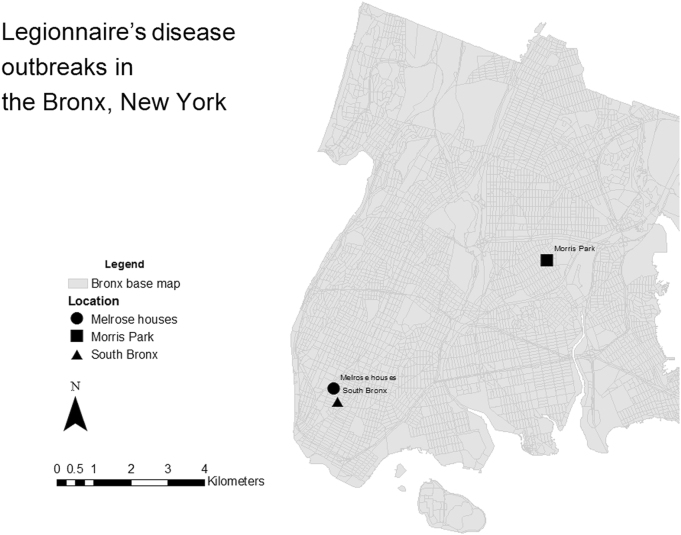
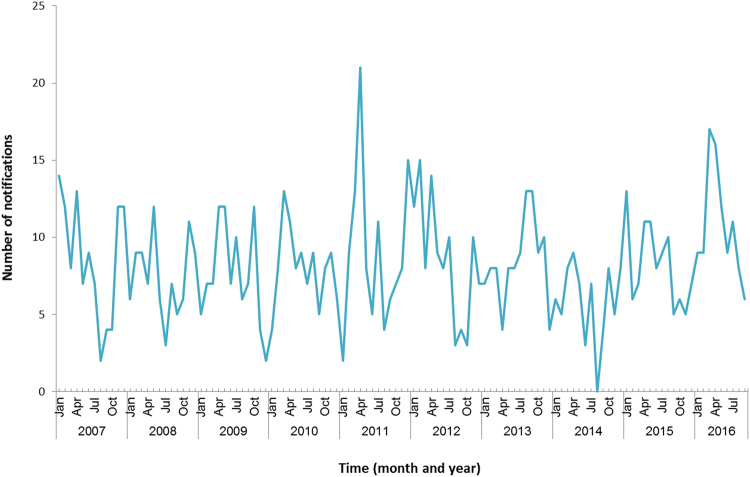
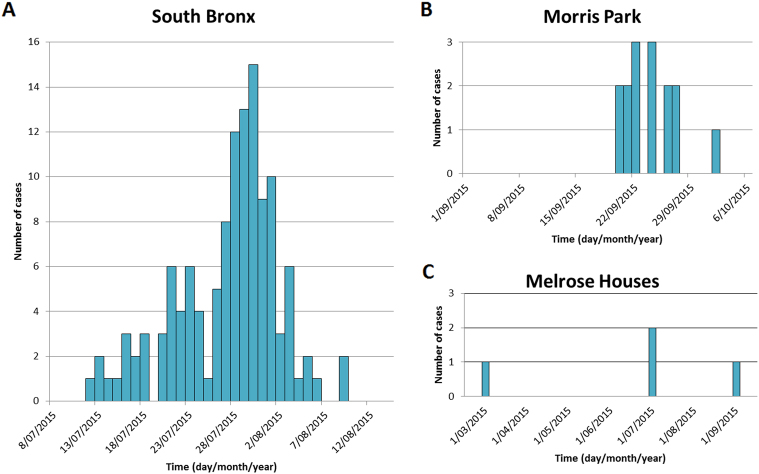
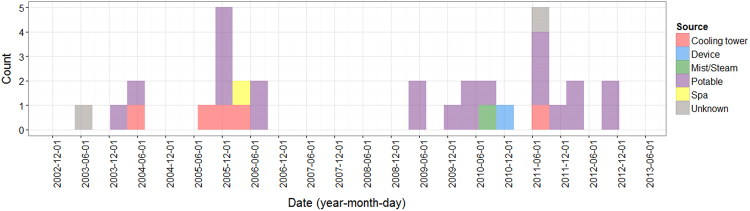
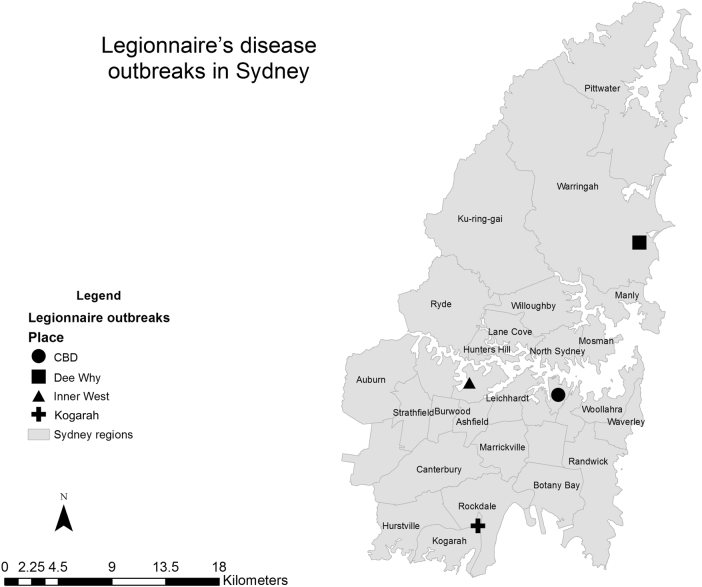
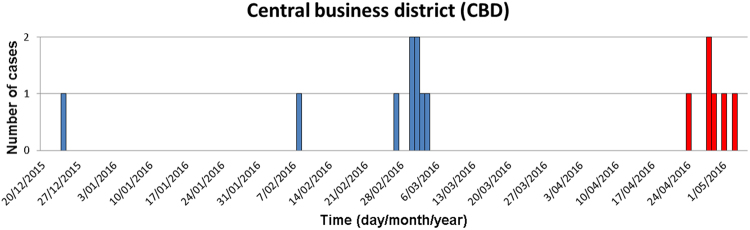
Legionnaires' disease (LD) is reported from many parts of the world, mostly linked to drinking water sources or cooling towers. We reviewed two unusual rolling outbreaks in Sydney and New York, each clustered in time and space. Data on these outbreaks were collected from public sources and compared to previous outbreaks in Australia and the US. While recurrent outbreaks of LD over time linked to an identified single source have been described, multiple unrelated outbreaks clustered in time and geography have not been previously described. We describe unusual geographic and temporal clustering of Legionella outbreaks in two cities, each of which experienced multiple different outbreaks within a small geographic area and within a short timeframe. The explanation for this temporal and spatial clustering of LD outbreaks in two cities is not clear, but climate variation and deteriorating water sanitation are two possible explanations. There is a need to critically analyse LD outbreaks and better understand changing trends to effectively prevent disease.
军团病(LD)在世界许多地区都有报道,主要与饮用水源或冷却塔有关。我们回顾了悉尼和纽约的两起不寻常的滚动暴发,这些暴发都在时间和空间上集中。从公共来源收集了这些暴发的数据,并与澳大利亚和美国以前的暴发进行了比较。虽然已经描述了随着时间的推移与一个确定的单一来源有关的 LD 反复暴发,但以前没有描述过时间和地理上聚集的多个无关暴发。我们描述了两个城市中军团菌暴发的不寻常的地理和时间聚集,每个城市都在一个小地理区域和短时间内经历了多次不同的暴发。这两个城市 LD 暴发的时间和空间聚集的原因尚不清楚,但气候变异和水质恶化是两种可能的解释。需要对 LD 暴发进行批判性分析,并更好地了解不断变化的趋势,以有效预防疾病。