Rogerson Evelyn, Pelletier Julien, Acosta-Serrano Alvaro, Rose Clair, Taylor Sarah, Guimond Scott, Lima Marcelo, Skidmore Mark, Yates Edwin
Liverpool School of Tropical Medicine, Pembroke Place, Liverpool L3 5QA, UK.
Molecular & Structural Bioscience, School of Life Sciences, Keele University, Keele ST5 5BG, UK.
Pathogens. 2018 Mar 19;7(1):32. doi: 10.3390/pathogens7010032.
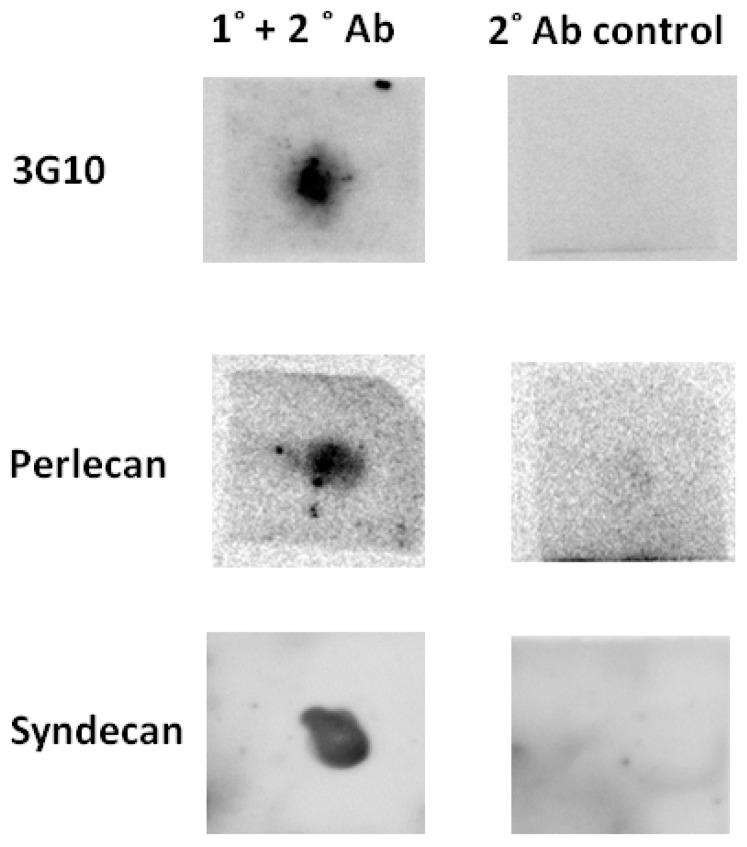
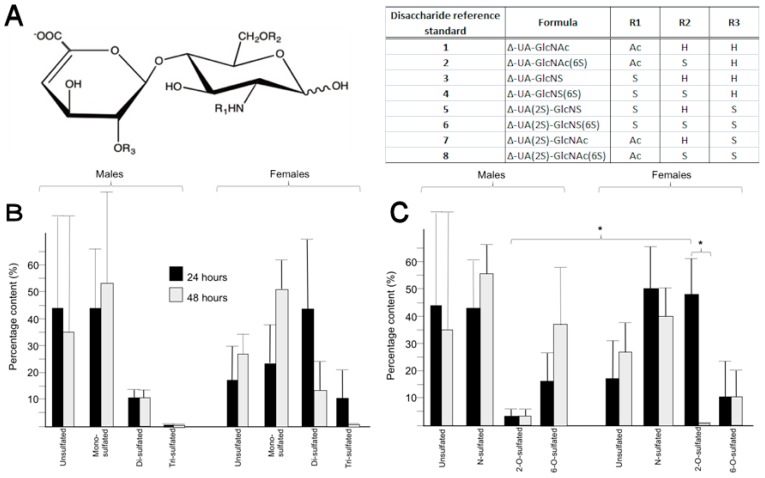
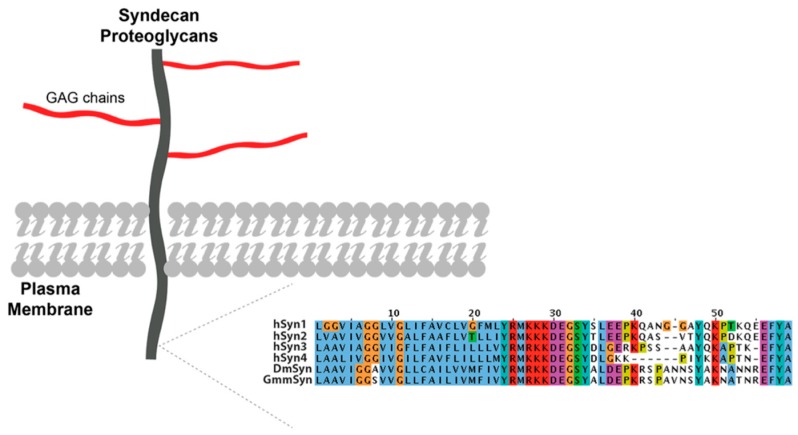
Tsetse flies are the principal insect vectors of African -sleeping sickness in humans and Nagana in cattle. One of the tsetse fly species, , is host to the parasite, , a major cause of African trypanosomiasis. Precise details of the life cycle have yet to be established, but the parasite life cycle involves crossing the insect peritrophic matrix (PM). The PM consists of the polysaccharide chitin, several hundred proteins, and both glycosamino- and galactosaminoglycan (GAG) polysaccharides. Owing to the technical challenges of detecting small amounts of GAG polysaccharides, their conclusive identification and composition have not been possible until now. Following removal of PMs from the insects and the application of heparinases (bacterial lyase enzymes that are specific for heparan sulphate (HS) GAG polysaccharides), dot blots with a HS-specific antibody showed heparan sulphate proteoglycans (HSPGs) to be present, consistent with genome analysis, as well as the likely expression of the HSPGs syndecan and perlecan. Exhaustive HS digestion with heparinases, fluorescent labeling of the resulting disaccharides with BODIPY fluorophore, and separation by strong anion exchange chromatography then demonstrated the presence of HS for the first time and provided the disaccharide composition. There were no significant differences in the type of disaccharide species present between genders or between ages (24 vs 48 h post emergence), although the HS from female flies was more heavily sulphated overall. Significant differences, which may relate to differences in infection between genders or ages, were evident, however, in overall levels of 2--sulphation between sexes and, for females, between 24 and 48 h post-emergence, implying a change in expression or activity for the 2--sulphotransferase enzyme. The presence of significant quantities of disaccharides containing the monosaccharide GlcNAc6S contrasts with previous findings in and suggests subtle differences in HS fine structure between species of the .
采采蝇是人类非洲昏睡病和牛那加那病的主要昆虫传播媒介。采采蝇的一个物种是寄生虫布氏锥虫的宿主,布氏锥虫是非洲锥虫病的主要病因。其生命周期的精确细节尚未确定,但寄生虫的生命周期涉及穿过昆虫的围食膜(PM)。围食膜由多糖几丁质、数百种蛋白质以及糖胺聚糖和半乳糖胺聚糖(GAG)多糖组成。由于检测少量GAG多糖存在技术挑战,到目前为止,它们的确切鉴定和组成尚无法实现。从昆虫中去除围食膜并应用肝素酶(对硫酸乙酰肝素(HS)GAG多糖具有特异性的细菌裂解酶)后,用HS特异性抗体进行的斑点印迹显示存在硫酸乙酰肝素蛋白聚糖(HSPG),这与基因组分析一致,也与HSPG syndecan和基底膜聚糖的可能表达一致。用肝素酶对HS进行彻底消化,用BODIPY荧光团对所得二糖进行荧光标记,然后通过强阴离子交换色谱分离,首次证明了HS的存在并提供了二糖组成。尽管雌性采采蝇的HS总体上硫酸化程度更高,但在不同性别或不同年龄(羽化后24小时与48小时)之间,存在的二糖种类类型没有显著差异。然而,在性别之间以及雌性羽化后24小时与48小时之间,2-O-硫酸化的总体水平存在明显差异,这可能与性别或年龄之间的感染差异有关,这意味着2-O-磺基转移酶的表达或活性发生了变化。含有单糖GlcNAc6S的大量二糖的存在与之前在布氏锥虫中的发现形成对比,表明采采蝇不同物种之间HS精细结构存在细微差异。