Ludger Ltd., Culham Science Centre, Oxford, United Kingdom.
Department of Vector Biology, Liverpool School of Tropical Medicine, Liverpool, United Kingdom.
PLoS Negl Trop Dis. 2021 Feb 2;15(2):e0009071. doi: 10.1371/journal.pntd.0009071. eCollection 2021 Feb.
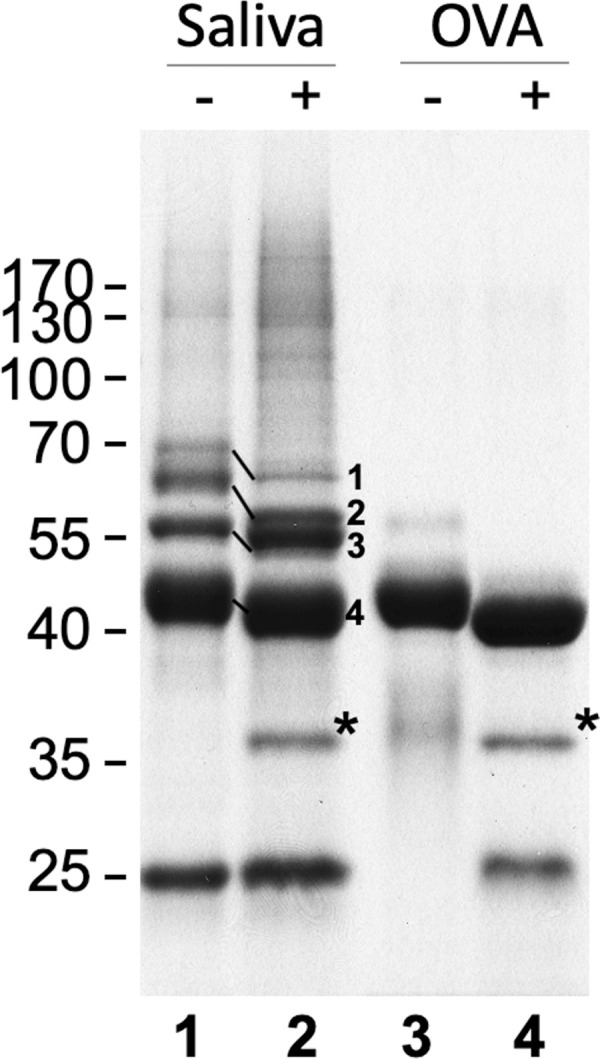
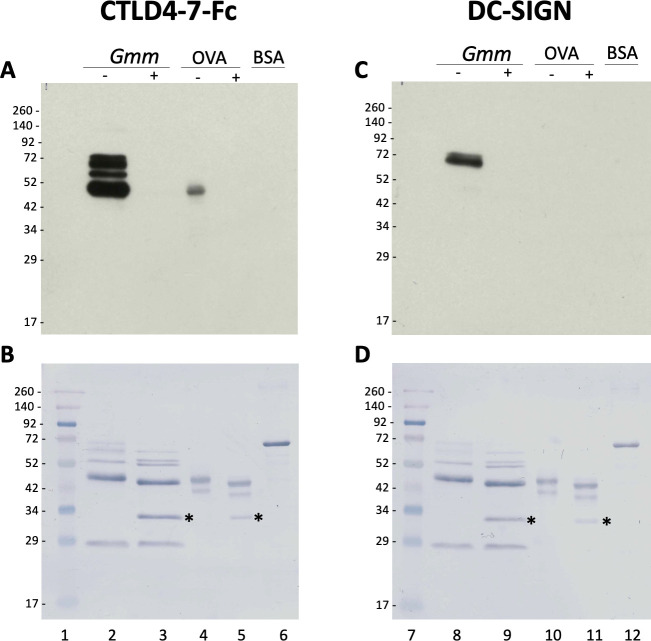
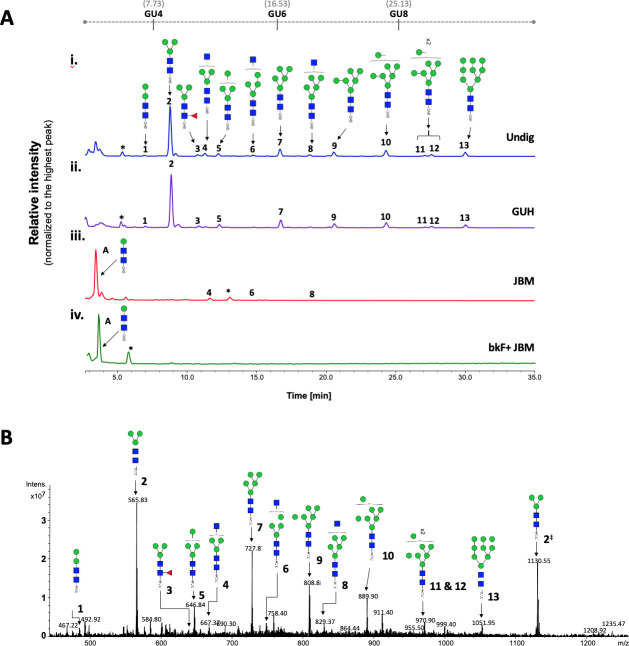
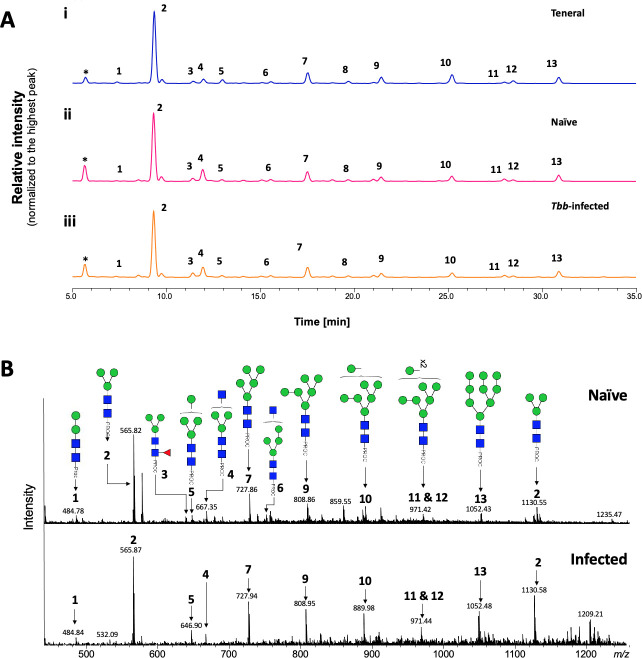
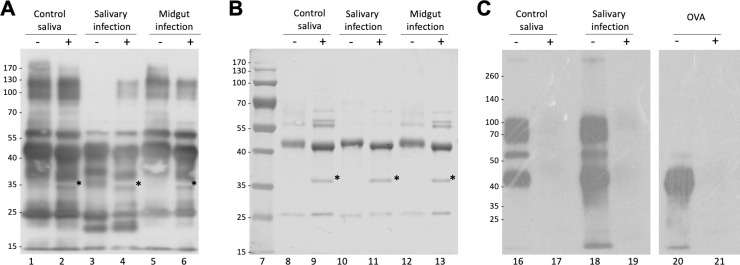
African sleeping sickness is caused by Trypanosoma brucei, a parasite transmitted by the bite of a tsetse fly. Trypanosome infection induces a severe transcriptional downregulation of tsetse genes encoding for salivary proteins, which reduces its anti-hemostatic and anti-clotting properties. To better understand trypanosome transmission and the possible role of glycans in insect bloodfeeding, we characterized the N-glycome of tsetse saliva glycoproteins. Tsetse salivary N-glycans were enzymatically released, tagged with either 2-aminobenzamide (2-AB) or procainamide, and analyzed by HILIC-UHPLC-FLR coupled online with positive-ion ESI-LC-MS/MS. We found that the N-glycan profiles of T. brucei-infected and naïve tsetse salivary glycoproteins are almost identical, consisting mainly (>50%) of highly processed Man3GlcNAc2 in addition to several other paucimannose, high mannose, and few hybrid-type N-glycans. In overlay assays, these sugars were differentially recognized by the mannose receptor and DC-SIGN C-type lectins. We also show that salivary glycoproteins bind strongly to the surface of transmissible metacyclic trypanosomes. We suggest that although the repertoire of tsetse salivary N-glycans does not change during a trypanosome infection, the interactions with mannosylated glycoproteins may influence parasite transmission into the vertebrate host.
非洲昏睡病是由布氏锥虫引起的,这种寄生虫通过采采蝇的叮咬传播。锥虫感染会导致采采蝇编码唾液蛋白的基因严重转录下调,从而降低其抗凝血和抗凝结特性。为了更好地了解锥虫的传播以及糖在昆虫吸血中的可能作用,我们对采采蝇唾液糖蛋白的 N-糖组进行了表征。采采蝇唾液 N-糖通过酶解释放,分别用 2-氨基苯甲酰胺 (2-AB) 或普鲁卡因胺标记,然后通过 HILIC-UHPLC-FLR 与正离子 ESI-LC-MS/MS 在线联用进行分析。我们发现,感染了布氏锥虫和未感染的采采蝇唾液糖蛋白的 N-糖谱几乎相同,主要由高度加工的 Man3GlcNAc2 组成(>50%),此外还有几种低甘露糖、高甘露糖和少数杂合型 N-聚糖。在覆盖实验中,这些糖被甘露糖受体和 DC-SIGN C 型凝集素特异性识别。我们还表明,唾液糖蛋白强烈结合到可传播的循环型锥虫表面。我们认为,尽管采采蝇唾液 N-聚糖的 repertoire 在锥虫感染期间不会发生变化,但与甘露糖基化糖蛋白的相互作用可能会影响寄生虫向脊椎动物宿主的传播。