Department of Neurology, University Hospital and University of Zurich, Frauenklinikstrasse 26, 8091, Zurich, Switzerland.
Spinal Cord Injury Center, Balgrist University Hospital, Forchstrasse 340, 8008, Zurich, Switzerland.
Sci Rep. 2018 Mar 21;8(1):4984. doi: 10.1038/s41598-018-22676-0.
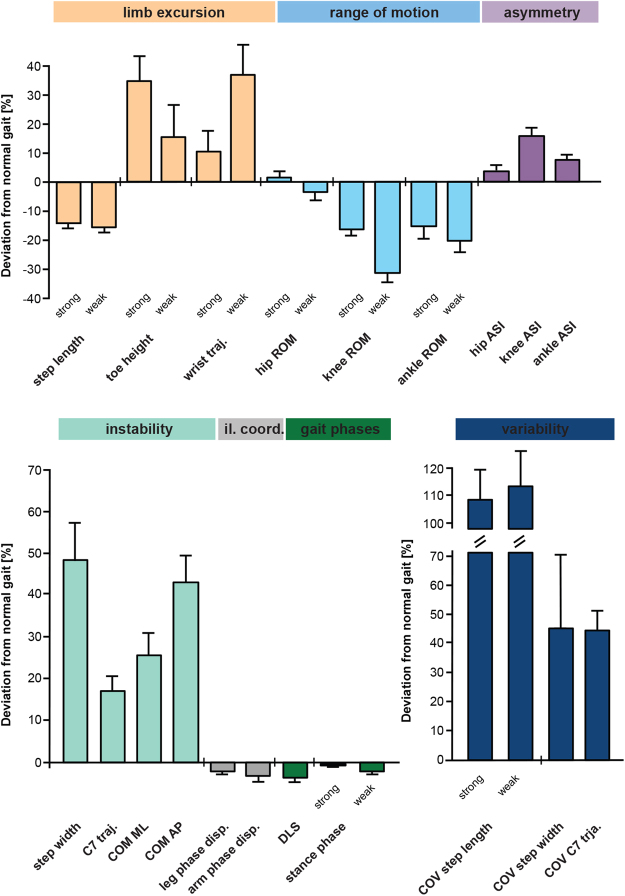
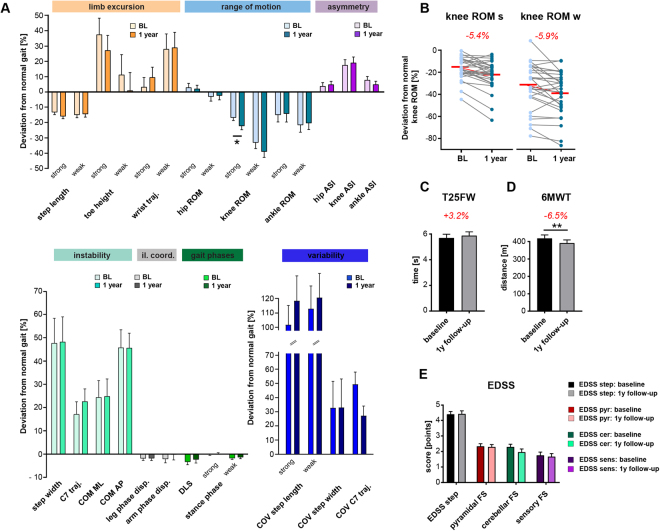
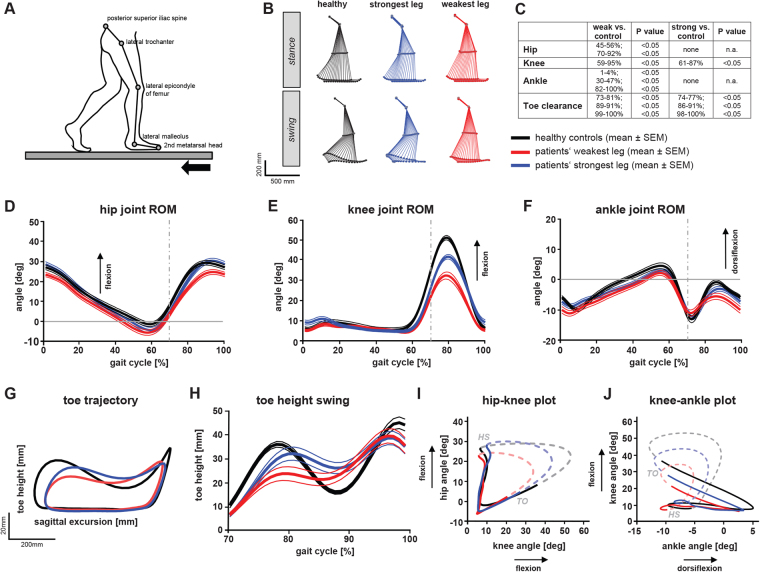
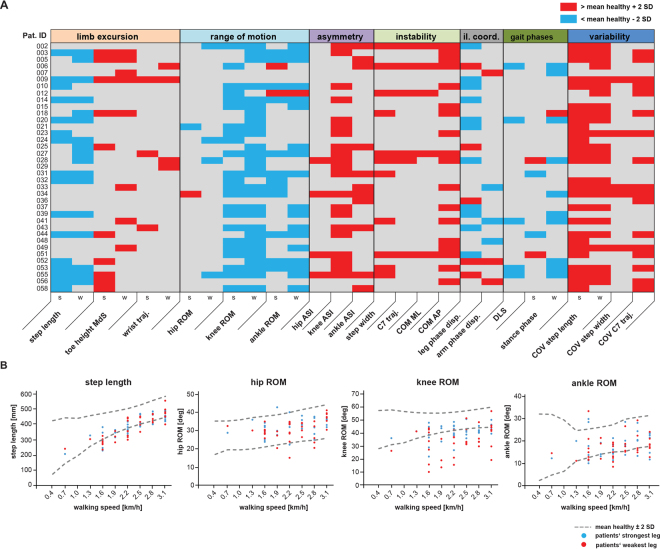
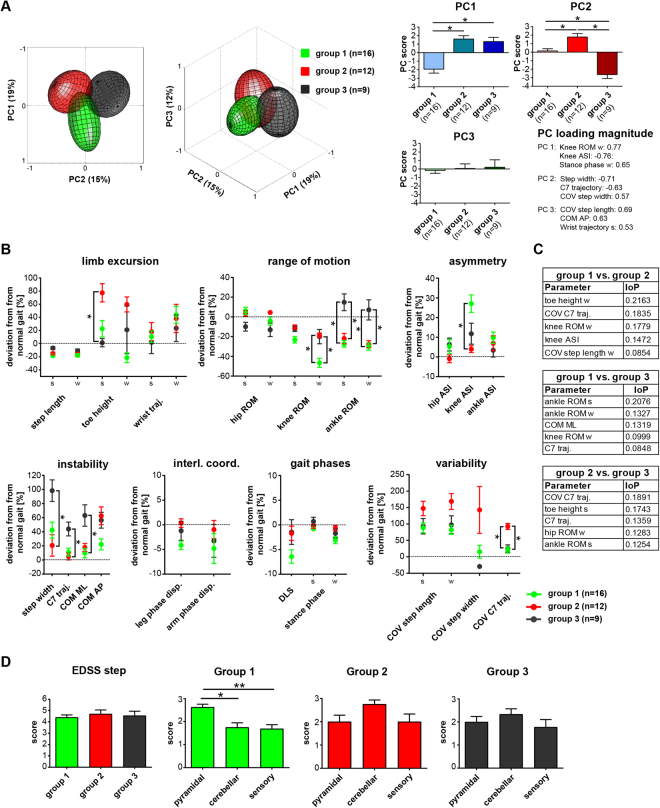
Gait dysfunction is a common and relevant symptom in multiple sclerosis (MS). This study aimed to profile gait pathology in gait-impaired patients with MS using comprehensive 3D gait analysis and clinical walking tests. Thirty-seven patients with MS walked on the treadmill at their individual, sustainable speed while 20 healthy control subjects walked at all the different patient's paces, allowing for comparisons independent of walking velocity. Kinematic analysis revealed pronounced restrictions in knee and ankle joint excursion, increased gait variability and asymmetry along with impaired dynamic stability in patients. The most discriminative single gait parameter, differentiating patients from controls with an accuracy of 83.3% (χ test; p = 0.0001), was reduced knee range of motion. Based on hierarchical cluster and principal component analysis, three principal pathological gait patterns were identified: a spastic-paretic, an ataxia-like, and an unstable gait. Follow-up assessments after 1 year indicated deterioration of walking function, particularly in patients with spastic-paretic gait patterns. Our findings suggest that impaired knee/ankle control is common in patients with MS. Personalised gait profiles and clustering algorithms may be promising tools for stratifying patients and to inform patient-tailored exercise programs. Responsive, objective outcome measures are important for monitoring disease progression and treatment effects in MS trials.
步态障碍是多发性硬化症(MS)中常见且相关的症状。本研究旨在使用全面的 3D 步态分析和临床步行测试来描绘步态受损的 MS 患者的步态病理。37 名 MS 患者在跑步机上以个人可持续速度行走,而 20 名健康对照者则以所有不同患者的速度行走,这使得可以独立于行走速度进行比较。运动学分析显示,膝关节和踝关节活动度明显受限,步态变异性和不对称性增加,动态稳定性受损。最具区分力的单一步态参数是膝关节活动范围减小,可准确区分患者和对照组(卡方检验;p=0.0001)。基于层次聚类和主成分分析,确定了三种主要的病理性步态模式:痉挛性瘫痪、共济失调样和不稳定步态。1 年后的随访评估表明,行走功能恶化,尤其是痉挛性瘫痪步态模式的患者。我们的研究结果表明,膝关节/踝关节控制受损在 MS 患者中很常见。个性化的步态特征和聚类算法可能是分层患者和为患者量身定制运动计划的有前途的工具。在 MS 试验中,反应灵敏、客观的结果测量对于监测疾病进展和治疗效果非常重要。