Podgórska Marta, Ołdak Monika, Marthaler Anna, Fingerle Alina, Walch-Rückheim Barbara, Lohse Stefan, Müller Cornelia S L, Vogt Thomas, Ustav Mart, Wnorowski Artur, Malejczyk Magdalena, Majewski Sławomir, Smola Sigrun
Institute of Virology, Saarland University Medical Center, Homburg, Germany.
Department of Histology and Embryology, Center of Biostructure Research, Medical University of Warsaw, Warsaw, Poland.
Front Microbiol. 2018 Mar 7;9:392. doi: 10.3389/fmicb.2018.00392. eCollection 2018.
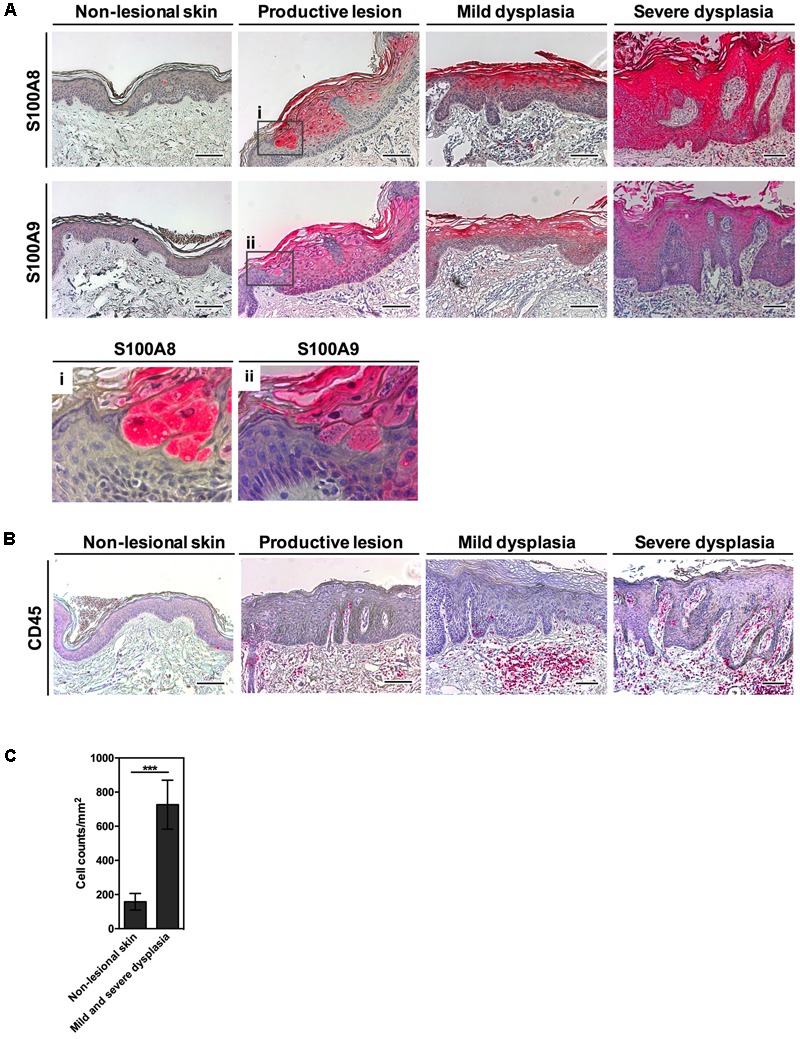
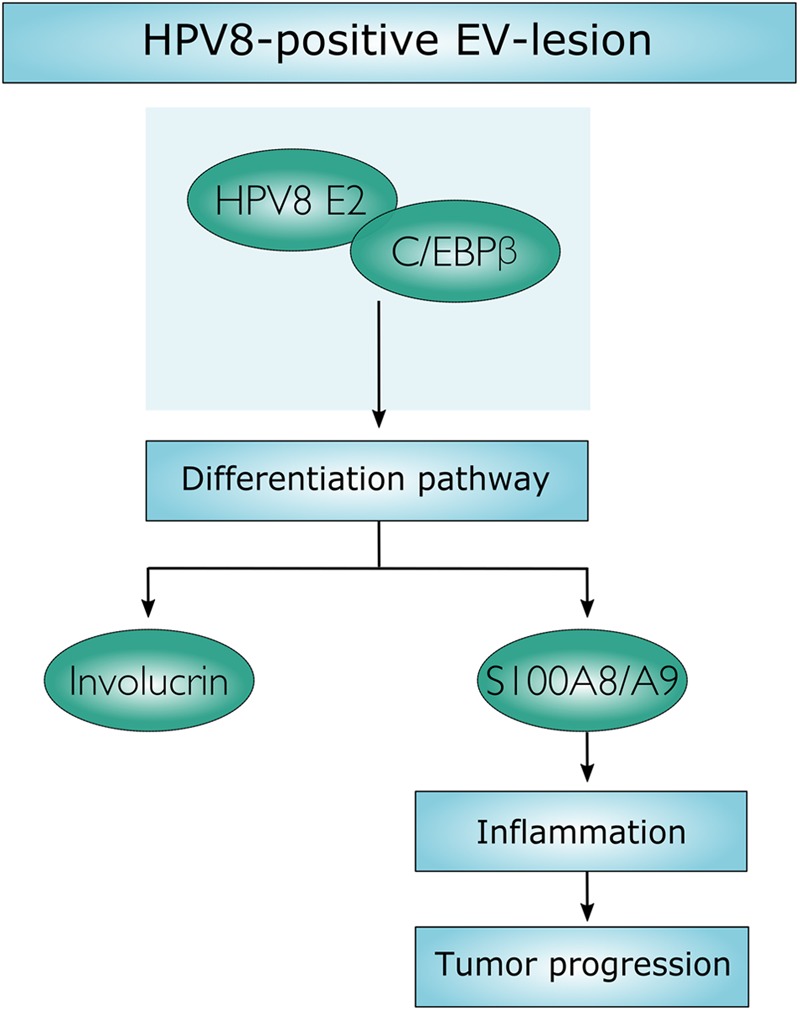
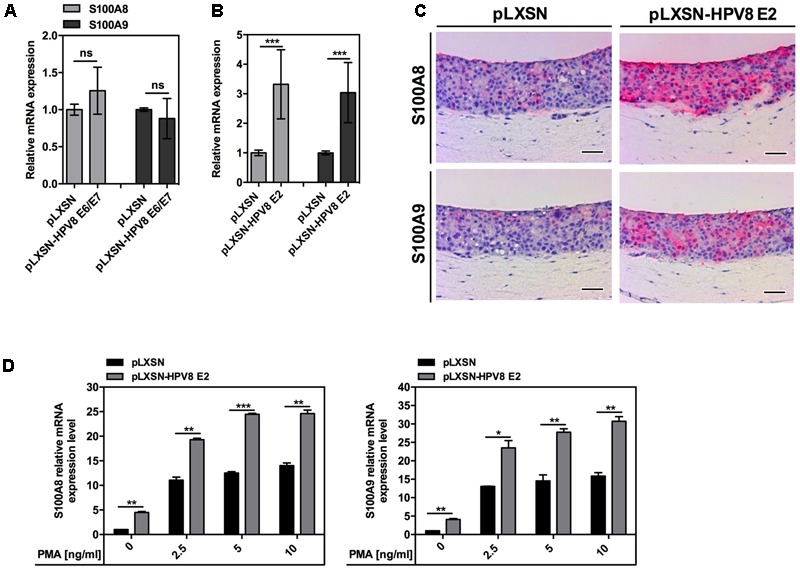
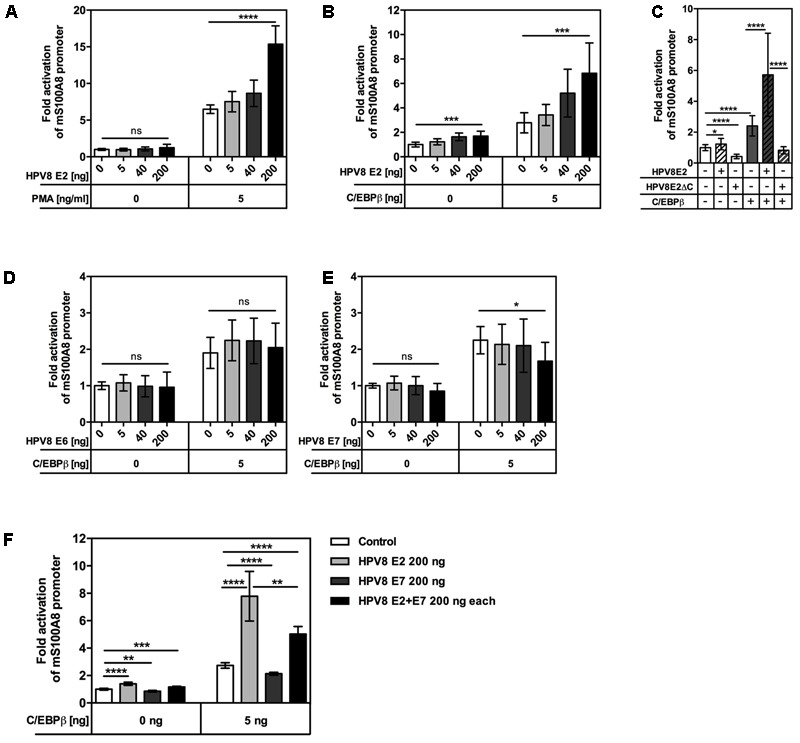
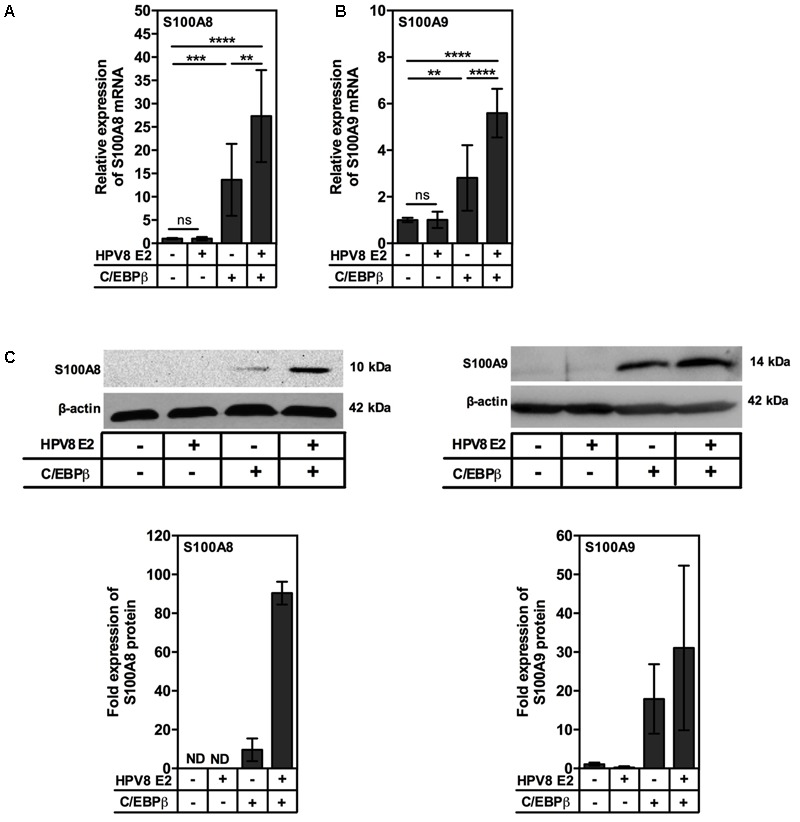
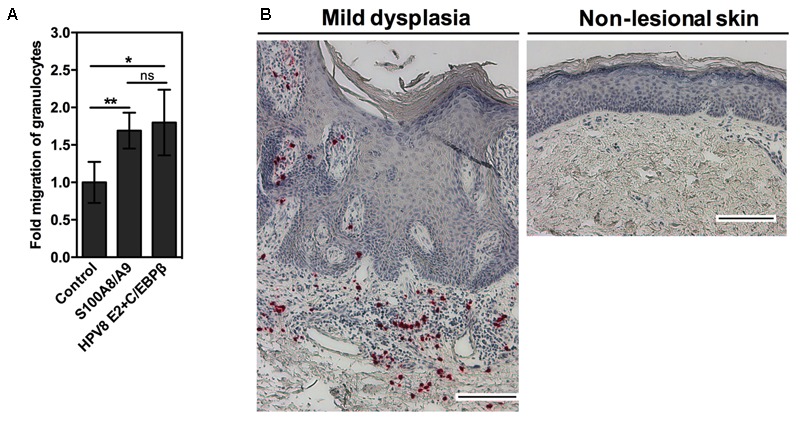
Persistent genus β-HPV (human papillomavirus) infection is a major co-factor for non-melanoma skin cancer in patients suffering from the inherited skin disease epidermodysplasia verruciformis (EV). Malignant EV lesions are particularly associated with HPV type 5 or 8. There is clinical and molecular evidence that HPV8 actively suppresses epithelial immunosurveillance by interfering with the recruitment of Langerhans cells, which may favor viral persistence. Mechanisms how persistent HPV8 infection promotes the carcinogenic process are, however, less well understood. In various tumor types chronic inflammation has a central role in tumor progression. The calprotectin complex consisting of S100A8 and S100A9 proteins has recently been identified as key driver of chronic and tumor promoting inflammation in skin carcinogenesis. It induces chemotaxis of neutrophil granulocytes and modulates inflammatory as well as immune responses. In this study, we demonstrate that skin lesions of EV-patients are massively infiltrated by inflammatory cells, including CD15 granulocytes. At the same time we observed a very strong expression of S100A8 and S100A9 proteins in lesional keratinocytes, which was mostly confined to the suprabasal layers of the epidermis. Both proteins were hardly detected in non-lesional skin. Further experiments revealed that the HPV8 oncoproteins E6 and E7 were not involved in S100A8/A9 up-regulation. They rather suppressed differentiation-induced S100A8/A9 expression. In contrast, the viral transcription factor E2 strongly enhanced PMA-mediated S100A8/A9 up-regulation in primary human keratinocytes. Similarly, a tremendous up-regulation of both S100 proteins was observed, when minute amounts of the PMA-inducible CCAAT/enhancer binding protein β (C/EBPβ), which is expressed at low levels in the suprabasal layers of the epidermis, were co-expressed together with HPV8 E2. This confirmed our previous observation that C/EBPβ interacts and functionally synergizes with the HPV8 E2 protein in differentiation-dependent gene expression. Potent synergistic up-regulation of S100A8/A9 was seen at transcriptional and protein levels. S100A8/A9 containing supernatants from keratinocytes co-expressing HPV8 E2 and C/EBPβ significantly induced chemotaxis of granulocytes in migration assays supporting the relevance of our finding. In conclusion, our data suggest that the HPV8 E2 protein actively contributes to the recruitment of myeloid cells into EV skin lesions, which may support chronic inflammation and progression to skin cancer.
持续性β属人乳头瘤病毒(HPV)感染是遗传性皮肤病疣状表皮发育不良(EV)患者发生非黑色素瘤皮肤癌的主要协同因素。EV恶性病变尤其与5型或8型HPV相关。有临床和分子证据表明,HPV8通过干扰朗格汉斯细胞的募集来积极抑制上皮免疫监视,这可能有利于病毒持续存在。然而,持续性HPV8感染促进致癌过程的机制尚不太清楚。在各种肿瘤类型中,慢性炎症在肿瘤进展中起核心作用。由S100A8和S100A9蛋白组成的钙卫蛋白复合物最近被确定为皮肤癌发生中慢性和促进肿瘤炎症的关键驱动因素。它可诱导中性粒细胞的趋化作用,并调节炎症和免疫反应。在本研究中,我们证明EV患者的皮肤病变被包括CD15粒细胞在内的炎症细胞大量浸润。同时,我们观察到病变角质形成细胞中S100A8和S100A9蛋白表达非常强烈,主要局限于表皮的基底层以上。在非病变皮肤中几乎检测不到这两种蛋白。进一步的实验表明,HPV8癌蛋白E6和E7不参与S100A8/A9的上调。它们反而抑制分化诱导的S100A8/A9表达。相反,病毒转录因子E2强烈增强了佛波酯(PMA)介导的原代人角质形成细胞中S100A8/A9的上调。同样,当微量的PMA诱导型CCAAT/增强子结合蛋白β(C/EBPβ)(在表皮基底层以上低水平表达)与HPV8 E2共表达时,观察到这两种S100蛋白都有巨大上调。这证实了我们之前的观察结果,即C/EBPβ在依赖分化的基因表达中与HPV8 E2蛋白相互作用并在功能上协同。在转录和蛋白质水平上都观察到了S100A8/A9的强效协同上调。在迁移试验中,共表达HPV8 E2和C/EBPβ的角质形成细胞中含有S100A8/A9的上清液显著诱导了粒细胞的趋化作用,支持了我们这一发现的相关性。总之,我们的数据表明,HPV8 E2蛋白积极促进髓样细胞募集到EV皮肤病变中,这可能支持慢性炎症和向皮肤癌的进展。