Park Jun Sung, Moon Kyoung Ho
Department of Orthopaedic Surgery, Inha University School of Medicine, Incheon, Korea.
Hip Pelvis. 2018 Mar;30(1):23-28. doi: 10.5371/hp.2018.30.1.23. Epub 2018 Mar 5.
We evaluated the medium- to long-term outcomes of cortical strut allografts used to treat periprosthetic bone defects to better understand the correlation between radiological and clinical outcomes.
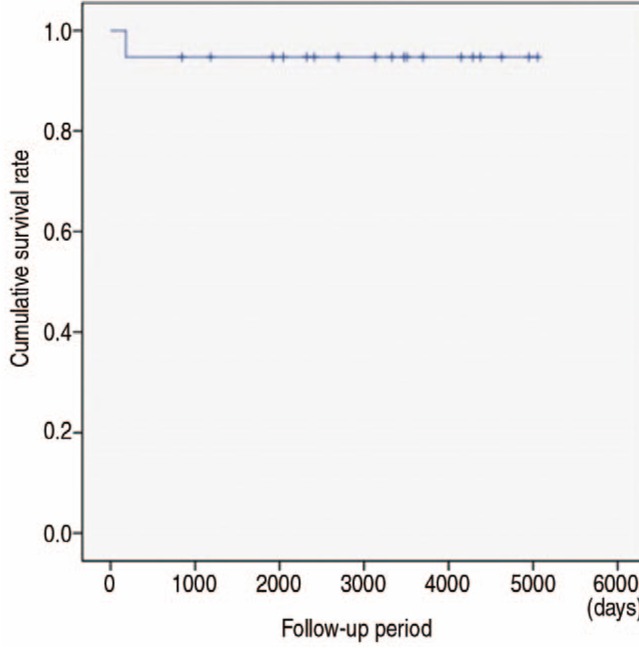
We retrospectively reviewed outcomes from 19 patients undergoing cortical strut allografts to treat periproshtetic bone defects from 2001 to 2015. The mean age at index operation was 59.4 years and the average follow-up period was 8.6 years. Surgeries were performed because of aseptic loosening (n=9), periprosthetic fractures (n=5), and infections (n=5). Each case was characterized and described in detail including the length of allograft and the union period; possible correlations between allograft length and detailed classification and union period was analyzed. Clinical evaluations included the Harris hip score and Kaplan-Meier survivorship.
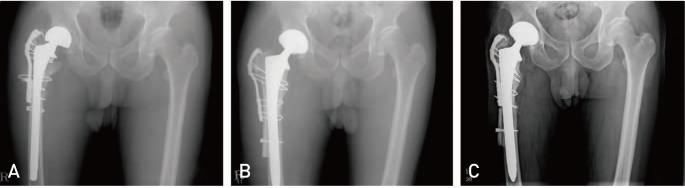
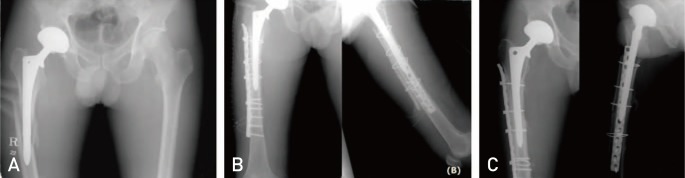
In revision total hip arthroplasty (THA), the average length of allografts used in patients experiencing fractures was significantly longer than those with aseptic loosening or infection. Of the 19 cases, incorporation was observed in 18 cases (94.7%). The average time to incorporation was 21.2 months and the time to incorporation was not significantly different among the two groups (fracture vs. aseptic loosening or infection). No positive correlation was identified between the length of allograft and incorporation period or in the time to cortical strut allograft incorporation among Paprosky or Vancouver subgroups.
Results of cortical strut allografts show excellent incorporation rates based on medium- to long-term follow-up. Cortical strut allografts may be considered useful for the treatment of femoral bone defects experienced during revision THA and following periprosthetic fracture.
我们评估了用于治疗假体周围骨缺损的皮质支撑异体骨移植的中长期疗效,以更好地了解放射学和临床疗效之间的相关性。
我们回顾性分析了2001年至2015年间19例行皮质支撑异体骨移植治疗假体周围骨缺损患者的疗效。初次手术时的平均年龄为59.4岁,平均随访期为8.6年。手术原因包括无菌性松动(n = 9)、假体周围骨折(n = 5)和感染(n = 5)。详细描述了每个病例的特征,包括异体骨长度和愈合时间;分析了异体骨长度与详细分类及愈合时间之间可能的相关性。临床评估包括Harris髋关节评分和Kaplan-Meier生存率。
在翻修全髋关节置换术(THA)中,骨折患者使用的异体骨平均长度明显长于无菌性松动或感染患者。19例中,18例(94.7%)观察到骨融合。平均骨融合时间为21.2个月,两组(骨折组与无菌性松动或感染组)之间的骨融合时间无显著差异。在Paprosky或Vancouver亚组中,未发现异体骨长度与骨融合期或皮质支撑异体骨骨融合时间之间存在正相关。
基于中长期随访,皮质支撑异体骨移植的结果显示出优异的骨融合率。皮质支撑异体骨移植可被认为对翻修THA期间及假体周围骨折后出现的股骨骨缺损治疗有用。