Jovalekic Aleksandar, Koglin Norman, Mueller Andre, Stephens Andrew W
Piramal Imaging GmbH, Tegeler Straße 6-7, 13353 Berlin, Germany.
EJNMMI Radiopharm Chem. 2017;1(1):11. doi: 10.1186/s41181-016-0015-3. Epub 2016 Jun 2.
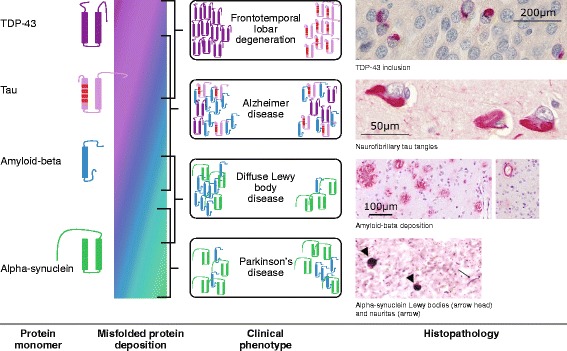
Traditional nuclear medicine ligands were designed to target cellular receptors or transporters with a binding pocket and a defined structure-activity relationship. More recently, tracers have been developed to target pathological protein aggregations, which have less well-defined structure-activity relationships. Aggregations of proteins such as tau, α-synuclein, and β-amyloid (Aβ) have been identified in neurodegenerative diseases, including Alzheimer's disease (AD) and other dementias, and Parkinson's disease (PD). Indeed, Aβ deposition is a hallmark of AD, and detection methods have evolved from coloured dyes to modern F-labelled positron emission tomography (PET) tracers. Such tracers are becoming increasingly established in routine clinical practice for evaluation of Aβ neuritic plaque density in the brains of adults who are being evaluated for AD and other causes of cognitive impairment. While similar in structure, there are key differences between the available compounds in terms of dosing/dosimetry, pharmacokinetics, and interpretation of visual reads. In the future, quantification of Aβ-PET may further improve its utility. Tracers are now being developed for evaluation of tau protein, which is associated with decreased cognitive function and neurodegenerative changes in AD, and is implicated in the pathogenesis of other neurodegenerative diseases. While no compound has yet been approved for tau imaging in clinical use, it is a very active area of research. Development of tau tracers comprises in-depth characterisation of existing radiotracers, clinical validation, a better understanding of uptake patterns, test-retest/dosimetry data, and neuropathological correlations with PET. Tau imaging may allow early, more accurate diagnosis, and monitoring of disease progression, in a range of conditions. Another marker for which imaging modalities are needed is α-synuclein, which has potential for conditions including PD and dementia with Lewy bodies. Efforts to develop a suitable tracer are ongoing, but are still in their infancy. In conclusion, several PET tracers for detection of pathological protein depositions are now available for clinical use, particularly PET tracers that bind to Aβ plaques. Tau-PET tracers are currently in clinical development, and α-synuclein protein deposition tracers are at early stage of research. These tracers will continue to change our understanding of complex disease processes.
传统的核医学配体旨在靶向具有结合口袋和明确构效关系的细胞受体或转运体。最近,已经开发出了靶向病理性蛋白质聚集体的示踪剂,其构效关系不太明确。在包括阿尔茨海默病(AD)和其他痴呆症以及帕金森病(PD)在内的神经退行性疾病中,已经发现了tau蛋白、α-突触核蛋白和β-淀粉样蛋白(Aβ)等蛋白质的聚集。事实上,Aβ沉积是AD的一个标志,检测方法已经从彩色染料发展到现代F标记的正电子发射断层扫描(PET)示踪剂。这种示踪剂在常规临床实践中越来越多地用于评估因AD和其他认知障碍原因而接受评估的成年人脑中Aβ神经炎性斑块密度。虽然结构相似,但现有化合物在给药/剂量测定、药代动力学和视觉读数解释方面存在关键差异。未来,Aβ-PET的定量分析可能会进一步提高其效用。目前正在开发用于评估tau蛋白的示踪剂,tau蛋白与AD中认知功能下降和神经退行性变化有关,并与其他神经退行性疾病的发病机制有关。虽然目前还没有化合物被批准用于临床tau成像,但这是一个非常活跃的研究领域。tau示踪剂的开发包括对现有放射性示踪剂的深入表征、临床验证、对摄取模式的更好理解、重测/剂量测定数据以及与PET的神经病理学相关性。tau成像可能允许在一系列疾病中进行早期、更准确的诊断和疾病进展监测。另一种需要成像方式的标志物是α-突触核蛋白,它在包括PD和路易体痴呆等疾病中具有应用潜力。开发合适示踪剂的工作正在进行中,但仍处于起步阶段。总之,目前有几种用于检测病理性蛋白质沉积的PET示踪剂可用于临床,特别是与Aβ斑块结合的PET示踪剂。tau-PET示踪剂目前正在进行临床开发,α-突触核蛋白蛋白质沉积示踪剂正处于研究早期阶段。这些示踪剂将继续改变我们对复杂疾病过程的理解。