Department of Pathobiology, Faculty of Veterinary Medicine, Ferdowsi University of Mashhad, Mashhad, Iran.
Department of Clinical Sciences, Faculty of Veterinary Medicine, Ferdowsi University of Mashhad, Mashhad, Iran.
PLoS One. 2018 Mar 22;13(3):e0194888. doi: 10.1371/journal.pone.0194888. eCollection 2018.
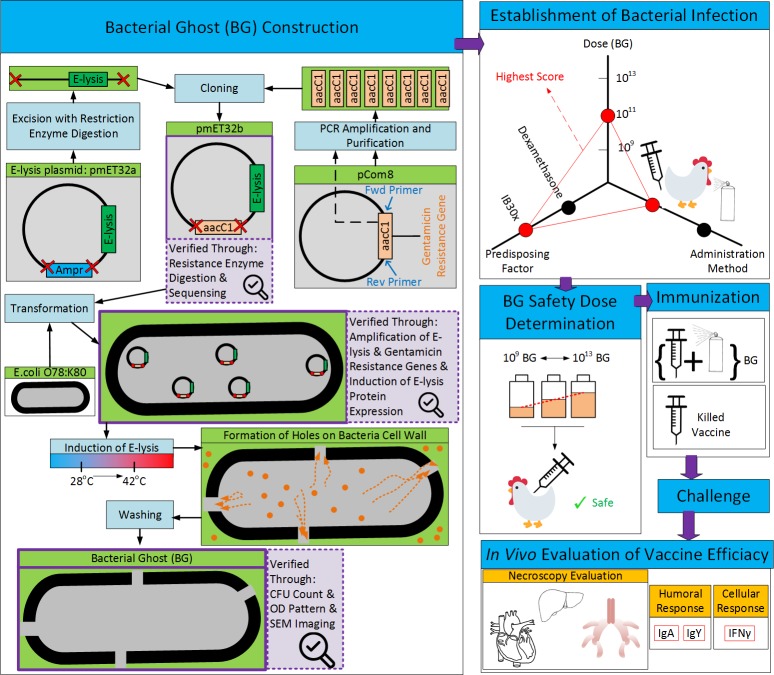
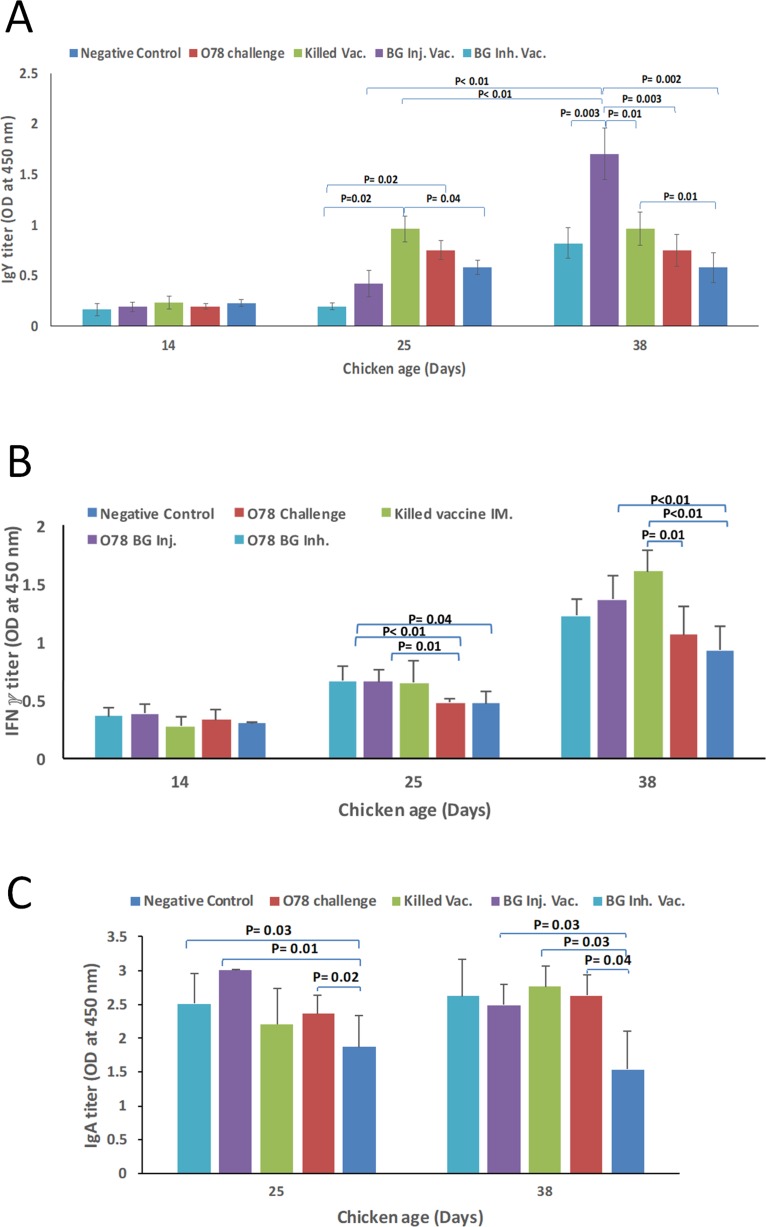
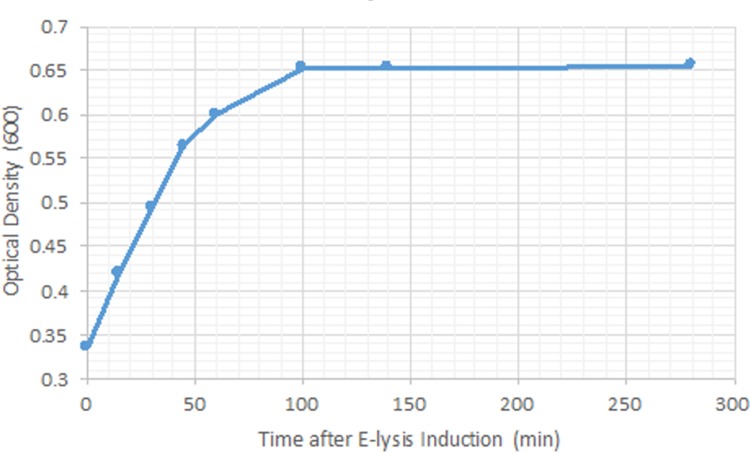
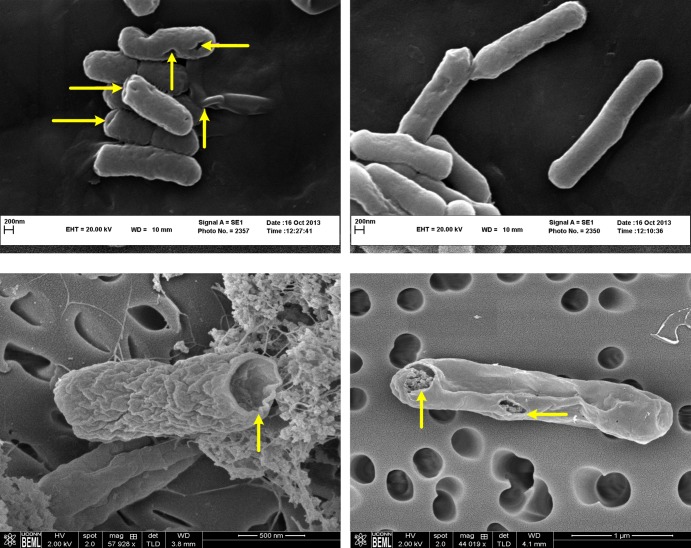
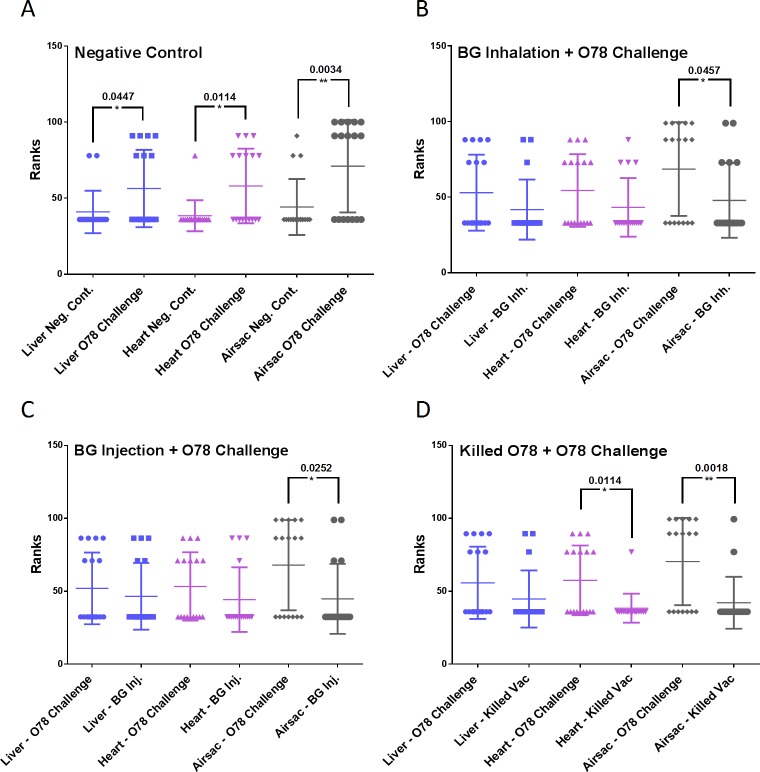
Avian Colibacillosis is among the major causes of economic loss in the poultry industry worldwide, with a more vivid impact on developing countries. The involvement of several bacteria has made it challenging to develop effective vaccines for this disease, particularly because it is notoriously difficult to make a vaccine that contains all the contributing pathogenic bacteria. Here, we report the design and fabrication of a bacterial ghost (BG) of E. coli O78:K80, which is among the major bacterial serotypes responsible for this disease. The generated ghost is then exploited as a homologous vaccine against Avian Colibacillosis. We demonstrate that hole formation in the cell wall of E. coli O78:K80 can happen properly in optical densities as high as 0.8 compared to the 0.3-0.4 standard for bacteria like E. coli TOP10. This is especially advantageous for mass production of this ghost which is a vital factor in development of any BG-based vaccine. Compared to E. coli TOP10, we faced a great challenge in transforming the wild type bacteria with the E-lysis plasmid which was probably due to higher thickness of the cell wall in O78:K80. This, however, was addressed by treating the cell wall with a different combination of ions.The vaccine was administered to Ross 308 broiler chickens via injection as well as through their respiratory system at a dose of 1010 BGs, repeated 3 times at weekly intervals. Chickens were then challenged with the wild type O78:K80 at a dose of 1011 bacteria together with Infectious Bronchitis H120 vaccine (as immunosuppressant) one week after the last immunization. Air sac lesions were significantly reduced in BG vaccinated groups in comparison with the control group. The levels of IFNγ, IgA and IgY were measured in the serum of immunized chickens as an indication of immune response and were compared with those of the chickens vaccinated with killed bacteria. The results show that O78:K80 BG can be used as an efficient homologous vaccine against Colibacillosis disease in poultry. We expect our findings can serve as the starting point for designing more sophisticated vaccines that contain all three major pathogenic bacteria involved in avian Colibacillosis.
禽大肠杆菌病是全球家禽业经济损失的主要原因之一,对发展中国家的影响更为明显。由于涉及多种细菌,因此很难为这种疾病开发有效的疫苗,特别是因为很难制造一种包含所有致病细菌的疫苗。在这里,我们报告了大肠杆菌 O78:K80 细菌幽灵(BG)的设计和制造,大肠杆菌 O78:K80 是导致这种疾病的主要细菌血清型之一。然后,生成的幽灵被用作针对禽大肠杆菌病的同源疫苗。我们证明,与大肠杆菌 TOP10 等细菌的 0.3-0.4 标准相比,在高达 0.8 的光密度下,大肠杆菌 O78:K80 的细胞壁中的孔形成可以正常发生。这对于这种幽灵的大规模生产特别有利,这是任何基于 BG 的疫苗开发的重要因素。与大肠杆菌 TOP10 相比,我们在使用 E-裂解质粒转化野生型细菌时遇到了很大的挑战,这可能是由于 O78:K80 的细胞壁更厚。然而,通过用不同的离子组合处理细胞壁,这个问题得到了解决。疫苗通过注射和通过呼吸系统以 1010 BG 的剂量施用于 Ross 308 肉鸡,每周重复 3 次。然后,在最后一次免疫后一周,用 1011 个细菌和传染性支气管炎 H120 疫苗(作为免疫抑制剂)对鸡进行野生型 O78:K80 攻毒。与对照组相比,BG 接种组的气囊病变明显减少。免疫鸡的血清中测量了 IFNγ、IgA 和 IgY 的水平,作为免疫反应的指示,并与用灭活细菌接种的鸡进行了比较。结果表明,O78:K80 BG 可用作家禽大肠杆菌病的有效同源疫苗。我们预计我们的发现可以为设计包含禽大肠杆菌病涉及的所有三种主要致病性细菌的更复杂疫苗提供起点。