Robertson Hugh M, Baits Rachel L, Walden Kimberly K O, Wada-Katsumata Ayako, Schal Coby
Department of Entomology, University of Illinois at Urbana-Champaign, Urbana, Illinois, USA.
Department of Entomology and Plant Pathology, North Carolina State University, Raleigh, North Carolina, USA.
J Exp Zool B Mol Dev Evol. 2018 Jul;330(5):265-278. doi: 10.1002/jez.b.22797. Epub 2018 Mar 22.
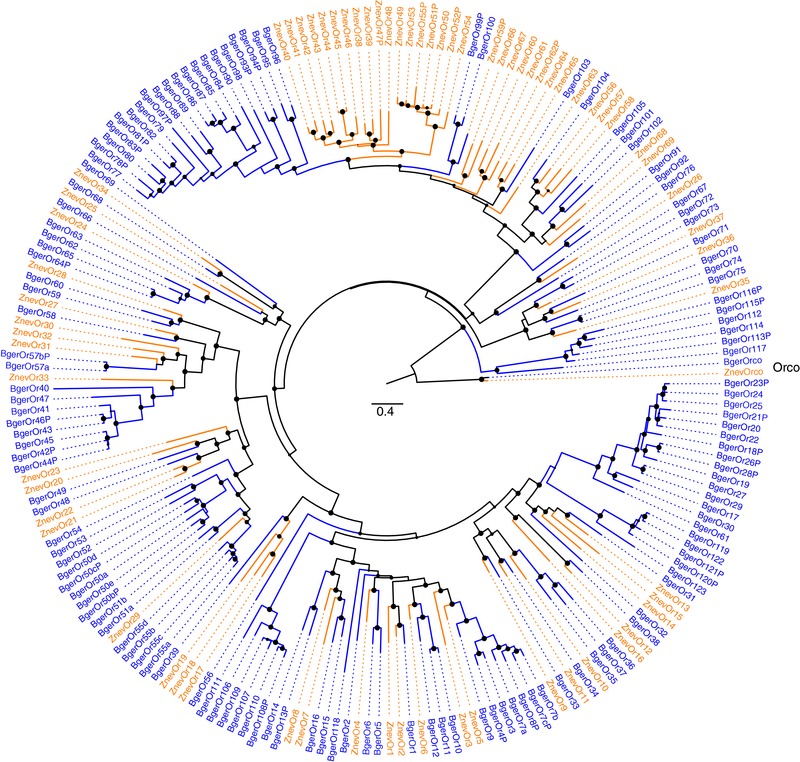
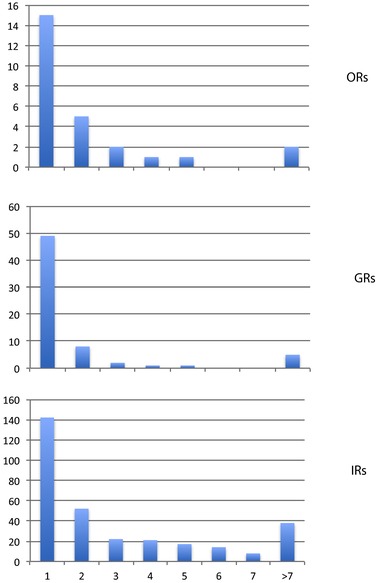
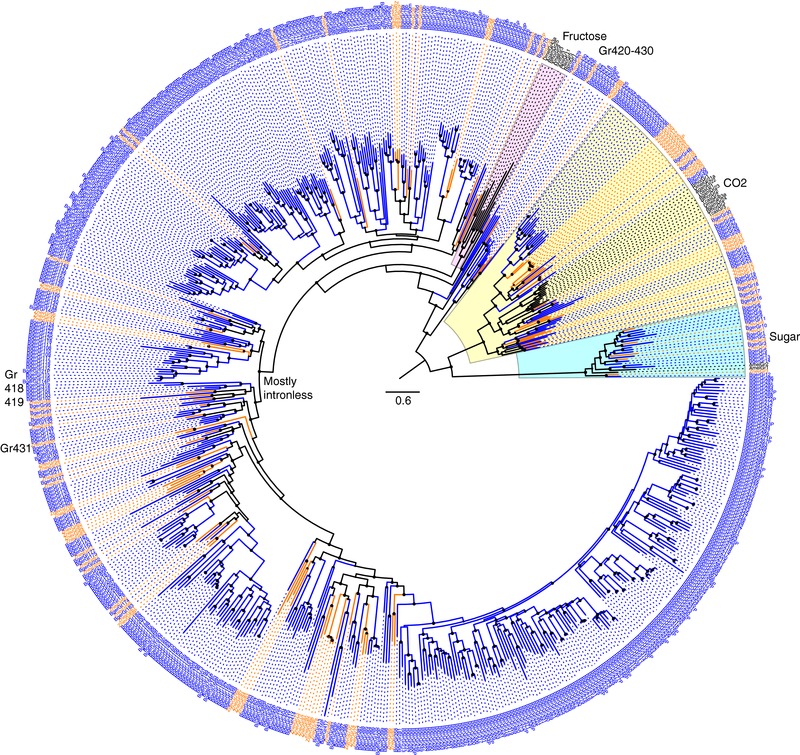
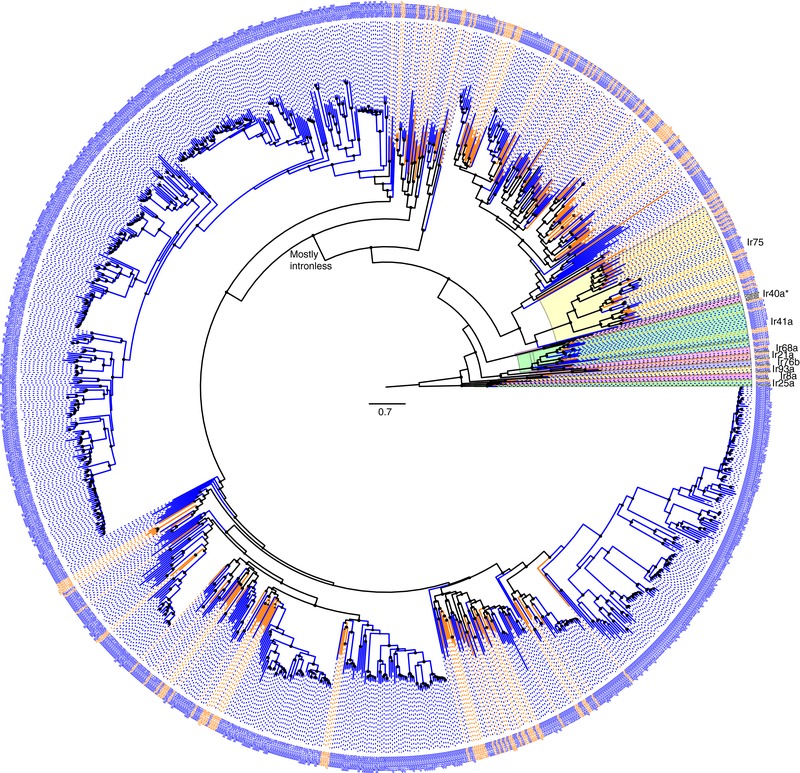
The acquisition of genome sequences from a wide range of insects and other arthropods has revealed a broad positive correlation between the complexity of their chemical ecology and the size of their chemosensory gene repertoire. The German cockroach Blattella germanica is an extreme omnivore and has the largest chemosensory gene repertoire known for an arthropod, exceeding even the highly polyphagous spider mite Tetranychus urticae. While the Odorant Receptor family is not particularly large, with 123 genes potentially encoding 134 receptors (105 intact), the Gustatory Receptor family is greatly expanded to 431 genes potentially encoding 545 receptors (483 intact), the largest known for insects and second only to the spider mite. The Ionotropic Receptor family of olfactory and gustatory receptors is vastly expanded to at least 897 genes (604 intact), the largest size known in arthropods, far surpassing the 150 known from the dampwood termite Zootermopsis nevadensis. Commensurately, the Odorant Binding Protein family is expanded to the largest known for insects at 109 genes (all intact). Comparison with the far more specialized, but phylogenetically related termite, within the Dictyoptera, reveals considerable gene losses from the termite, and massive species-specific gene expansions in the cockroach. The cockroach has lost function of 11%-41% of these three chemoreceptor gene families to pseudogenization, and most of these are young events, implying rapid turnover of genes along with these major expansions, presumably in response to changes in its chemical ecology.
对多种昆虫和其他节肢动物的基因组序列分析表明,它们化学生态的复杂性与其化学感应基因库的大小之间存在广泛的正相关关系。德国小蠊(Blattella germanica)是一种极端杂食性昆虫,拥有节肢动物中已知最大的化学感应基因库,甚至超过了高度多食性的叶螨(Tetranychus urticae)。虽然气味受体家族规模不算特别大,有123个基因可能编码134种受体(105个完整),但味觉受体家族大幅扩展至431个基因,可能编码545种受体(483个完整),是昆虫中已知最大的,仅次于叶螨。嗅觉和味觉的离子型受体家族大幅扩展至至少897个基因(604个完整),是节肢动物中已知规模最大的,远远超过了湿木白蚁(Zootermopsis nevadensis)的150个。相应地,气味结合蛋白家族扩展至昆虫中已知最大的109个基因(全部完整)。与直翅目内更为特化但在系统发育上相关的白蚁相比,发现白蚁有大量基因丢失,而蟑螂有大量物种特异性基因扩增。蟑螂这三个化学感受器基因家族中有11% - 41%因假基因化而丧失功能,且其中大多数是近期发生的事件,这意味着在这些主要基因扩增的同时,基因更替迅速,推测是对其化学生态变化的响应。