Condensed Matter and Interfaces, Debye Institute for Nanomaterials Science , Utrecht University , P.O. Box 80000 , 3508 TA Utrecht , The Netherlands.
Molecular Biophysics, Debye Institute for Nanomaterials Science , Utrecht University , 3508 TA Utrecht , The Netherlands.
J Am Chem Soc. 2018 May 2;140(17):5755-5763. doi: 10.1021/jacs.8b01412. Epub 2018 Mar 29.
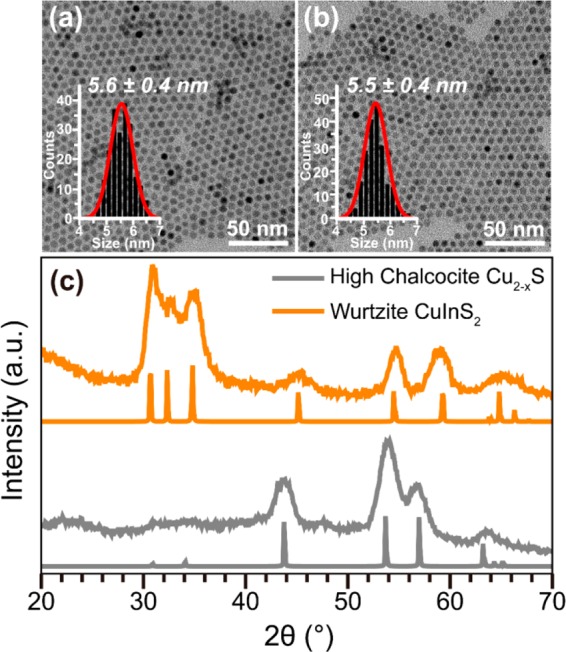
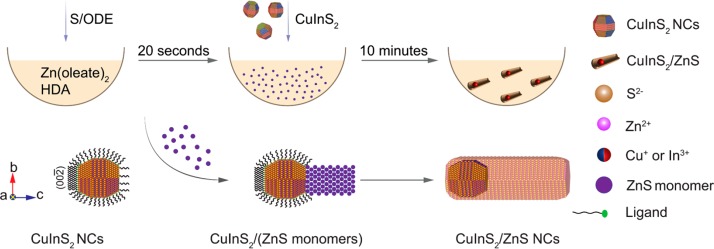
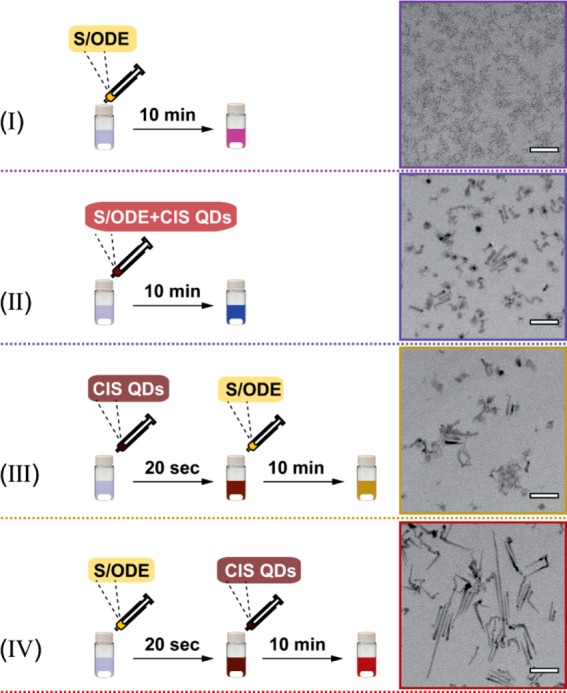
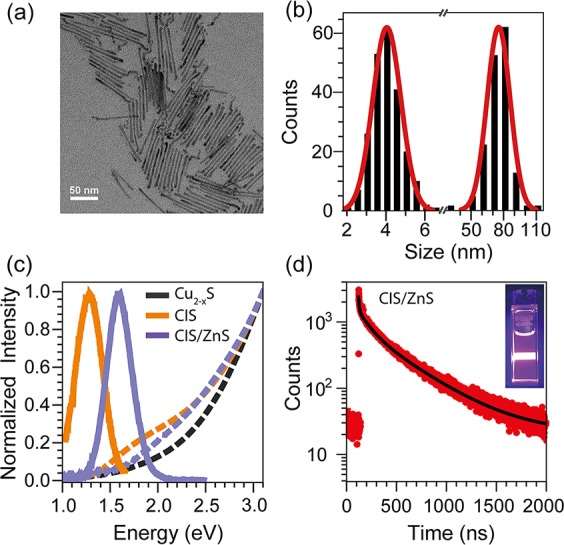
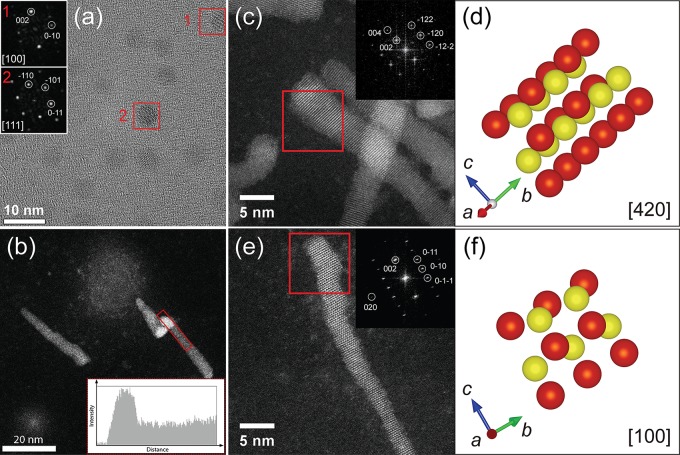
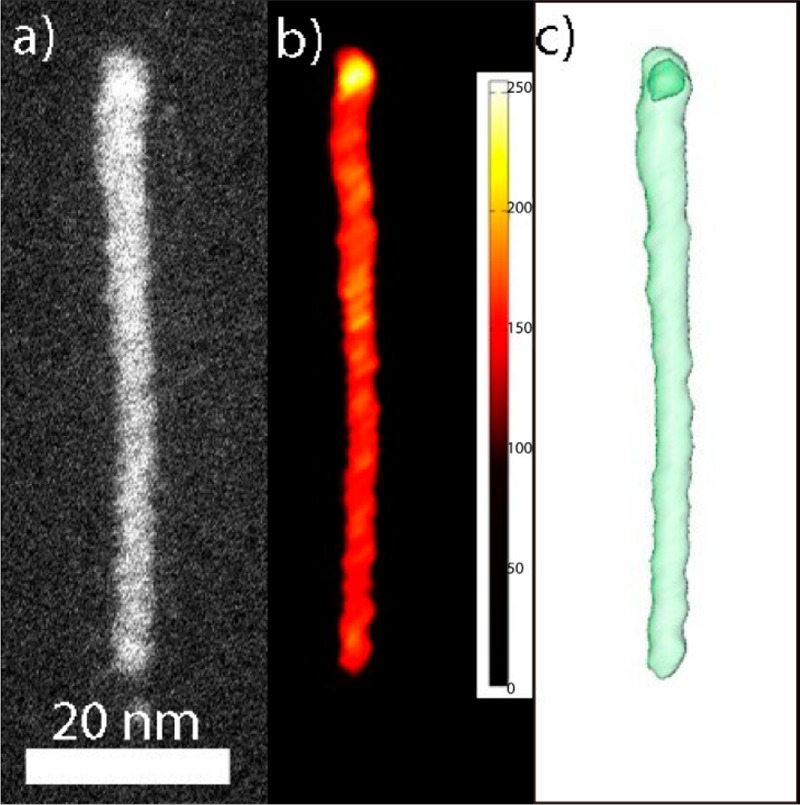
Synthesis protocols for anisotropic CuInX (X = S, Se, Te)-based heteronanocrystals (HNCs) are scarce due to the difficulty in balancing the reactivities of multiple precursors and the high solid-state diffusion rates of the cations involved in the CuInX lattice. In this work, we report a multistep seeded growth synthesis protocol that yields colloidal wurtzite CuInS/ZnS dot core/rod shell HNCs with photoluminescence in the NIR (∼800 nm). The wurtzite CuInS NCs used as seeds are obtained by topotactic partial Cu for In cation exchange in template CuS NCs. The seed NCs are injected in a hot solution of zinc oleate and hexadecylamine in octadecene, 20 s after the injection of sulfur in octadecene. This results in heteroepitaxial growth of wurtzite ZnS primarily on the Sulfur-terminated polar facet of the CuInS seed NCs, the other facets being overcoated only by a thin (∼1 monolayer) shell. The fast (∼21 nm/min) asymmetric axial growth of the nanorod proceeds by addition of [ZnS] monomer units, so that the polarity of the terminal (002) facet is preserved throughout the growth. The delayed injection of the CuInS seed NCs is crucial to allow the concentration of [ZnS] monomers to build up, thereby maximizing the anisotropic heteroepitaxial growth rates while minimizing the rates of competing processes (etching, cation exchange, alloying). Nevertheless, a mild etching still occurred, likely prior to the onset of heteroepitaxial overgrowth, shrinking the core size from 5.5 to ∼4 nm. The insights provided by this work open up new possibilities in designing multifunctional Cu-chalcogenide based colloidal heteronanocrystals.
由于难以平衡多种前体的反应性以及涉及 CuInX 晶格的阳离子的固态扩散率高,基于各向异性的 CuInX(X = S、Se、Te)的杂化纳米晶体(HNC)的合成方案很少。在这项工作中,我们报告了一种多步种晶生长合成方案,该方案可生成具有光致发光性能的胶体纤锌矿 CuInS/ZnS 点核/棒壳 HNC,其发光位于近红外区(∼800nm)。用作种子的纤锌矿 CuInS NC 是通过在模板 CuS NC 中进行拓扑部分 Cu 对 In 阳离子交换得到的。种子 NC 在注入十八烯中的硫 20 秒后,注入油酸锌和十六胺的热溶液中。这导致纤锌矿 ZnS 主要在 CuInS 种子 NC 的硫端极性面上进行异质外延生长,其他面仅被薄(∼1 单层)壳覆盖。纳米棒的快速(∼21nm/min)不对称轴向生长是通过添加 [ZnS]单体单元进行的,因此终端(002)面的极性在整个生长过程中得以保留。延迟注入 CuInS 种子 NC 至关重要,可使 [ZnS]单体的浓度得以建立,从而最大化各向异性异质外延生长速率,同时最小化竞争过程(蚀刻、阳离子交换、合金化)的速率。尽管如此,仍发生了温和的蚀刻,可能在异质外延生长之前发生,使核尺寸从 5.5nm 缩小到约 4nm。这项工作提供的见解为设计多功能基于 Cu-硫属化物的胶体杂化纳米晶体开辟了新的可能性。