State Key Laboratory of Molecular Oncology, National Cancer Center/Cancer Hospital, Chinese Academy of Medical Sciences and Peking Union Medical College, Beijing, China.
Department of Experimental Research, State Key Laboratory of Oncology in South China, Collaborative Innovation Center for Cancer Medicine, Sun Yat-sen University Cancer Center, Guangzhou, China.
Cancer Sci. 2018 May;109(5):1710-1722. doi: 10.1111/cas.13584. Epub 2018 Apr 28.
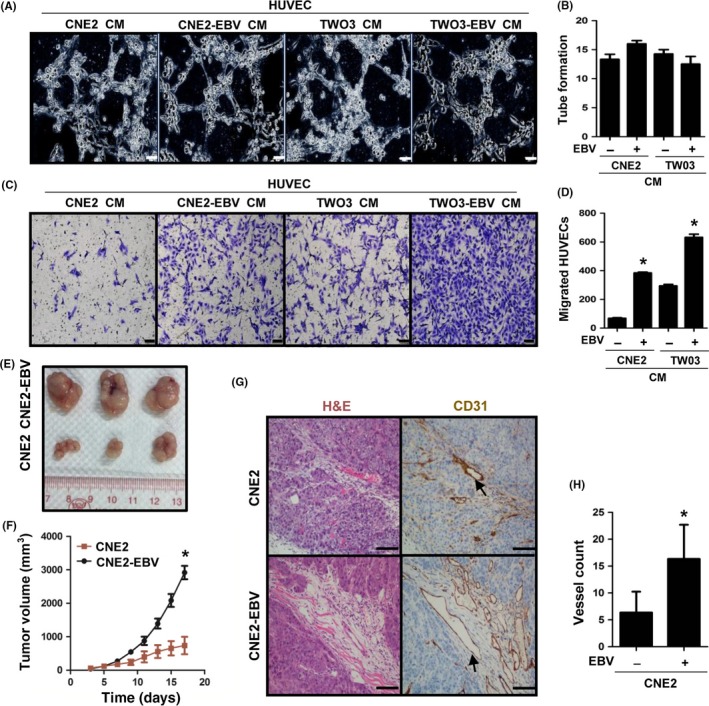
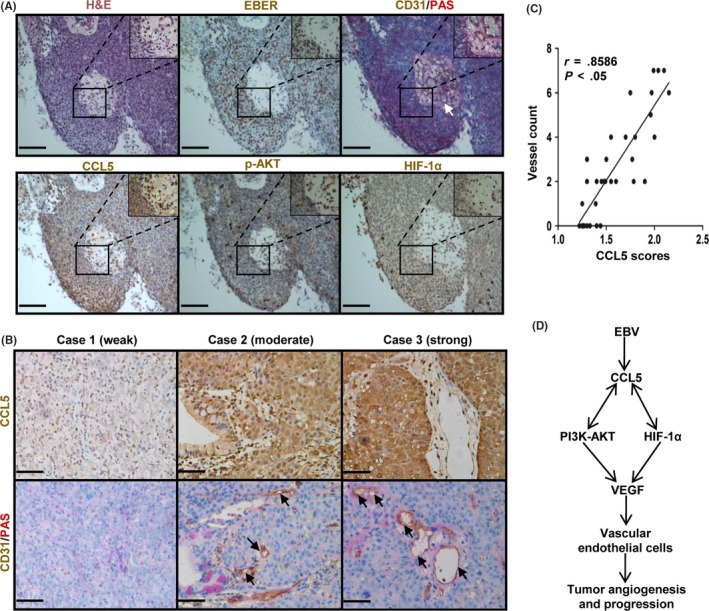
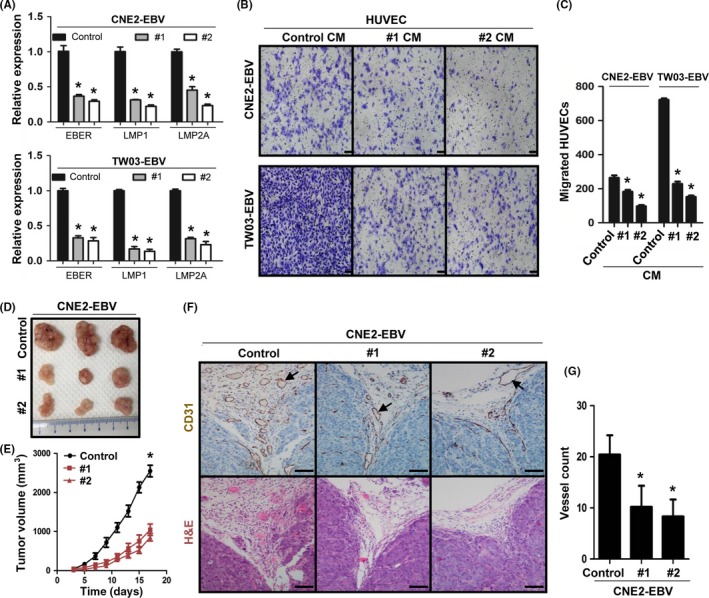
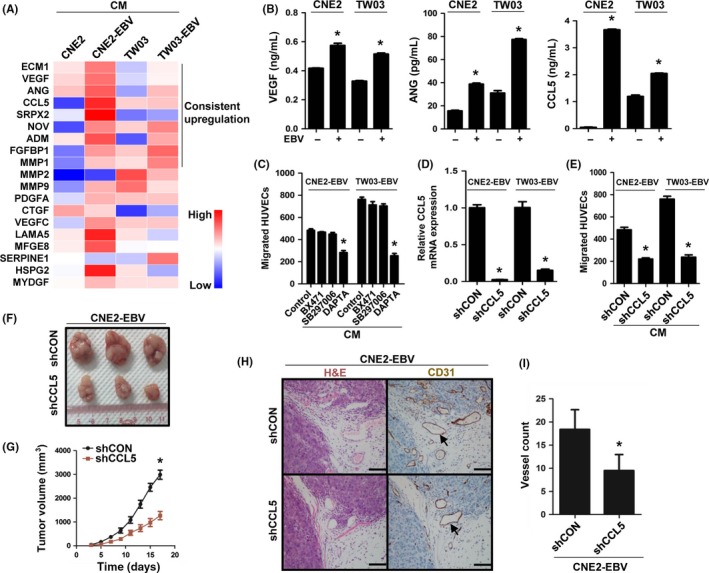
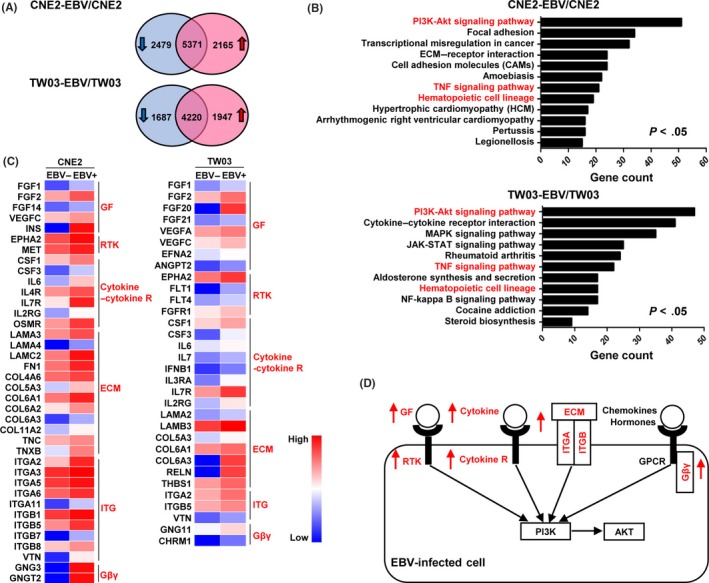
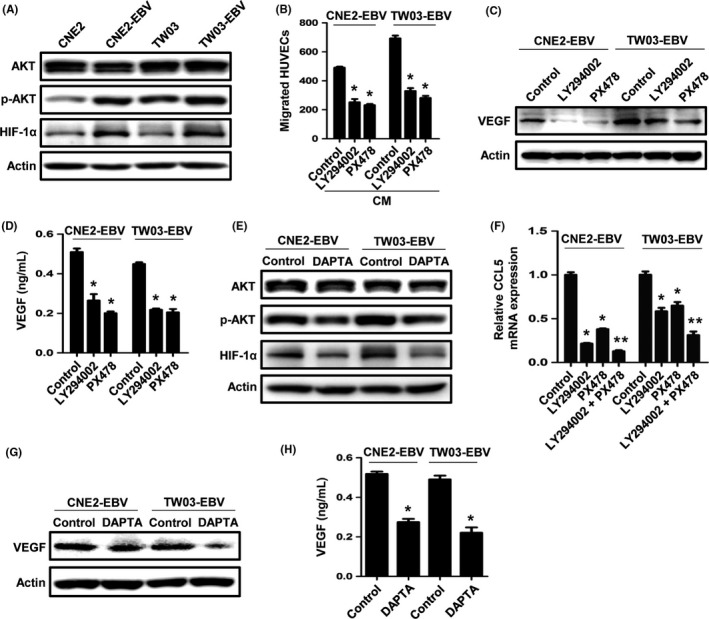
Nasopharyngeal carcinoma (NPC) is etiologically associated with Epstein-Barr virus (EBV) infection and is known to be highly vascularized. Previous studies have suggested that EBV oncoproteins contribute to NPC angiogenesis. However, the regulatory network of EBV in angiogenesis still remains elusive. Herein, we reveal a novel mechanism of EBV-induced angiogenesis in NPC. First, we showed that EBV-infected NPC cell lines generated larger tumors with more microvessels in mouse xenograft models. Subsequent proteomic analysis revealed that EBV infection increased the expression of a series of angiogenic factors, including chemokine (C-C motif) ligand 5 (CCL5). We then proved that CCL5 was a target of EBV in inducing tumor angiogenesis and growth. Further investigation through transcriptome analysis indicated that the pro-angiogenic function of CCL5 might be mediated by the PI3K/AKT pathway. Furthermore, we confirmed that activation of the PI3K/AKT and hypoxia-inducible factor-1α pathways was essential for CCL5-promoted angiogenesis. Finally, the immunohistochemical analysis of human NPC specimens also showed that CCL5 was correlated with angiogenesis. Taken together, our study identifies CCL5 as a key EBV-regulated molecular driver that promotes NPC angiogenesis, suggesting it as a potential therapeutic target.
鼻咽癌(NPC)与 Epstein-Barr 病毒(EBV)感染有关,其血管生成丰富。先前的研究表明,EBV 癌蛋白有助于 NPC 血管生成。然而,EBV 在血管生成中的调控网络仍然难以捉摸。在此,我们揭示了 EBV 诱导 NPC 血管生成的新机制。首先,我们发现 EBV 感染的 NPC 细胞系在小鼠异种移植模型中生成了更大的肿瘤,其中含有更多的微血管。随后的蛋白质组学分析显示,EBV 感染增加了一系列血管生成因子的表达,包括趋化因子(C-C 基序)配体 5(CCL5)。然后,我们证明 CCL5 是 EBV 诱导肿瘤血管生成和生长的靶点。通过转录组分析的进一步研究表明,CCL5 的促血管生成功能可能是通过 PI3K/AKT 通路介导的。此外,我们还证实,PI3K/AKT 和缺氧诱导因子-1α 通路的激活对于 CCL5 促进的血管生成是必不可少的。最后,对人 NPC 标本的免疫组织化学分析也表明 CCL5 与血管生成相关。总之,我们的研究确定 CCL5 是促进 NPC 血管生成的关键 EBV 调节分子驱动因素,表明它可能是一个潜在的治疗靶点。