Key Laboratory of Molecular Biophysics of MOE, College of Life Science and Technology, Huazhong University of Science and Technology, Wuhan, China.
Ministry of Education, Directorate of Education, Basra, Iraq.
Microbiologyopen. 2019 Jan;8(1):e00619. doi: 10.1002/mbo3.619. Epub 2018 Mar 25.
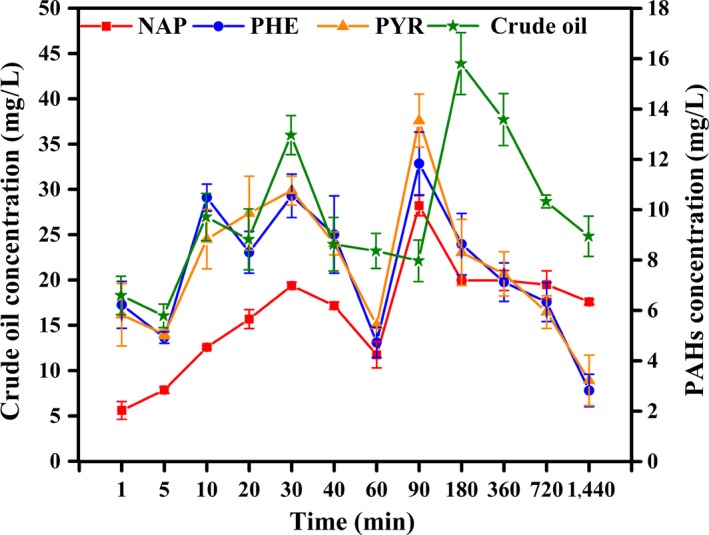
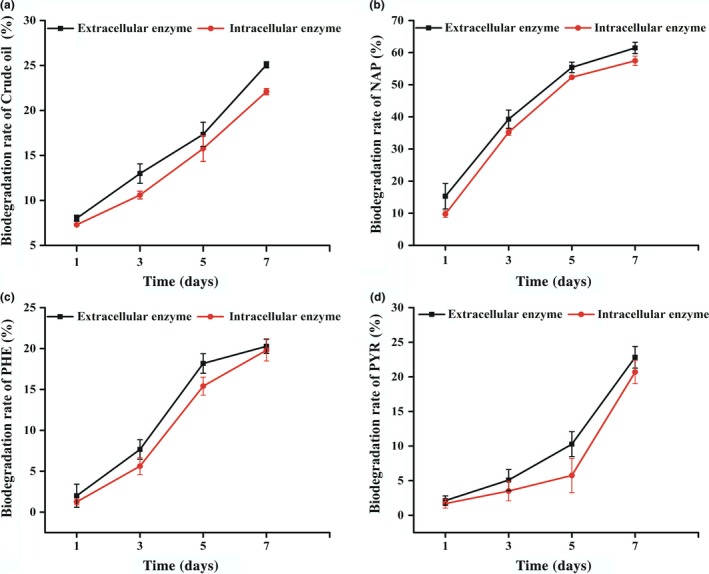
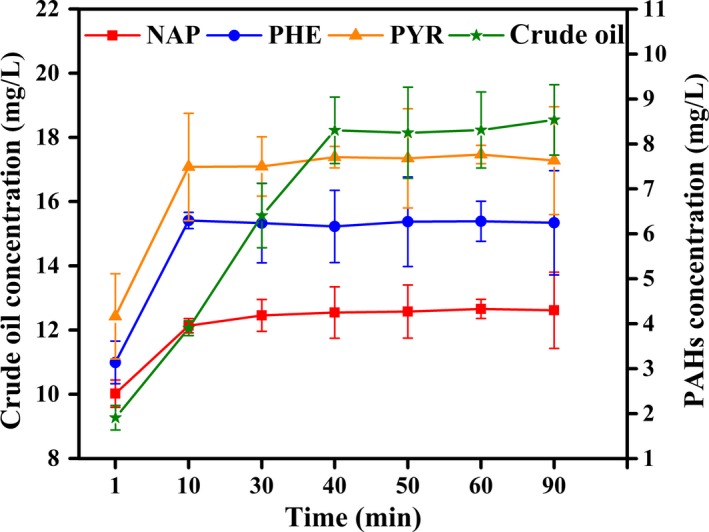
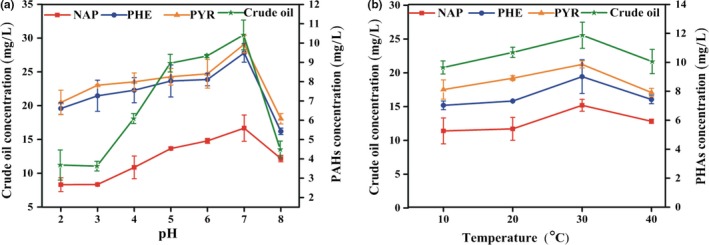
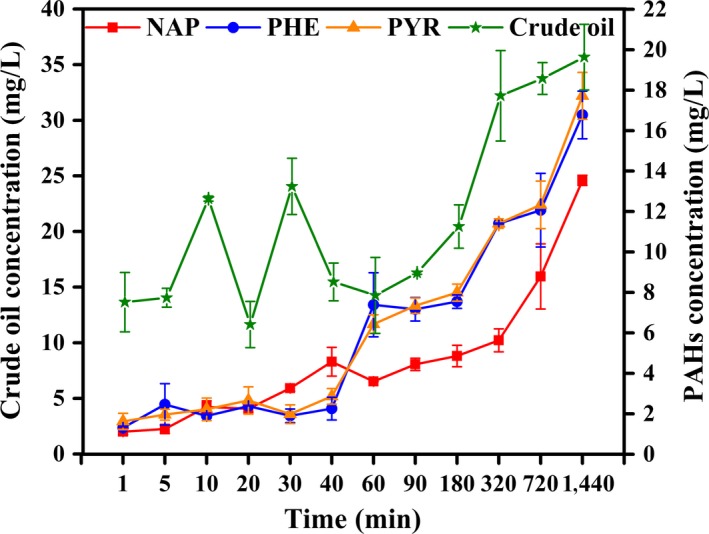
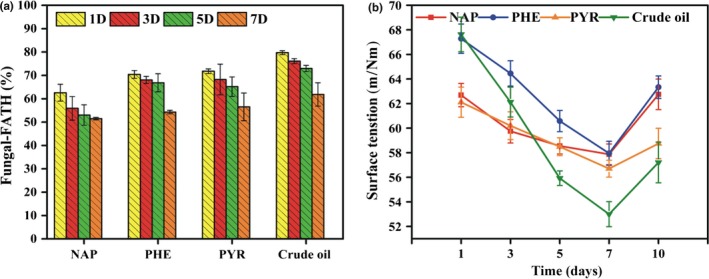
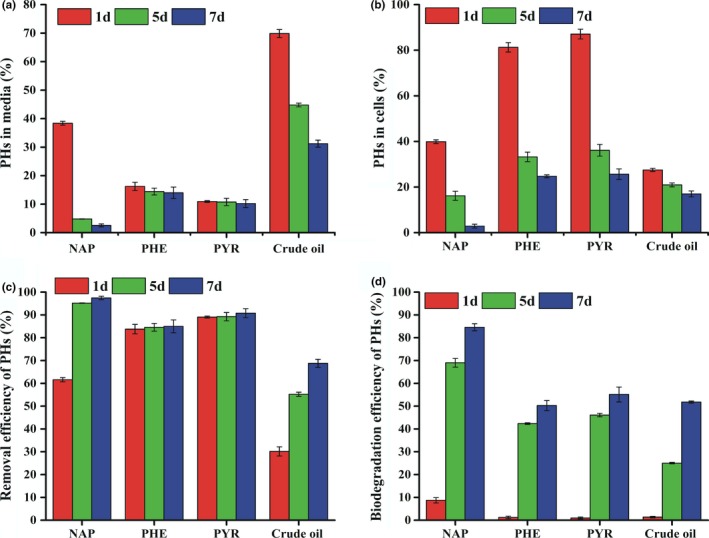
Petroleum pollution inevitably occurs at any stage of oil production and exerts a negative impact on the environment. Some microorganisms can degrade petroleum hydrocarbons (PHs). Polluted sludge of Rumaila oil field was use to isolate the highly efficient hydrocarbon-degrading fungal strain. Aspergillus sp. RFC-1 was obtained and its degradation ability for petroleum hydrocarbons was evaluated through surface adsorption, cell uptake, hydrophobicity, surface tension, biosurfactant production, and emulsification activity. In addition, the degradation mechanism was investigated. The results indicated the strain RFC-1 showed high removal activity for PHs, including biodegradation, adsorption, and emulsifiability. On the day 7 of incubation, the removal efficiencies of crude oil, naphthalene (NAP), phenanthrene (PHE), and pyrene (PYR) reached 60.3%, 97.4%, 84.9%, and 90.7%, respectively. Biodegradation efficiencies of crude oil, NAP, PHE, and PYR were 51.8%, 84.6%, 50.3%, and 55.1%, respectively. Surface adsorption and cell absorption by live mycelial pellets followed a decreasing order: PYR ≥ PHE > NAP > crude oil. Adsorption by heat-killed mycelial pellets increased within 40 and 10 min for crude oil and PAHs, respectively, and remained constant thereafter. Effects of cell surface hydrophobicity, surface tension, and emulsification index were discussed. Intra- and extracellular enzymes of strain RFC-1 played important roles in PHs degradation. The strain RFC-1 is a prospective strain for removing PHs from aqueous environments.
石油污染不可避免地发生在石油生产的任何阶段,并对环境产生负面影响。一些微生物可以降解石油烃(PHs)。利用鲁迈拉油田污染的污泥分离出高效烃降解真菌菌株。获得了曲霉 RFC-1,并通过表面吸附、细胞摄取、疏水性、表面张力、生物表面活性剂产生和乳化活性评估了其对石油烃的降解能力。此外,还研究了降解机制。结果表明,该菌株 RFC-1 对 PHs 具有高去除活性,包括生物降解、吸附和乳化性。在培养第 7 天,原油、萘(NAP)、菲(PHE)和芘(PYR)的去除效率分别达到 60.3%、97.4%、84.9%和 90.7%。原油、NAP、PHE 和 PYR 的生物降解效率分别为 51.8%、84.6%、50.3%和 55.1%。活菌丝球的表面吸附和细胞吸收顺序为:PYR≥PHE>NAP>原油。热杀菌丝球的吸附在 40 和 10 分钟内分别增加了原油和 PAHs 的吸附,之后保持不变。讨论了细胞表面疏水性、表面张力和乳化指数的影响。菌株 RFC-1 的胞内和胞外酶在 PHs 降解中发挥了重要作用。菌株 RFC-1 是一种从水相环境中去除 PHs 的有前途的菌株。