Labhishetty Vivek, Bobier William R, Lakshminarayanan Vasudevan
School of Optometry and Vision Science, University of Waterloo, ON, Canada.
School of Optometry and Vision Science, University of Waterloo, ON, Canada.
J Optom. 2019 Jan-Mar;12(1):22-29. doi: 10.1016/j.optom.2018.02.001. Epub 2018 Mar 24.
Accommodation is often recorded at a low sampling rate using devices such as autorefractors that are designed to measure the static refractive error. It is therefore important to determine if that resolution is sufficient to accurately measure the dynamic properties of accommodation. The current study provides both theoretical and empirical evidence on the ideal sampling rate necessary to measure a dynamic response.
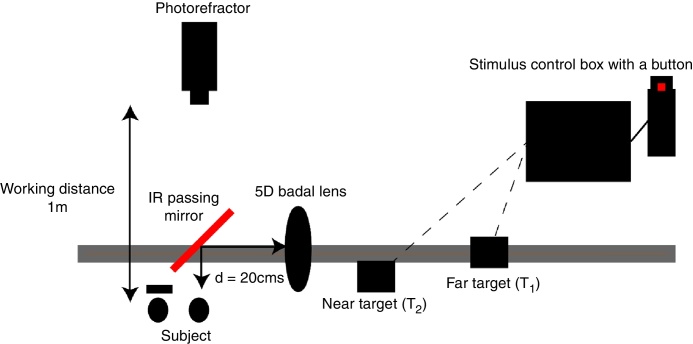
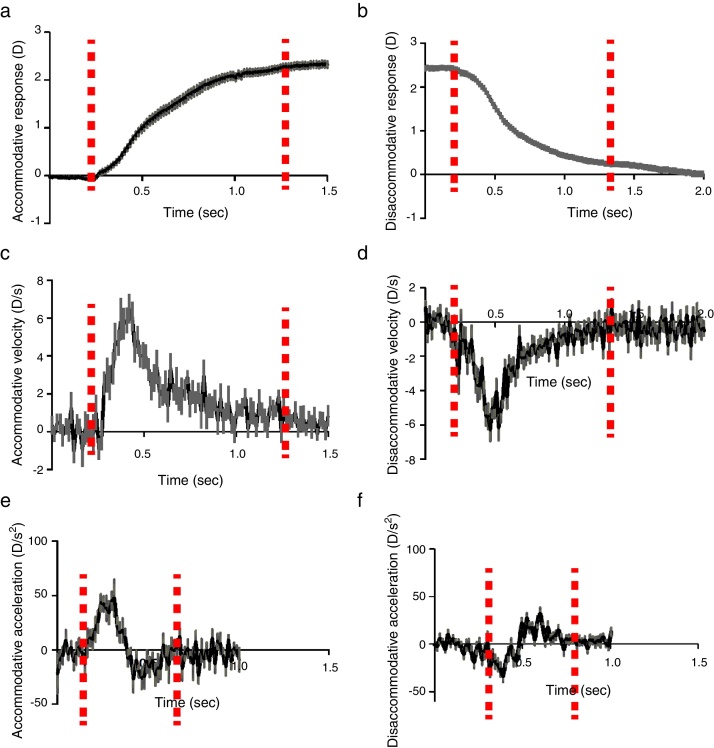
Accommodative and disaccommodative step stimuli ranging from 1-3D (1D steps) were presented using a Badal optical system. Responses from 12 children (8-13 years) and 6 adults (20-35 years) were recorded using a dynamic photorefractor (DPR). Fast Fourier transformation was applied to the unsmoothed dynamic responses including position, velocity and acceleration. Also, velocity and acceleration main sequence (MS) characteristics were compared between three photorefractor conditions on 3 subjects.
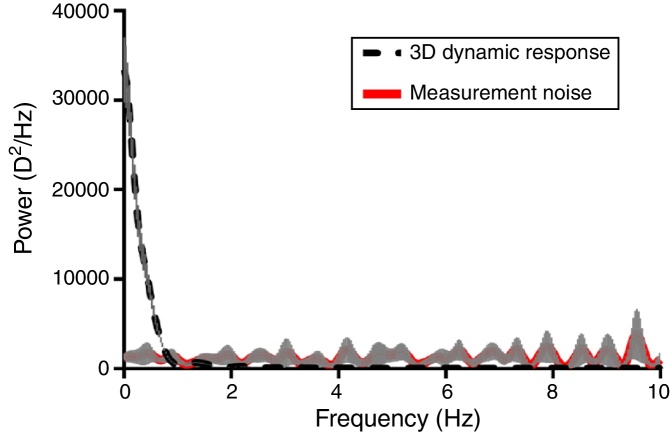
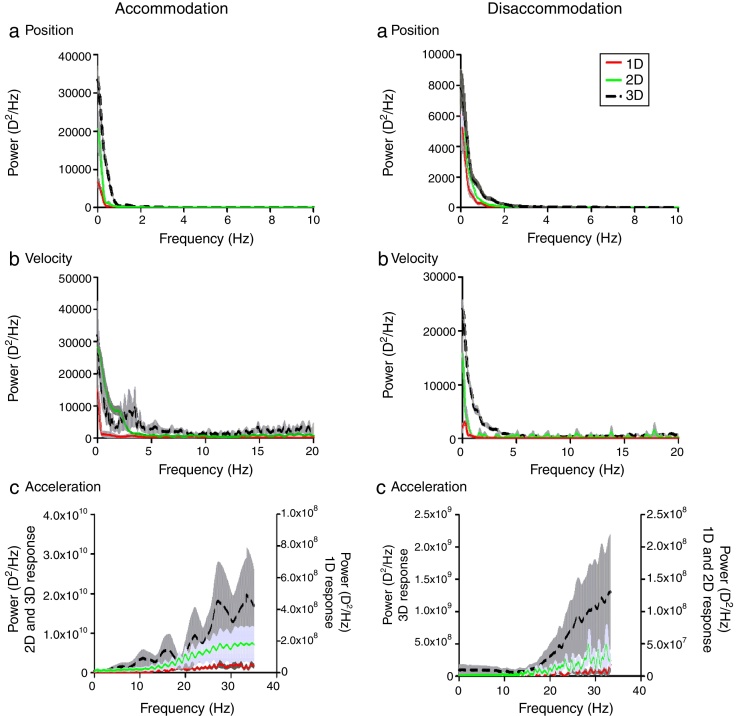
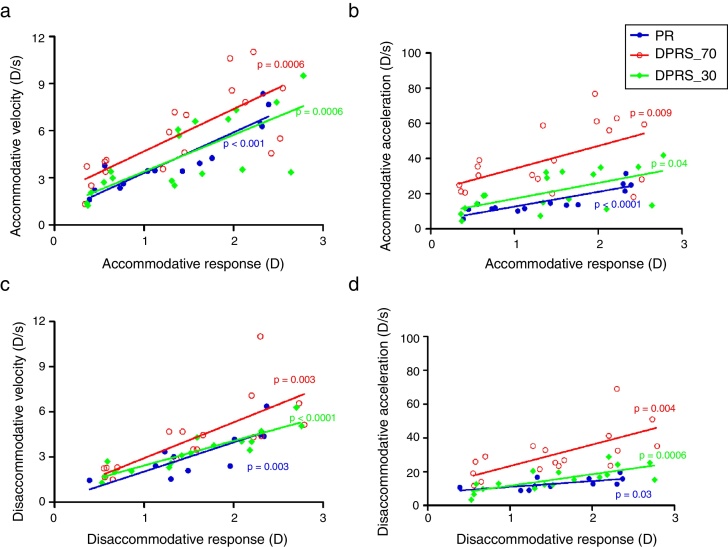
The Nyquist sampling limit necessary to accurately estimate position, velocity and acceleration was at least 5, 10 and 70Hz, respectively. Peak velocity and acceleration were significantly underestimated at a lower rate (p<0.5). However, the slope of MS remained invariant with sampling rate (p>0.5).
Contrary to the previous findings, a dynamic accommodative response exhibited frequencies larger than 10Hz. Stimulus direction and amplitude had no influence on the frequencies present in the dynamic response. Peak velocity and acceleration can be significantly underestimated when sampled at a lower rate. Taken as a whole, low sampling rate instruments can accurately estimate static accommodation, however, caution needs to be exercised when using them for dynamic accommodation.
使用旨在测量静态屈光不正的设备(如自动验光仪)时,调节通常以较低的采样率记录。因此,确定该分辨率是否足以准确测量调节的动态特性非常重要。本研究提供了关于测量动态响应所需理想采样率的理论和实证证据。
使用巴德尔光学系统呈现1-3D(1D步长)的调节和放松步长刺激。使用动态验光仪(DPR)记录12名儿童(8-13岁)和6名成年人(20-35岁)的反应。对包括位置、速度和加速度在内的未平滑动态反应应用快速傅里叶变换。此外,在3名受试者的三种验光仪条件下比较了速度和加速度主序列(MS)特征。
准确估计位置、速度和加速度所需的奈奎斯特采样极限分别至少为5、10和70Hz。在较低采样率下,峰值速度和加速度被显著低估(p<0.5)。然而,MS的斜率随采样率保持不变(p>0.5)。
与先前的研究结果相反,动态调节反应表现出大于10Hz的频率。刺激方向和幅度对动态反应中的频率没有影响。以较低采样率采样时,峰值速度和加速度可能会被显著低估。总体而言,低采样率仪器可以准确估计静态调节,然而,在将它们用于动态调节时需要谨慎。