Pediatric Intensive Care Unit, Anhui Provincial Children's Hospital, Hefei, 230029, P.R. China.
Joy Orient Translational Medicine Research Center Co., Ltd, Beijing, 100875, P.R. China.
Sci Rep. 2018 Mar 26;8(1):5214. doi: 10.1038/s41598-018-23503-2.
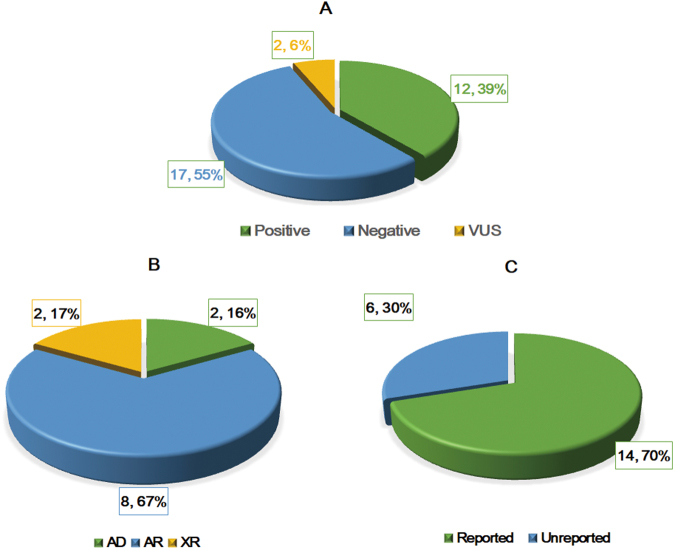
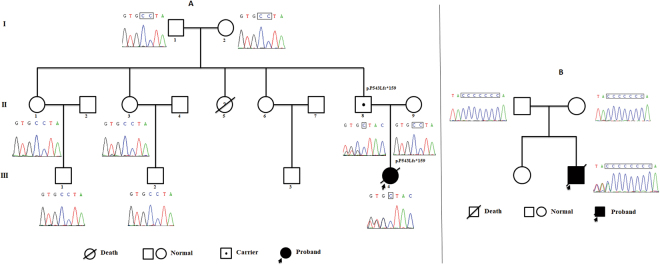
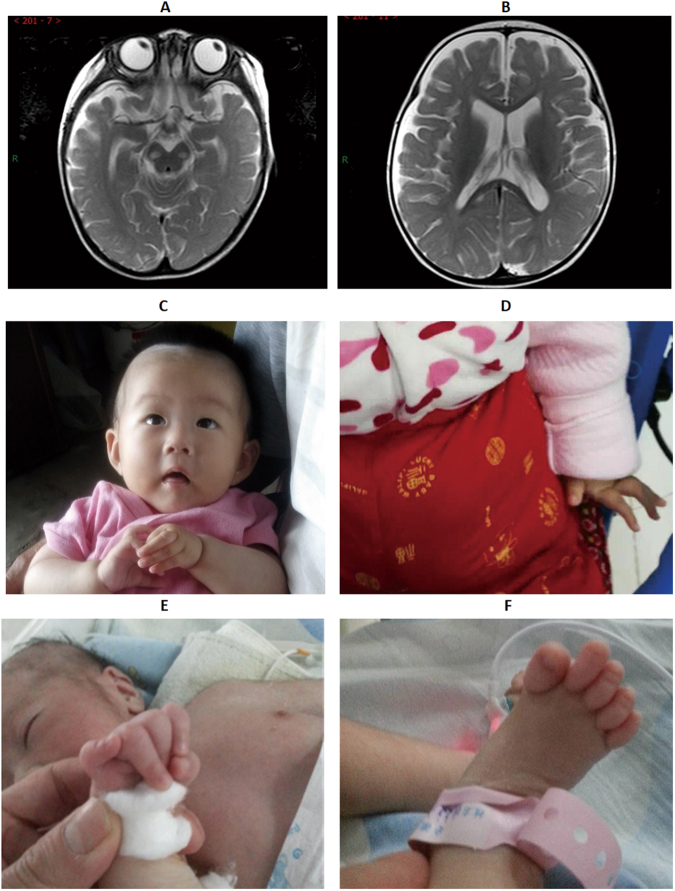
Neurodevelopmental delay accompanied unexplained dyspnea is a highly lethal disease in clinic. This study is to investigate the performance characteristics of trio whole exome sequencing (Trio-WES) in a pediatric setting by presenting our patient cohort and displaying the diagnostic yield. A total of 31 pediatric patients showing neurodevelopmental delay accompanied unexplained dyspnea were admitted to our hospital and referred for molecular genetic testing using Trio-WES. Eight genes namely MMACHC, G6PC, G6PT, ETFDH, OTC, NDUFAF5, SLC22A5, and MAGEL2 were suspected to be responsible for the onset of the clinical symptoms and 6 variants were novel. Standard interpretation according to ACMG guideline showed that the variants were pathogenic. Finally, diagnosis of methylmalonic aciduria and homocystinuria, glycogen storage disease, ornithine transcarbamylase deficiency, glutaric acidemia II, mitochondrial complex 1 deficiency, carnitine deficiency, and Schaaf-Yang syndrome was made in 12 out of the 31 patients. Trio-WES is an effective means for molecular diagnosis of infantile neurodevelopmental delay accompanied unexplained dyspnea. As for molecular etiology identification, when routine potential monogenetic inheritance patterns including de novo, autosomal recessive, autosomal dominant, and X-linked recessive inheritance analysis is negative, physicians should take into account imprinted genes.
神经发育迟缓伴不明原因呼吸困难是临床上一种高度致命的疾病。本研究通过展示我们的患者队列并展示诊断率,来探讨 trio 全外显子组测序(Trio-WES)在儿科环境中的表现特征。共有 31 名表现为神经发育迟缓伴不明原因呼吸困难的儿科患者入院,并接受 Trio-WES 进行分子遗传学检测。有 8 个基因(即 MMACHC、G6PC、G6PT、ETFDH、OTC、NDUFAF5、SLC22A5 和 MAGEL2)被怀疑是导致临床症状发生的原因,其中 6 个变异是新的。根据 ACMG 指南进行的标准解释表明,这些变异是致病性的。最后,在 31 名患者中的 12 名患者中诊断出甲基丙二酸血症和同型胱氨酸尿症、糖原贮积病、鸟氨酸转氨甲酰酶缺乏症、戊二酸血症 II 型、线粒体复合物 1 缺乏症、肉碱缺乏症和 Schaaf-Yang 综合征。Trio-WES 是一种有效的分子诊断方法,可用于诊断婴儿神经发育迟缓伴不明原因呼吸困难。对于分子病因学的识别,当常规的潜在单基因遗传模式(包括新生、常染色体隐性、常染色体显性和 X 连锁隐性遗传分析)为阴性时,医生应考虑印记基因。