Johns Hopkins International Injury Research Unit, Department of International Health, Johns Hopkins Bloomberg School of Public Health, Baltimore, Maryland, United States of America.
Bureau for Global Health, Office of Health, Infectious Diseases & Nutrition, United States Agency for International Development, Washington, DC, United States of America.
PLoS One. 2018 Mar 27;13(3):e0194692. doi: 10.1371/journal.pone.0194692. eCollection 2018.
Heavy burden of child injuries and lack of policy response in Ethiopia call for an improved understanding of the situation and development of action plans from multiple governmental agencies and stakeholders.
A consortium of international and Ethiopian researchers and stakeholders used extensive literature review and mixed analytical methods to estimate and project the burden of fatal and non-fatal child unintentional injuries in Ethiopia from 2015 to 2030. Estimates were derived for children aged 0-14 years. Data sources include a longitudinal study conducted by the Central Statistics Agency of Ethiopia and the World Bank as well as model-based estimates from World Health Organization 2017 and Global Burden of Disease 2016 project.
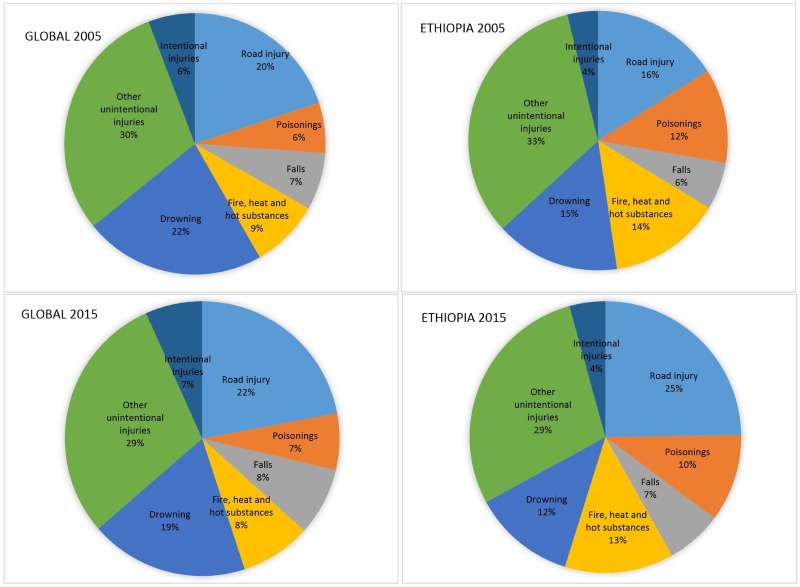
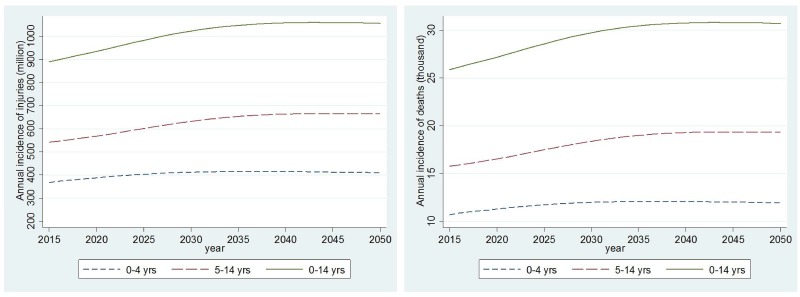
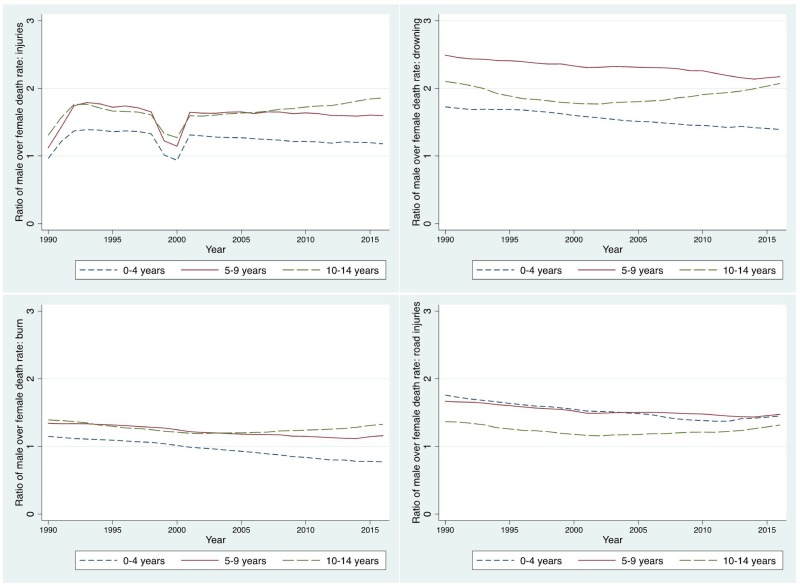
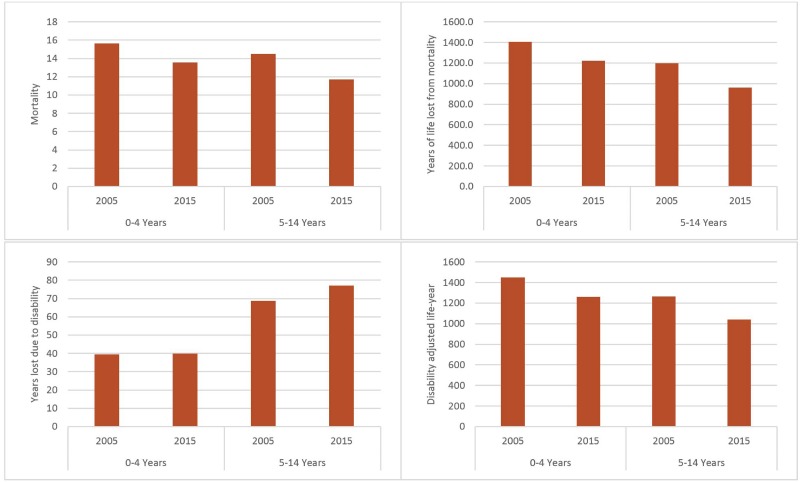
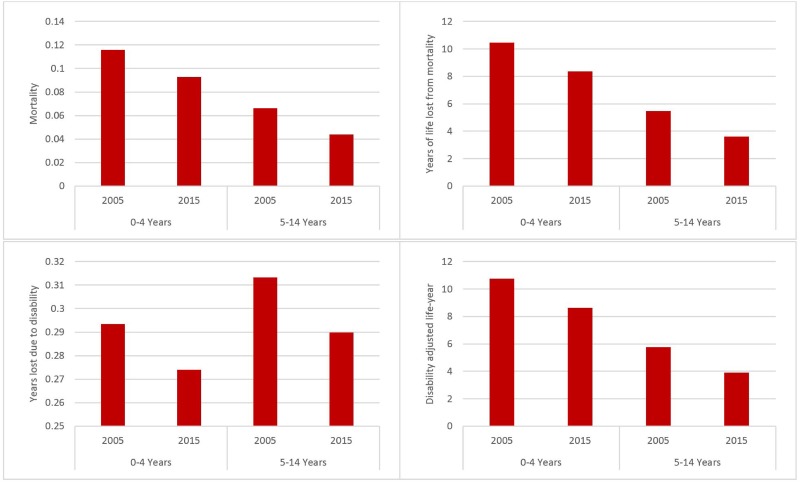
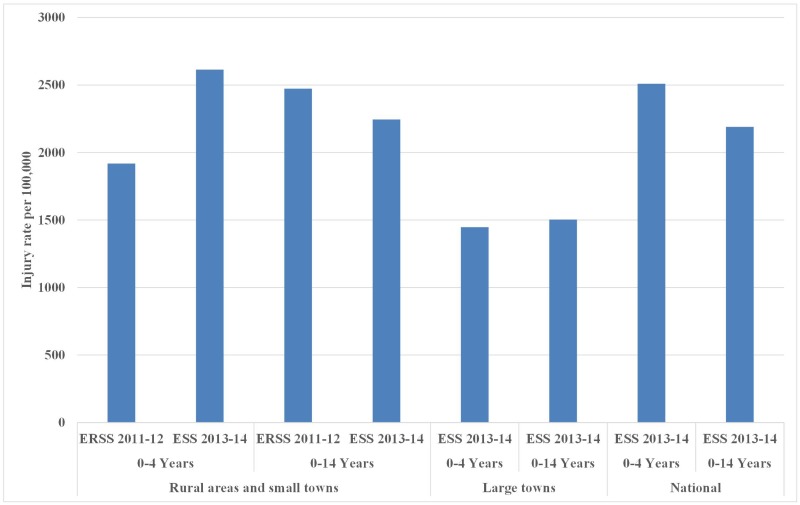
Injuries caused about 25 thousand deaths among 0-14-year olds in Ethiopia in 2015. The leading cause of fatal child unintentional injuries in Ethiopia was road-traffic injuries, followed by fire, heat and hot substances and drowning. The death rate due to injuries among 0-14 years olds was about 50 percent higher in males than females. Rural children were exposed to a greater risk of injury than their urban peers. The longitudinal survey suggests that the incidence rate of child injuries increased during the period 2011-2014. The annual mortality caused by injuries is projected to increase from 10,697 in 2015 to 11,279 in 2020 and 11,989 in 2030 among children under 5 years, an increase of 12 percentage points in 15 years. The number of deaths among 0-14-year olds will be 26,463, 27,807, and 30,364 respectively in 2015, 2020, and 2030.
As the first multisectoral collaboration on child injuries in Ethiopia, this study identified gaps in understanding of the burden of child injuries in Ethiopia. In consultation with Ethiopian government and other stakeholders, we propose starting an injury surveillance system at health clinics and hospitals and building an intervention package based on existing platforms.
儿童受伤负担沉重,埃塞俄比亚缺乏政策应对,需要增进对这一情况的了解,并由多个政府机构和利益攸关方制定行动计划。
一个由国际和埃塞俄比亚研究人员和利益攸关方组成的联盟利用广泛的文献回顾和混合分析方法,估计并预测了 2015 年至 2030 年期间埃塞俄比亚 0-14 岁儿童致命和非致命意外伤害的负担。估计数据适用于 0-14 岁儿童。数据来源包括埃塞俄比亚中央统计局和世界银行开展的一项纵向研究以及世界卫生组织 2017 年和全球疾病负担 2016 年项目的基于模型的估计。
2015 年,埃塞俄比亚 0-14 岁儿童因伤死亡约 2.5 万人。埃塞俄比亚儿童非故意意外伤害的主要原因是道路交通伤害,其次是火灾、高温和热物质以及溺水。0-14 岁儿童的受伤死亡率男性比女性高约 50%。农村儿童比城市同龄人更容易受伤。纵向调查显示,2011-2014 年期间,儿童受伤发生率有所增加。预计 2020 年和 2030 年,0-5 岁儿童因伤年死亡率将从 2015 年的 10697 人分别增加到 11279 人和 11989 人,15 年内增加 12 个百分点。2015 年、2020 年和 2030 年,0-14 岁儿童死亡人数将分别为 26463 人、27807 人和 30364 人。
作为埃塞俄比亚首次多部门合作开展的儿童伤害研究,本研究发现了埃塞俄比亚儿童伤害负担方面认识不足的问题。我们与埃塞俄比亚政府和其他利益攸关方协商后,建议在卫生诊所和医院启动伤害监测系统,并在现有平台的基础上制定一揽子干预措施。