Department of Pharmacy, Pharmaceutical Technology and Physical Chemistry, Faculty of Pharmacy, University of Barcelona, 08028, Barcelona, Spain.
Institute of Nanoscience and Nanotechnology (IN2UB), Faculty of Pharmacy, University of Barcelona, 08028, Barcelona, Spain.
J Nanobiotechnology. 2018 Mar 27;16(1):32. doi: 10.1186/s12951-018-0356-z.
Memantine, drug approved for moderate to severe Alzheimer's disease, has not shown to be fully effective. In order to solve this issue, polylactic-co-glycolic (PLGA) nanoparticles could be a suitable solution to increase drug's action on the target site as well as decrease adverse effects. For these reason, Memantine was loaded in biodegradable PLGA nanoparticles, produced by double emulsion method and surface-coated with polyethylene glycol. MEM-PEG-PLGA nanoparticles (NPs) were aimed to target the blood-brain barrier (BBB) upon oral administration for the treatment of Alzheimer's disease.
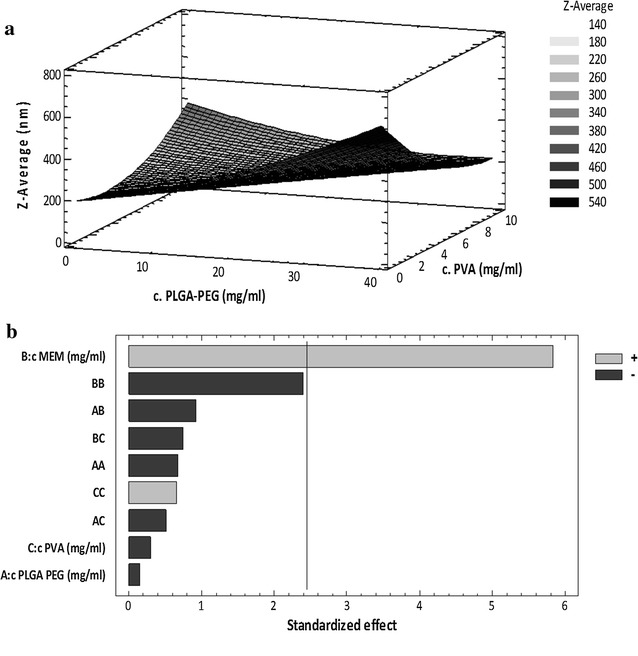
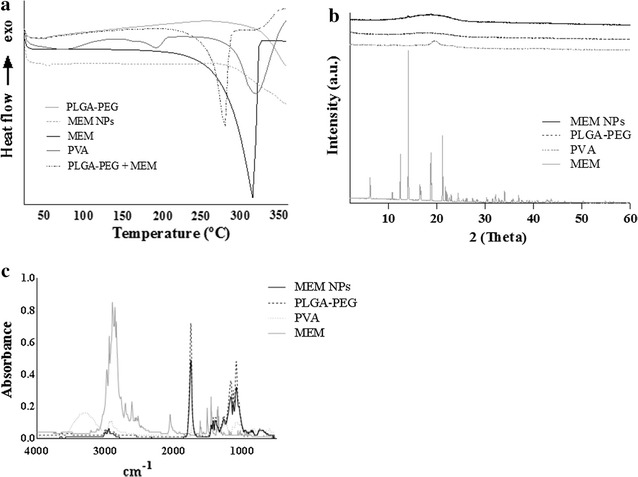
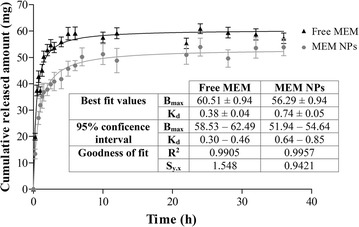
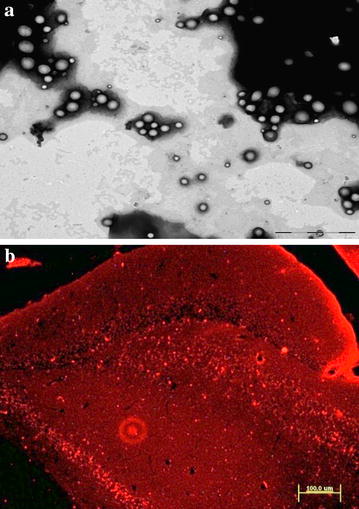
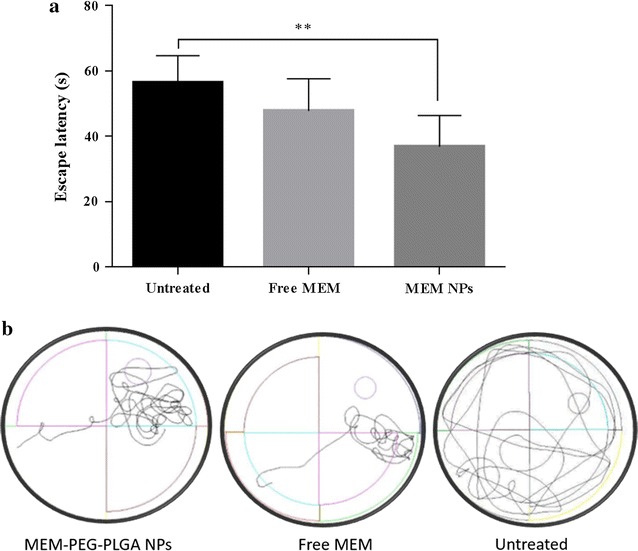
The production parameters were optimized by design of experiments. MEM-PEG-PLGA NPs showed a mean particle size below 200 nm (152.6 ± 0.5 nm), monomodal size distribution (polydispersity index, PI < 0.1) and negative surface charge (- 22.4 mV). Physicochemical characterization of NPs confirmed that the crystalline drug was dispersed inside the PLGA matrix. MEM-PEG-PLGA NPs were found to be non-cytotoxic on brain cell lines (bEnd.3 and astrocytes). Memantine followed a slower release profile from the NPs against the free drug solution, allowing to reduce drug administration frequency in vivo. Nanoparticles were able to cross BBB both in vitro and in vivo. Behavioral tests carried out on transgenic APPswe/PS1dE9 mice demonstrated to enhance the benefit of decreasing memory impairment when using MEM-PEG-PLGA NPs in comparison to the free drug solution. Histological studies confirmed that MEM-PEG-PLGA NPs reduced β-amyloid plaques and the associated inflammation characteristic of Alzheimer's disease.
Memantine NPs were suitable for Alzheimer's disease and more effective than the free drug.
美金刚是一种已被批准用于治疗中重度阿尔茨海默病的药物,但尚未显示出完全有效的效果。为了解决这个问题,聚乳酸-羟基乙酸共聚物(PLGA)纳米粒可以作为一种合适的解决方案,以增加药物在靶部位的作用,同时减少不良反应。因此,将美金刚载入可生物降解的 PLGA 纳米粒中,采用双乳液法制备,并进行聚乙二醇表面修饰。MEM-PEG-PLGA 纳米粒(NPs)旨在通过口服靶向血脑屏障(BBB),用于治疗阿尔茨海默病。
通过实验设计优化了生产参数。MEM-PEG-PLGA NPs 的平均粒径低于 200nm(152.6±0.5nm),呈单模态粒径分布(多分散指数,PI<0.1),带负电荷(-22.4mV)。NPs 的理化特性分析证实,结晶药物分散在 PLGA 基质中。MEM-PEG-PLGA NPs 对脑细胞系(bEnd.3 和星形胶质细胞)无细胞毒性。与游离药物溶液相比,美金刚从 NPs 中的释放速度较慢,这使得体内给药频率得以降低。纳米粒能够在体外和体内穿越血脑屏障。在 APPswe/PS1dE9 转基因小鼠上进行的行为学测试表明,与游离药物溶液相比,使用 MEM-PEG-PLGA NPs 可增强降低记忆损伤的效果。组织学研究证实,MEM-PEG-PLGA NPs 减少了β-淀粉样斑块和与阿尔茨海默病相关的炎症。
美金刚 NPs 适用于阿尔茨海默病,比游离药物更有效。