Department of Pharmacy, Pharmaceutical Technology and Physical Chemistry, Faculty of Pharmacy and Food Sciences, University of Barcelona, Spain; Institute of Nanoscience and Nanotechnology (IN2UB), Barcelona, Spain; Biomedical Research Networking Centre in Neurodegenerative Diseases (CIBERNED), Madrid, Spain; UCL Institute of Ophthalmology, University College of London, United Kingdom.
Biomedical Research Networking Centre in Neurodegenerative Diseases (CIBERNED), Madrid, Spain; Department of Pharmacology, Toxicology and Therapeutic Chemistry, Faculty of Pharmacy and Food Sciences, University of Barcelona, Spain; Unit of Biochemistry and Pharmacology, Faculty of Medicine and Health Sciences, University of Rovira i Virgili, Reus, Tarragona, Spain.
J Control Release. 2019 May 10;301:62-75. doi: 10.1016/j.jconrel.2019.03.010. Epub 2019 Mar 13.
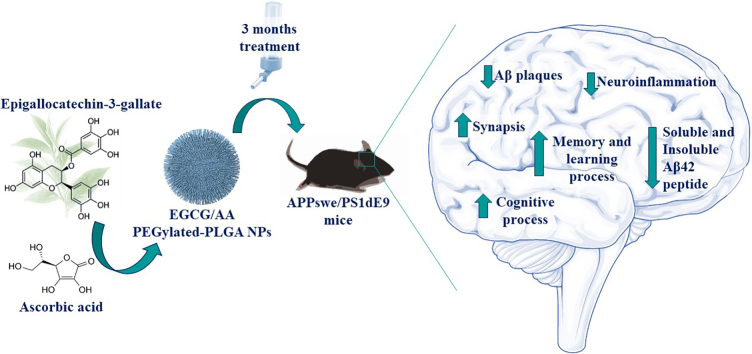
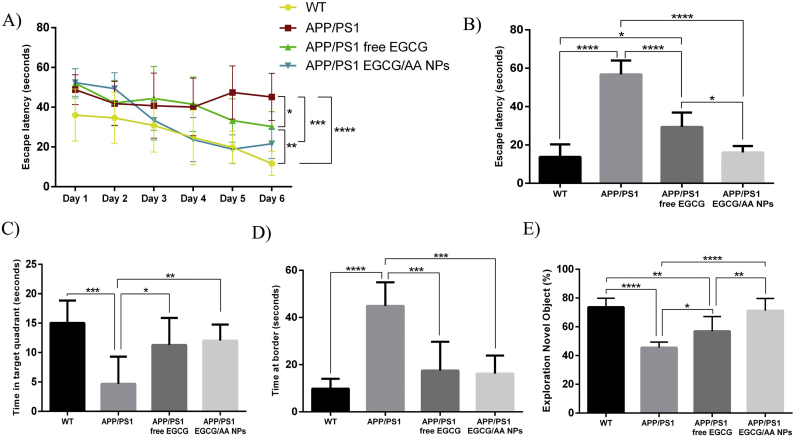
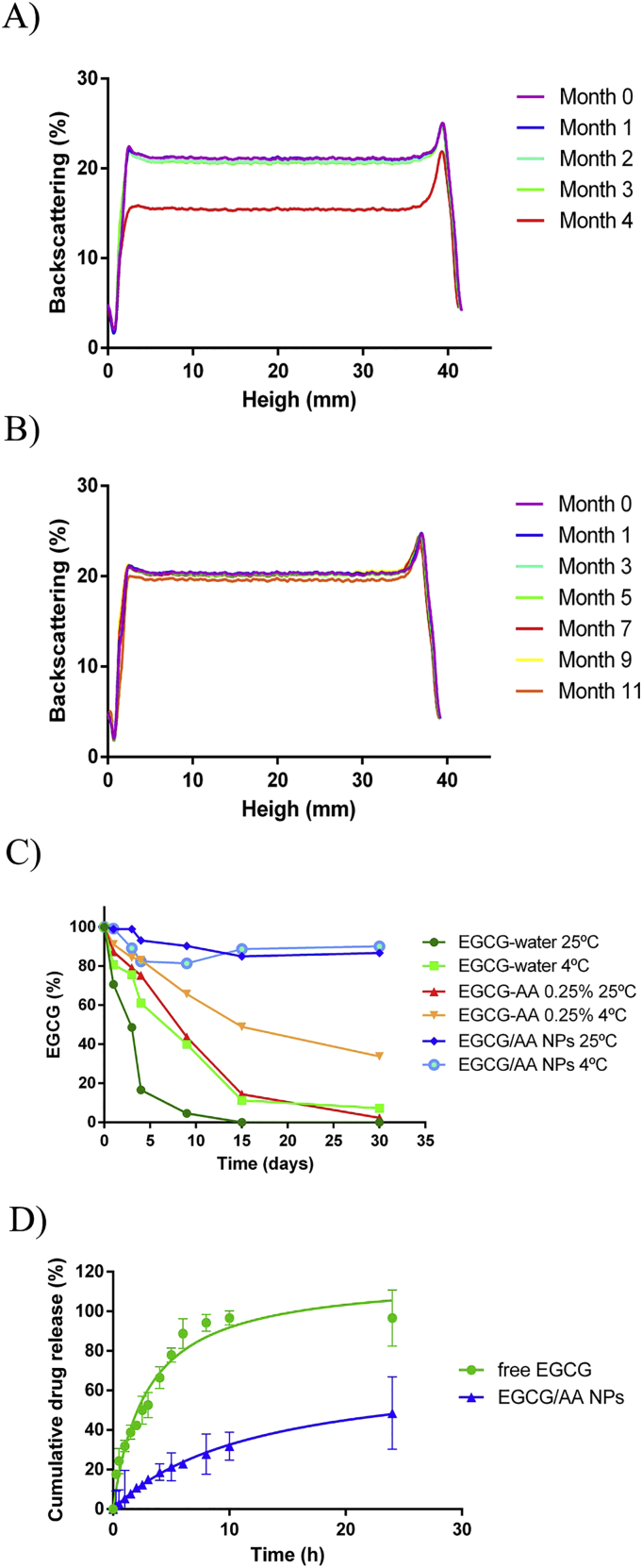
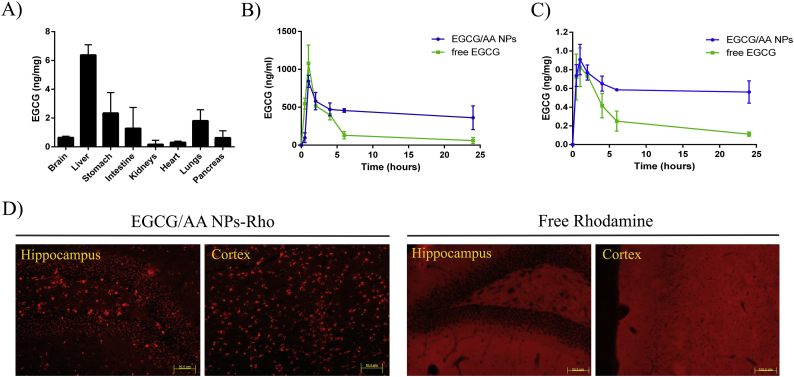
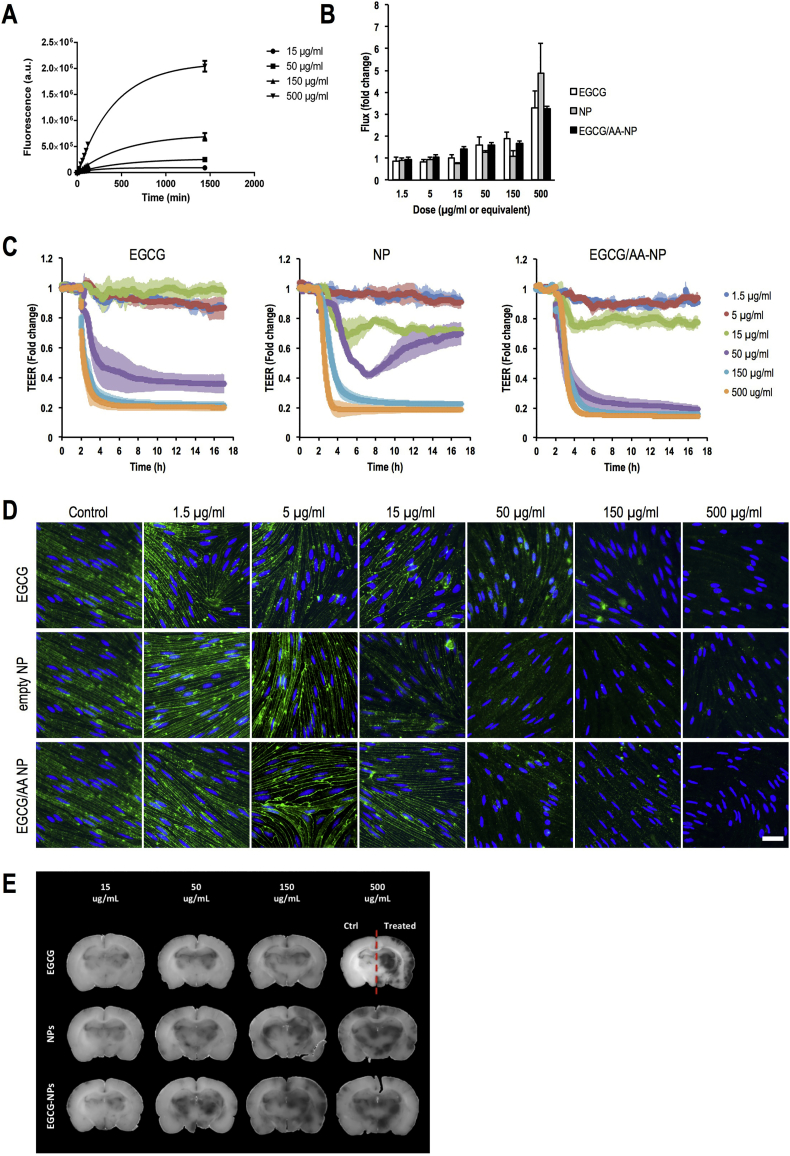
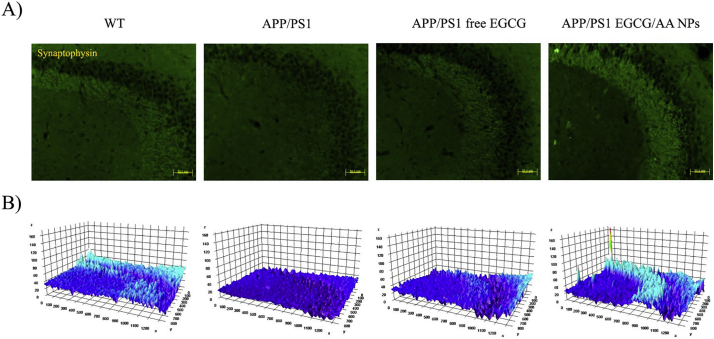
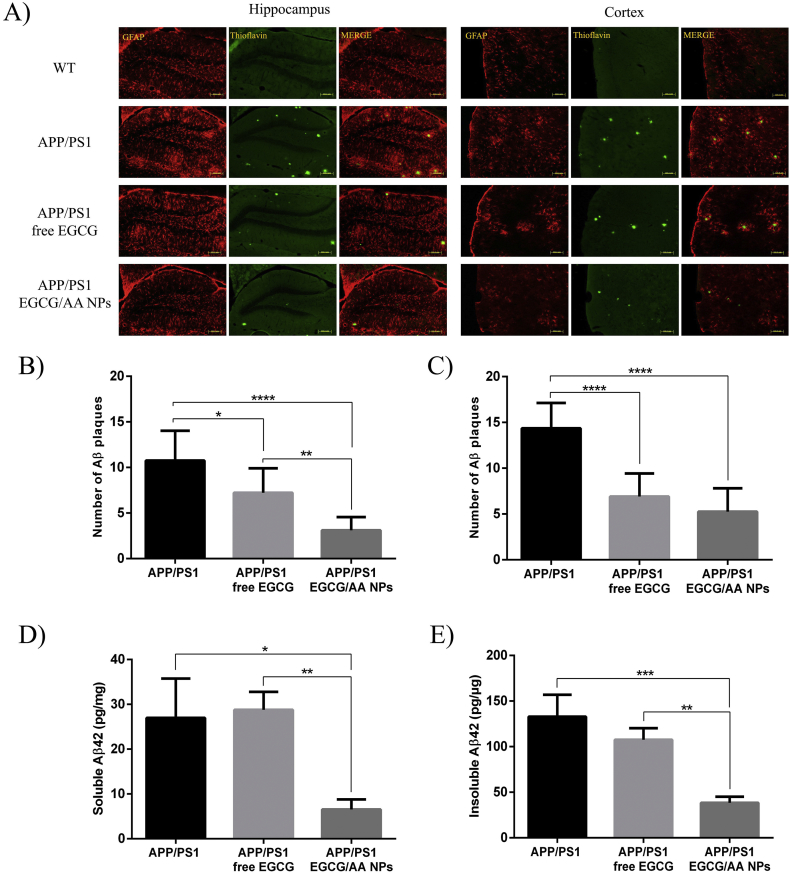
Epigallocatechin-3-gallate (EGCG) is a candidate for treatment of Alzheimer's disease (AD) but its inherent instability limits bioavailability and effectiveness. We found that EGCG displayed increased stability when formulated as dual-drug loaded PEGylated PLGA nanoparticles (EGCG/AA NPs). Oral administration of EGCG/AA NPs in mice resulted in EGCG accumulation in all major organs, including the brain. Pharmacokinetic comparison of plasma and brain accumulation following oral administration of free or EGCG/AA NPs showed that, whilst in both cases initial EGCG concentrations were similar, long-term (5-25 h) concentrations were ca. 5 fold higher with EGCG/AA NPs. No evidence was found that EGCG/AA NPs utilised a specific pathway across the blood-brain barrier (BBB). However, EGCG, empty NPs and EGCG/AA NPs all induced tight junction disruption and opened the BBB in vitro and ex vivo. Oral treatment of APPswe/PS1dE9 (APP/PS1) mice, a familial model of AD, with EGCG/AA NPs resulted in a marked increase in synapses, as judged by synaptophysin (SYP) expression, and reduction of neuroinflammation as well as amyloid β (Aβ) plaque burden and cortical levels of soluble and insoluble Aβ peptide. These morphological changes were accompanied by significantly enhanced spatial learning and memory. Mechanistically, we propose that stabilisation of EGCG in NPs complexes and a destabilized BBB led to higher therapeutic EGCG concentrations in the brain. Thus EGCG/AA NPs have the potential to be developed as a safe and strategy for the treatment of AD.
没食子酸表没食子儿茶素酯(EGCG)是治疗阿尔茨海默病(AD)的候选药物,但由于其内在不稳定性限制了其生物利用度和效果。我们发现,EGCG 制成载有双药的聚乙二醇化 PLGA 纳米粒(EGCG/AA NPs)后稳定性增加。在小鼠中口服 EGCG/AA NPs 可使 EGCG 积聚在所有主要器官,包括大脑。口服游离 EGCG 或 EGCG/AA NPs 后比较血浆和脑内积聚的药代动力学显示,尽管两种情况下初始 EGCG 浓度相似,但 EGCG/AA NPs 的长期(5-25 小时)浓度高约 5 倍。没有证据表明 EGCG/AA NPs 通过特定途径穿过血脑屏障(BBB)。然而,EGCG、空 NPs 和 EGCG/AA NPs 均在体外和离体诱导紧密连接破坏并打开 BBB。用 EGCG/AA NPs 对 APPswe/PS1dE9(APP/PS1)小鼠进行口服治疗,这种 AD 的家族性模型,导致突触明显增加,突触小体蛋白(SYP)表达判断;神经炎症以及淀粉样β(Aβ)斑块负担和皮质可溶性和不溶性 Aβ肽水平降低。这些形态变化伴随着空间学习和记忆能力的显著提高。从机制上讲,我们提出 NPs 复合物中 EGCG 的稳定化和 BBB 的不稳定导致大脑中 EGCG 的治疗浓度更高。因此,EGCG/AA NPs 有可能被开发为治疗 AD 的安全有效的策略。