Dynamics of Immune Responses Unit, Equipe Labellisée Ligue Contre le Cancer, Institut Pasteur, Paris, France.
Institut National de la Santé et de la Recherche Medicale, U1223, Paris, France.
J Exp Med. 2018 May 7;215(5):1481-1492. doi: 10.1084/jem.20171708. Epub 2018 Mar 27.
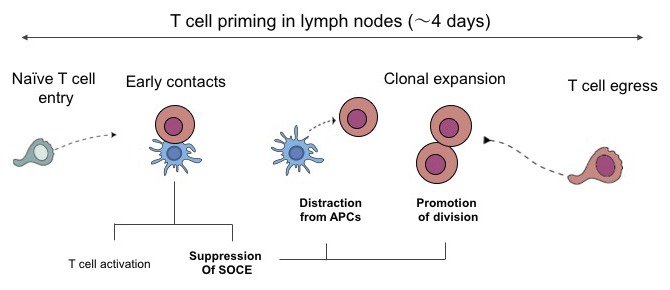
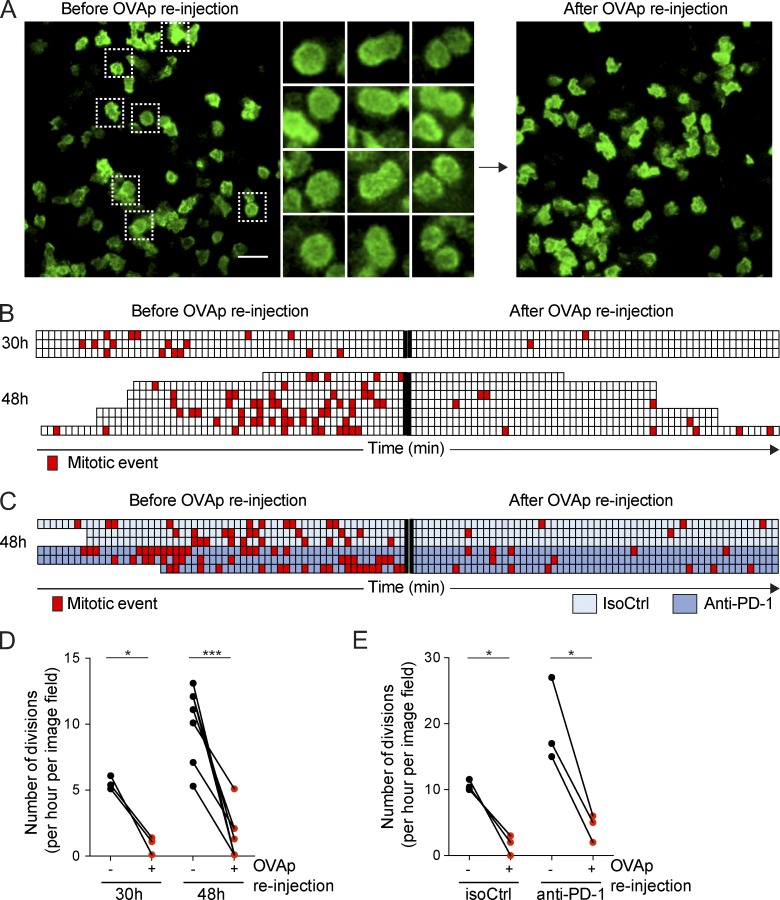
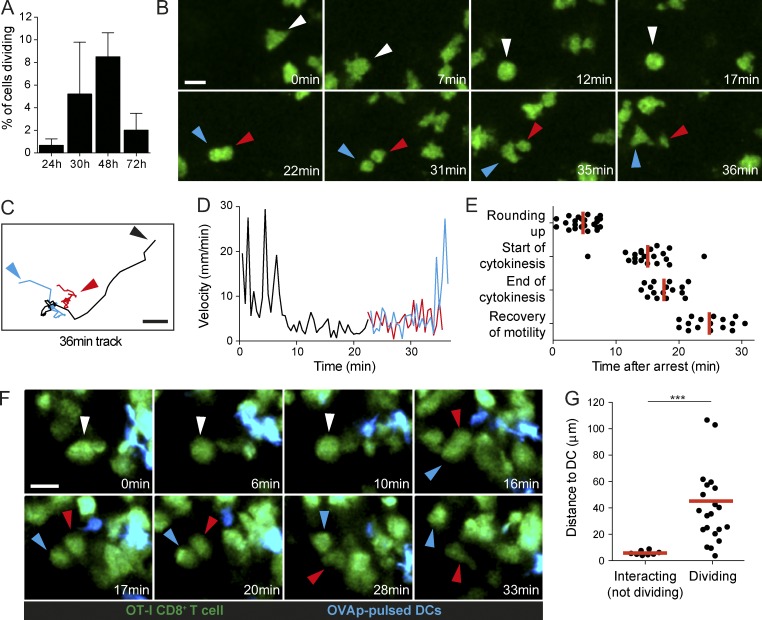
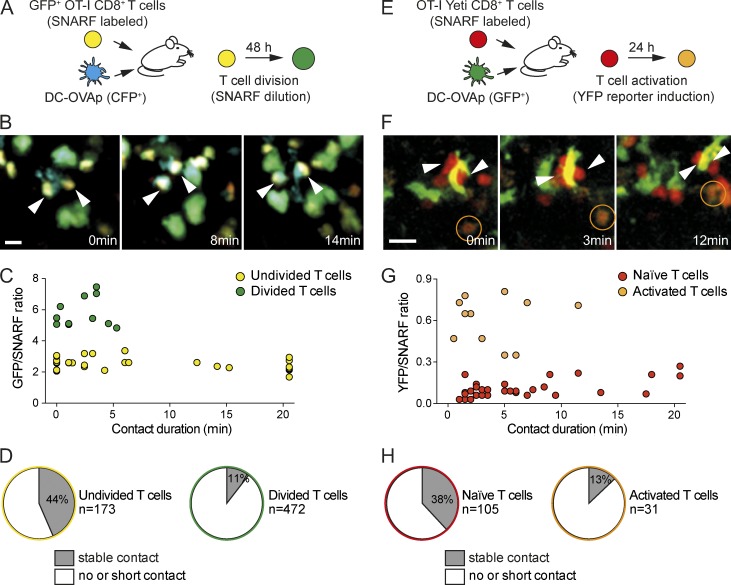
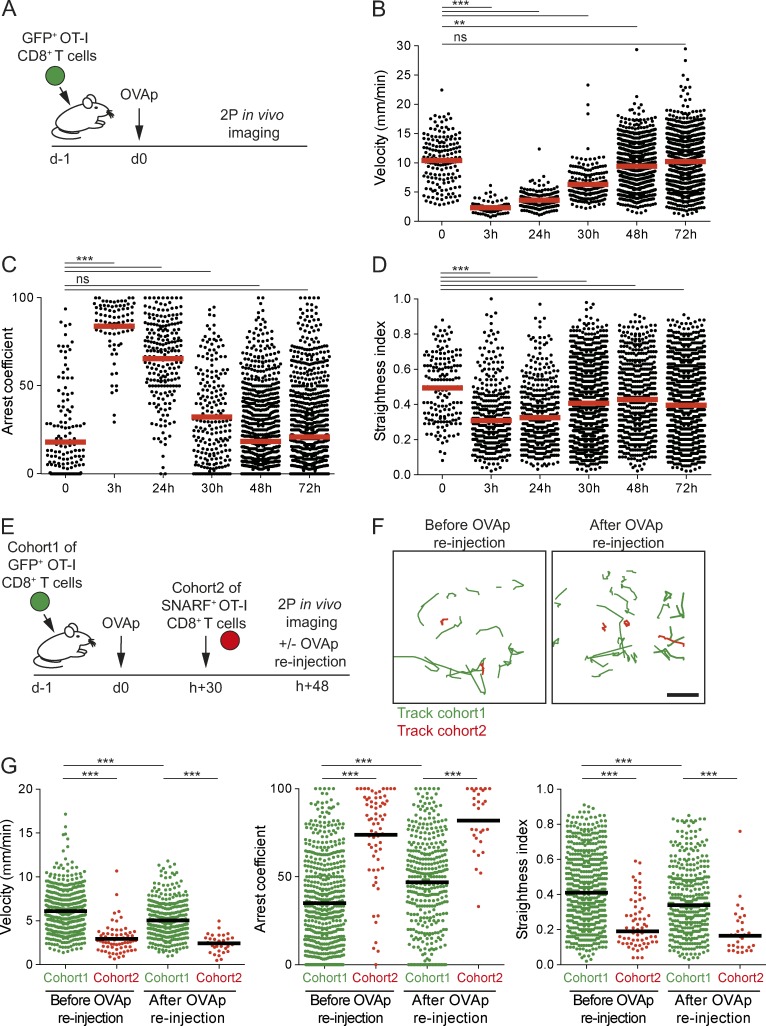
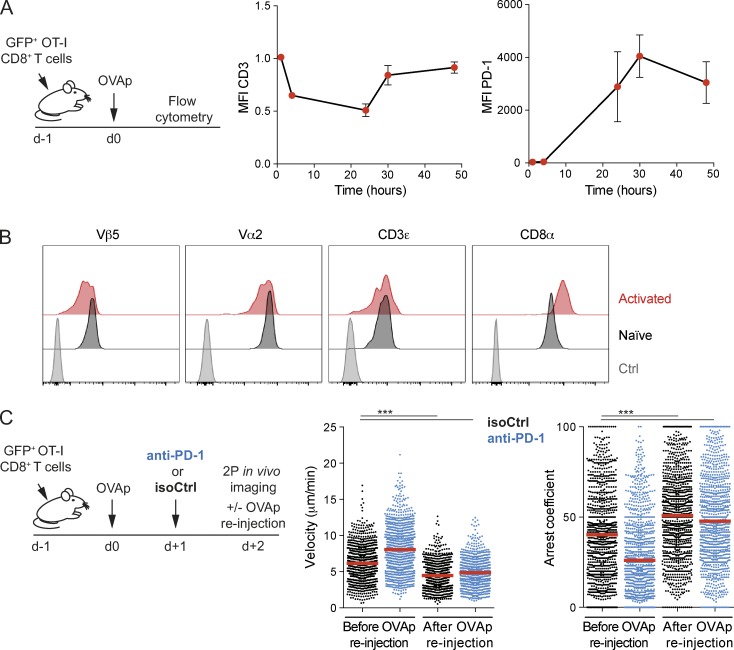
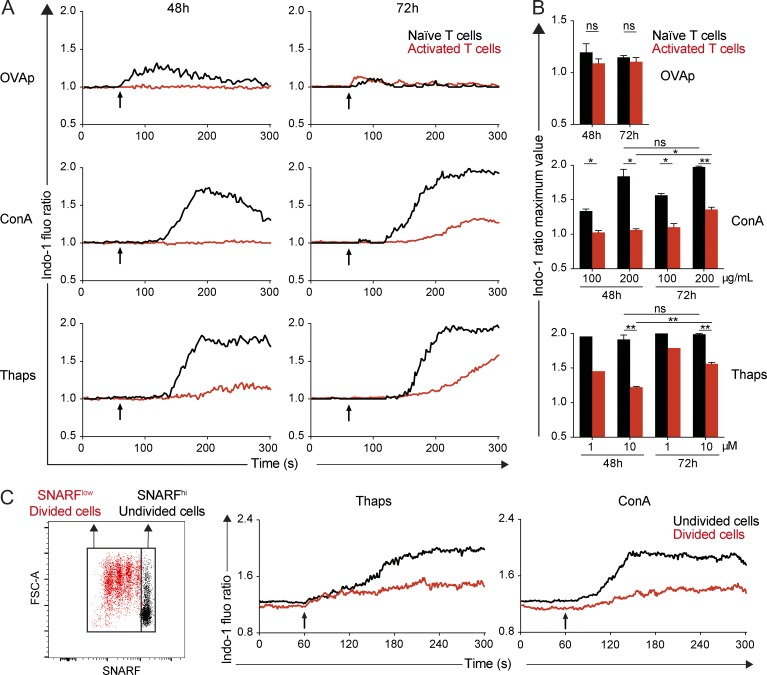
T cells are primed in secondary lymphoid organs by establishing stable interactions with antigen-presenting cells (APCs). However, the cellular mechanisms underlying the termination of T cell priming and the initiation of clonal expansion remain largely unknown. Using intravital imaging, we observed that T cells typically divide without being associated to APCs. Supporting these findings, we demonstrate that recently activated T cells have an intrinsic defect in establishing stable contacts with APCs, a feature that was reflected by a blunted capacity to stop upon T cell receptor (TCR) engagement. T cell unresponsiveness was caused, in part, by a general block in extracellular calcium entry. Forcing TCR signals in activated T cells antagonized cell division, suggesting that T cell hyporesponsiveness acts as a safeguard mechanism against signals detrimental to mitosis. We propose that transient unresponsiveness represents an essential phase of T cell priming that promotes T cell disengagement from APCs and favors effective clonal expansion.
T 细胞在次级淋巴器官中通过与抗原呈递细胞 (APCs) 建立稳定的相互作用而被激活。然而,T 细胞激活终止和克隆扩增开始的细胞机制在很大程度上仍然未知。使用活体成像,我们观察到 T 细胞通常在不与 APC 相关联的情况下分裂。支持这些发现,我们证明最近激活的 T 细胞在与 APC 建立稳定接触方面存在内在缺陷,这一特征反映在它们在 TCR 结合时停止的能力减弱。T 细胞无反应性部分是由于细胞外钙进入的普遍阻断引起的。在激活的 T 细胞中强制 TCR 信号拮抗细胞分裂,表明 T 细胞低反应性是一种针对有丝分裂有害信号的保护机制。我们提出,短暂的无反应性代表 T 细胞激活的一个重要阶段,它促进 T 细胞与 APC 的脱离,并有利于有效的克隆扩增。