John P. Hussman Institute for Human Genomics, Dr. John T. Macdonald Foundation Department of Human Genetics, University of Miami Miller School of Medicine, Miami, FL, 33136, USA.
Braman Family Breast Cancer Institute, University of Miami Miller School of Medicine, Miami, FL, 33136, USA.
Sci Rep. 2018 Mar 28;8(1):5306. doi: 10.1038/s41598-018-23714-7.
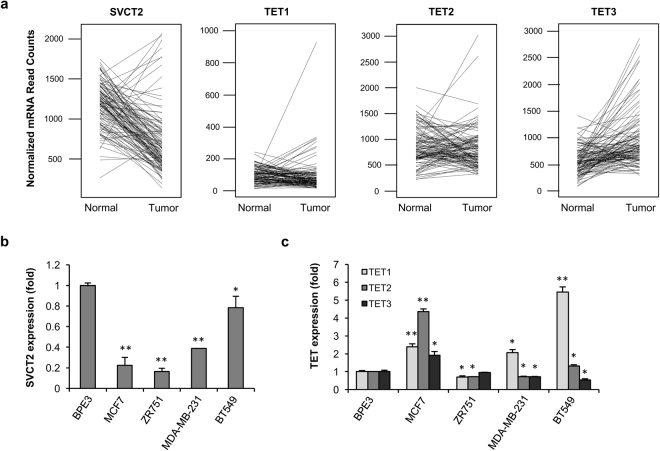
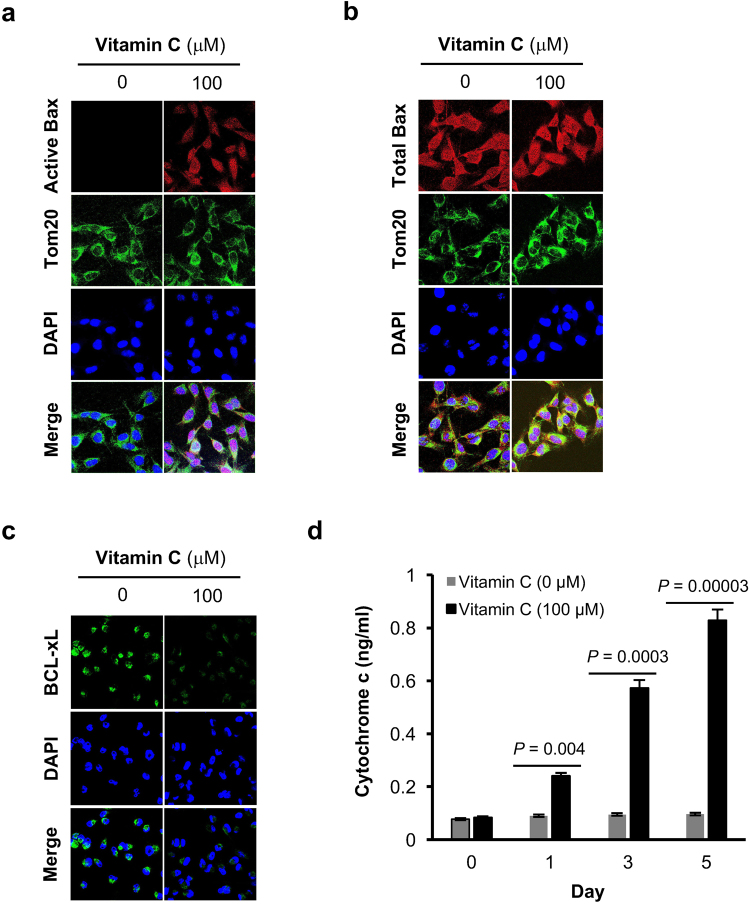
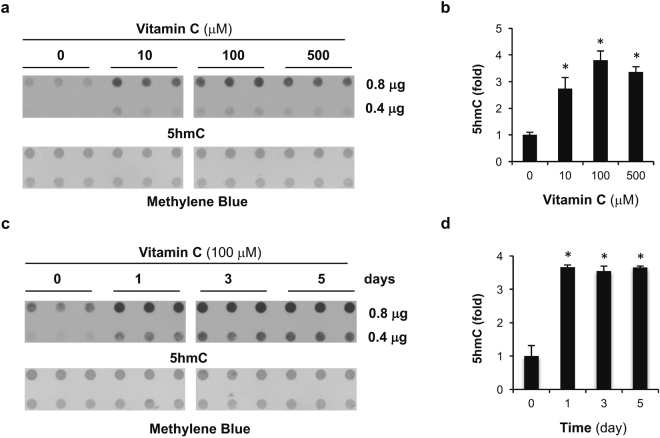
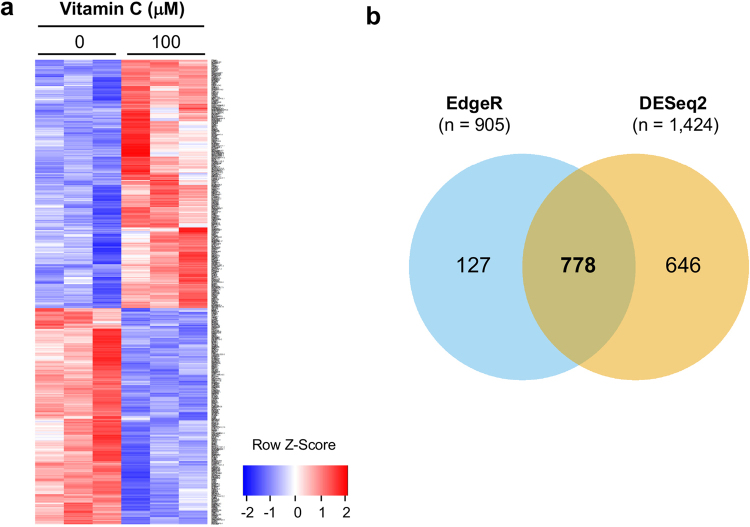
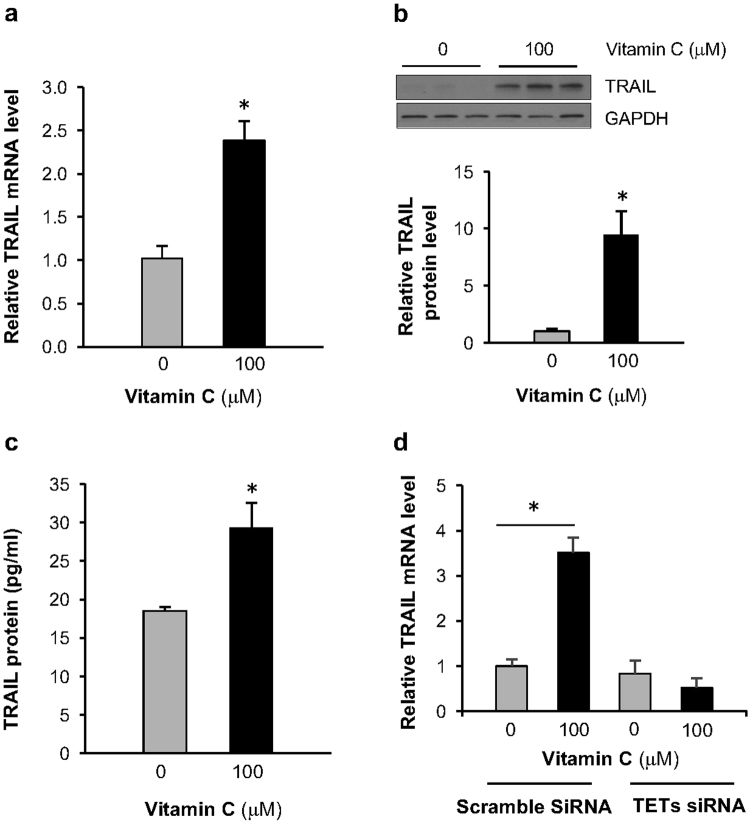
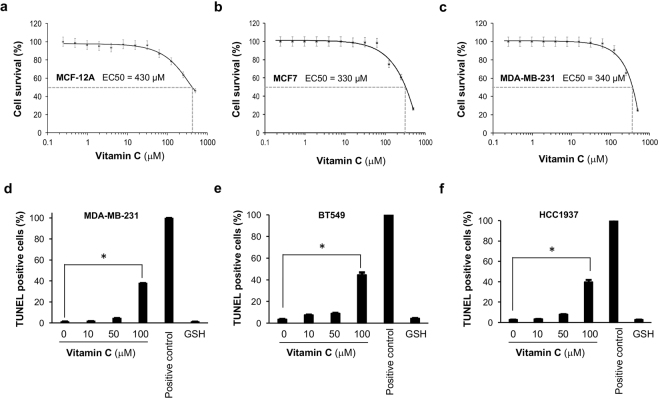
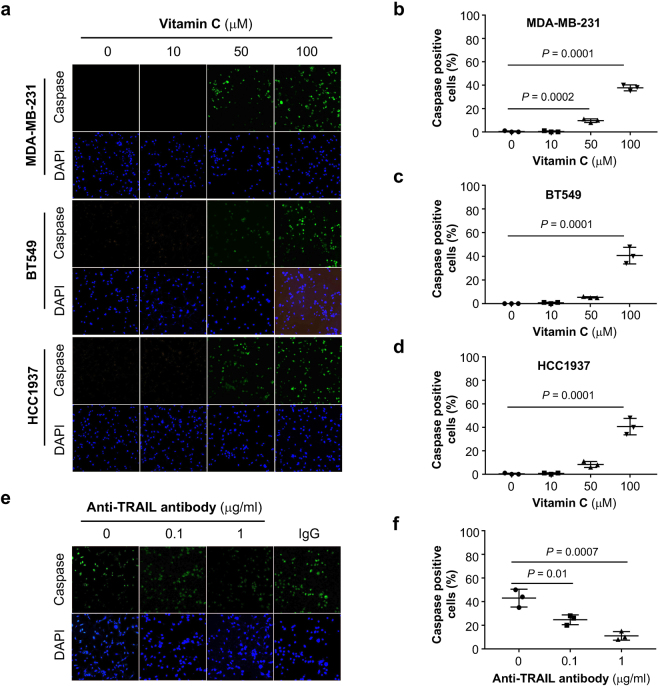
Genomic loss of 5-hydroxymethylcytosine (5hmC) accompanies malignant cellular transformation in breast cancer. Vitamin C serves as a cofactor for TET methylcytosine dioxygenases to increase 5hmC generation. Here we show that the transcription of SVCT2, a major vitamin C transporter, was decreased in human breast cancers (113 cases) compared to normal breast tissues from the same patients. A decreased SVCT2 expression was also observed in breast cancer cell lines. Treatment with vitamin C (100 μM) increased the 5hmC content in MDA-MB-231 breast cancer cells and markedly altered the transcriptome. The vitamin C treatment induced apoptosis in MDA-MB-231 cells, which was verified in two additional breast cancer cell lines. This pro-apoptotic effect of vitamin C appeared to be mediated by TRAIL, a known apoptosis inducer. Vitamin C upregulated TRAIL transcripts (2.3-fold increase) and increased TRAIL protein levels. The upregulation of TRAIL by vitamin C was largely abolished by siRNAs targeting TETs and anti-TRAIL antibody abrogated the induction of apoptosis. Furthermore, the apoptosis promoted by vitamin C was associated with Bax and caspases activation, Bcl-xL sequestration, and cytochrome c release. Taken together, these results suggest a potential role of physiological doses of vitamin C in breast cancer prevention and treatment.
基因组中 5-羟甲基胞嘧啶(5hmC)的缺失伴随着乳腺癌中恶性细胞的转化。维生素 C 作为 TET 甲基胞嘧啶双加氧酶的辅助因子,可增加 5hmC 的生成。在这里,我们发现与来自同一患者的正常乳腺组织相比,人乳腺癌(113 例)中 SVCT2(主要的维生素 C 转运蛋白)的转录减少。在乳腺癌细胞系中也观察到 SVCT2 表达降低。用维生素 C(100μM)处理可增加 MDA-MB-231 乳腺癌细胞中的 5hmC 含量,并显著改变转录组。维生素 C 处理诱导 MDA-MB-231 细胞凋亡,在另外两种乳腺癌细胞系中得到了验证。维生素 C 的这种促凋亡作用似乎是由 TRAIL 介导的,TRAIL 是一种已知的凋亡诱导剂。维生素 C 上调 TRAIL 转录本(增加 2.3 倍)并增加 TRAIL 蛋白水平。用靶向 TET 的 siRNA 和抗 TRAIL 抗体可显著抑制维生素 C 对 TRAIL 的上调,从而消除 TRAIL 的诱导凋亡作用。此外,维生素 C 诱导的凋亡与 Bax 和 caspase 的激活、Bcl-xL 的隔离以及细胞色素 c 的释放有关。综上所述,这些结果表明生理剂量的维生素 C 可能在乳腺癌的预防和治疗中发挥作用。