Tick Vaccine Group, Department of Genetics, University of Pretoria, Pretoria, South Africa.
Front Cell Infect Microbiol. 2018 Mar 13;8:67. doi: 10.3389/fcimb.2018.00067. eCollection 2018.
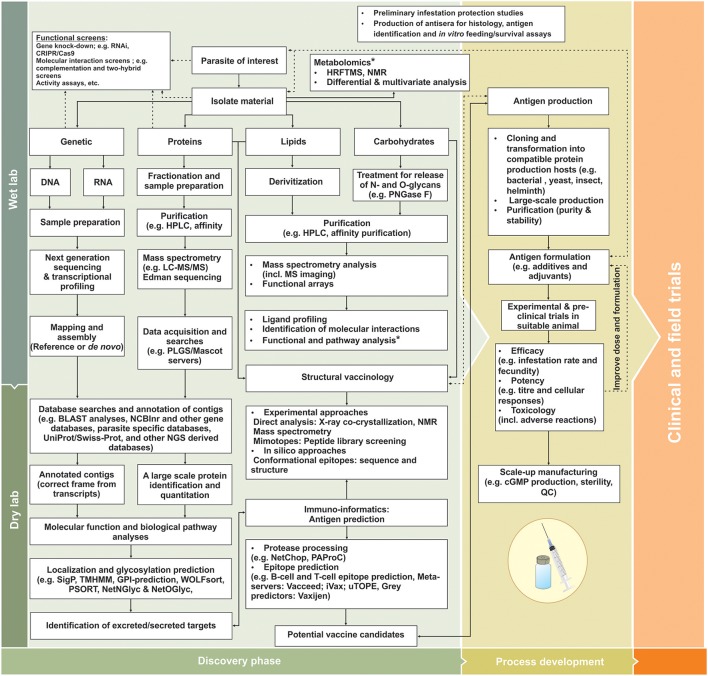
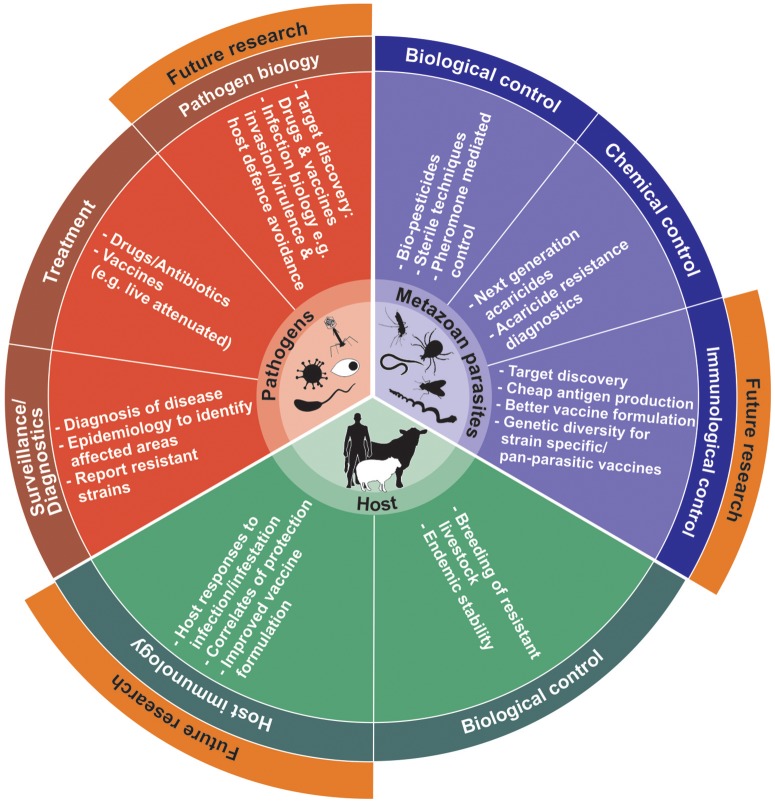
Eukaryotic parasites and pathogens continue to cause some of the most detrimental and difficult to treat diseases (or disease states) in both humans and animals, while also continuously expanding into non-endemic countries. Combined with the ever growing number of reports on drug-resistance and the lack of effective treatment programs for many metazoan diseases, the impact that these organisms will have on quality of life remain a global challenge. Vaccination as an effective prophylactic treatment has been demonstrated for well over 200 years for bacterial and viral diseases. From the earliest variolation procedures to the cutting edge technologies employed today, many protective preparations have been successfully developed for use in both medical and veterinary applications. In spite of the successes of these applications in the discovery of subunit vaccines against prokaryotic pathogens, not many targets have been successfully developed into vaccines directed against metazoan parasites. With the current increase in -omics technologies and metadata for eukaryotic parasites, target discovery for vaccine development can be expedited. However, a good understanding of the host/vector/pathogen interface is needed to understand the underlying biological, biochemical and immunological components that will confer a protective response in the host animal. Therefore, systems biology is rapidly coming of age in the pursuit of effective parasite vaccines. Despite the difficulties, a number of approaches have been developed and applied to parasitic helminths and arthropods. This review will focus on key aspects of vaccine development that require attention in the battle against these metazoan parasites, as well as successes in the field of vaccine development for helminthiases and ectoparasites. Lastly, we propose future direction of applying successes in pursuit of next generation vaccines.
真核寄生虫和病原体继续在人类和动物中引起一些最具危害性和最难治疗的疾病(或疾病状态),同时也不断扩展到非流行国家。再加上越来越多的关于耐药性的报告以及许多后生动物疾病缺乏有效的治疗方案,这些生物对生活质量的影响仍然是一个全球性挑战。疫苗接种作为一种有效的预防治疗方法,已经在细菌和病毒疾病方面得到了超过 200 年的证明。从最早的种痘程序到当今采用的尖端技术,已经成功开发了许多用于医学和兽医应用的保护制剂。尽管这些应用在发现针对原核病原体的亚单位疫苗方面取得了成功,但针对后生动物寄生虫的疫苗却很少成功开发。随着真核寄生虫的组学技术和元数据的不断增加,疫苗开发的目标发现可以加快速度。然而,需要很好地了解宿主/载体/病原体界面,以了解在宿主动物中赋予保护反应的潜在生物学、生物化学和免疫学成分。因此,系统生物学在寻找有效的寄生虫疫苗方面迅速崭露头角。尽管存在困难,但已经开发并应用了多种方法来对抗这些后生动物寄生虫。这篇综述将重点介绍在对抗这些后生动物寄生虫的斗争中需要注意的疫苗开发的关键方面,以及在蠕虫病和外寄生虫疫苗开发领域的成功。最后,我们提出了未来应用成功的方向,以追求下一代疫苗。