
质子和X射线是否通过不同机制诱导人外周血淋巴细胞死亡?
Do protons and X-rays induce cell-killing in human peripheral blood lymphocytes by different mechanisms?
作者信息
Miszczyk J, Rawojć K, Panek A, Borkowska A, Prasanna P G S, Ahmed M M, Swakoń J, Gałaś A
机构信息
Institute of Nuclear Physics Polish Academy of Sciences, PL-31342, Poland.
Department of Endocrinology, Nuclear Medicine Unit, The University Hospital, Kraków, Poland.
出版信息
Clin Transl Radiat Oncol. 2018 Jan 31;9:23-29. doi: 10.1016/j.ctro.2018.01.004. eCollection 2018 Feb.
PURPOSE
Significant progress has been made in the technological and physical aspects of dose delivery and distribution in proton therapy. However, mode of cell killing induced by protons is less understood in comparison with X-rays. The purpose of this study is to see if there is any difference in the mode of cell-killing, induced by protons and X-rays in an human peripheral blood lymphocyte (HPBL) model.
MATERIALS AND METHODS
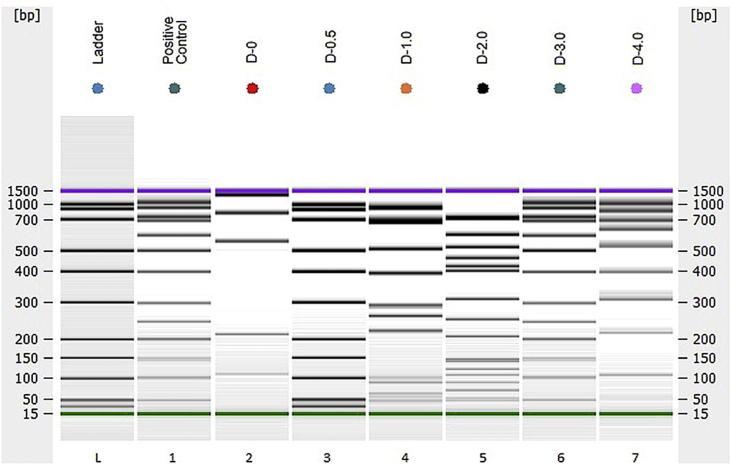
HPBL were irradiated with 60 MeV proton beam or 250-kVp X-rays in the dose range of 0.3-4.0 Gy. Frequency of apoptotic and necrotic cells was determined by the Fluorescein (FITC)-Annexin V labelling procedure, 1 and 4 h after irradiation. Chip-based DNA Ladder Assay was used to confirm radiation-induced apoptosis and necrosis. Chip-based DNA Ladder Assay was used to confirm radiation-induced apoptosis.
RESULTS
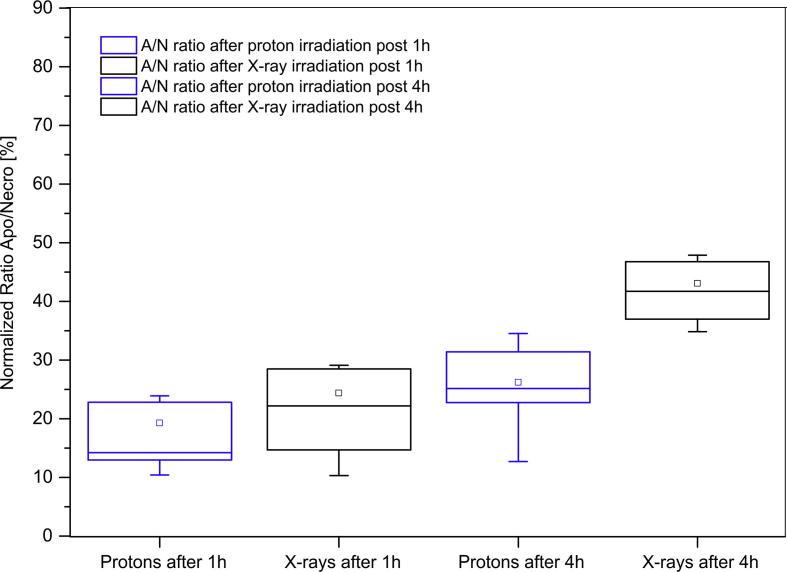
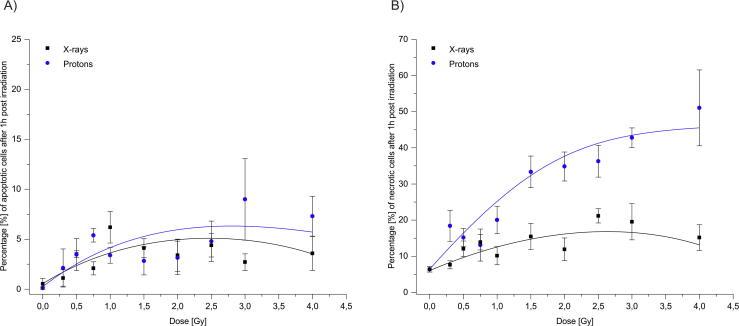
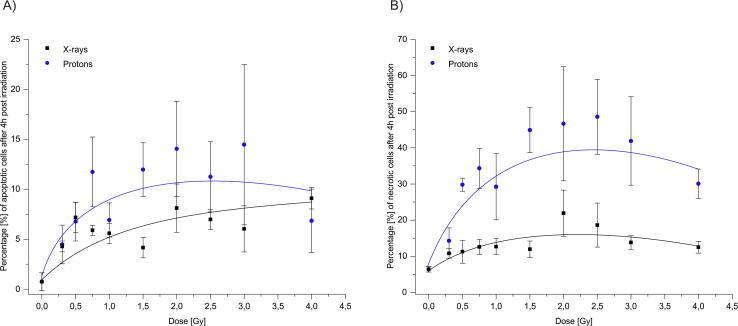
irradiation of HPBL with proton beams of 60 MeV or 250 kVp X-rays resulted in apoptotic as well as necrotic modes of cell-killing, which were evident at both 1 and 4 h after irradiation in the whole dose and time range. Generally, our results indicated that protons cause relatively higher yields of cell death that appears to be necrosis compared to X-rays. The analysis also demonstrates that radiation type and dose play a critical role in mode of cell-killing.
CONCLUSION
Obtained results suggest that X-rays and protons induce cell-killing by different modes. Such differences in cell-killing modes may have implications on the potential of a given therapeutic modality to cause immune modulation programmed cell death (X-rays) or necrotic cell death (proton therapy). These studies point towards exploring for gene expression biomarkers related necrosis or apoptosis to predict immune response after proton therapy.
目的
质子治疗在剂量传递和分布的技术及物理方面已取得显著进展。然而,与X射线相比,质子诱导的细胞杀伤模式尚不太为人所理解。本研究的目的是观察在人外周血淋巴细胞(HPBL)模型中,质子和X射线诱导的细胞杀伤模式是否存在差异。
材料与方法
用60 MeV质子束或250 kVp X射线在0.3 - 4.0 Gy剂量范围内照射HPBL。在照射后1小时和4小时,通过荧光素(FITC)-膜联蛋白V标记程序测定凋亡和坏死细胞的频率。基于芯片的DNA梯状分析用于确认辐射诱导的凋亡和坏死。基于芯片的DNA梯状分析用于确认辐射诱导的凋亡。
结果
用60 MeV质子束或250 kVp X射线照射HPBL导致细胞杀伤的凋亡和坏死模式,在整个剂量和时间范围内,照射后1小时和4小时均很明显。一般来说,我们的结果表明,与X射线相比,质子导致相对较高的细胞死亡发生率,且似乎以坏死为主。分析还表明,辐射类型和剂量在细胞杀伤模式中起关键作用。
结论
所得结果表明,X射线和质子通过不同模式诱导细胞杀伤。这种细胞杀伤模式的差异可能对特定治疗方式引起免疫调节、程序性细胞死亡(X射线)或坏死性细胞死亡(质子治疗)的潜力产生影响。这些研究指向探索与坏死或凋亡相关的基因表达生物标志物,以预测质子治疗后的免疫反应。

 Zotero 插件