Yang Alina Y, Chow Jessica, Liu Ji
Department of Ophthalmology and Visual Science, Yale School of Medicine, New Haven, CT.
Yale J Biol Med. 2018 Mar 28;91(1):13-21. eCollection 2018 Mar.
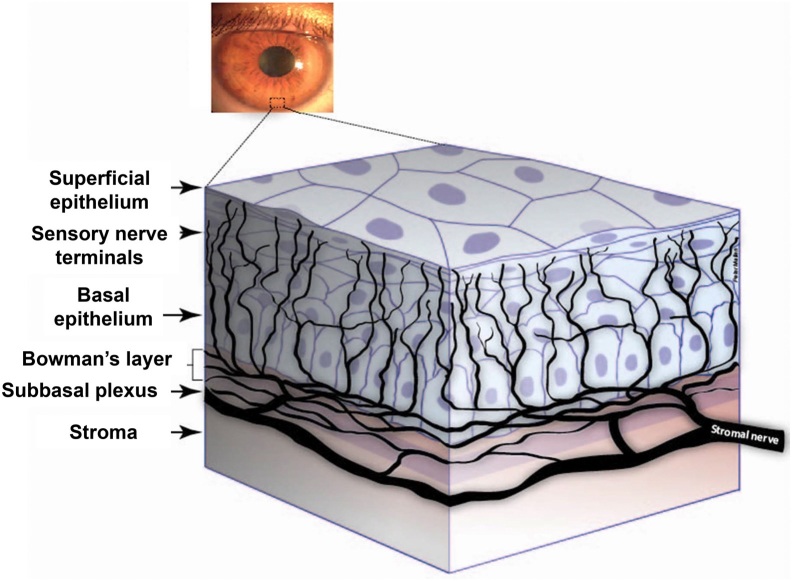
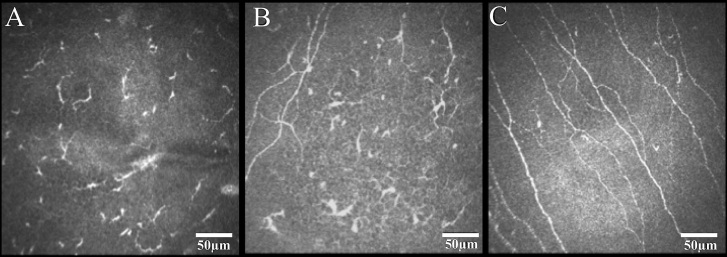
The cornea is one of the most densely innervated and sensitive tissues in the body. In addition to their important sensory functions, corneal nerves induce reflex tear production, blinking, and the release of trophic factors - all of which combined help to maintain the structural and functional integrity of the surface of the eye. Consequently, damage to corneal nerves as a result of disease, surgery, or trauma can lead to diminished corneal sensitivity, epithelial defects, and possible blindness. In this review, we describe commonly used tools that have provided considerable new information on corneal architecture and sensation in healthy and diseased corneas, with special emphasis on changes seen in herpes zoster ophthalmicus, corneal and other therapeutic ocular procedures, antiglaucoma medical therapy, aging, and diabetes. With its potential applications ranging from managing ocular-specific to systemic diseases, the study of corneal innervation has implications for future therapies extending beyond just the eye itself.
角膜是人体中神经分布最密集、最敏感的组织之一。除了重要的感觉功能外,角膜神经还能诱导反射性泪液分泌、眨眼以及营养因子的释放,所有这些共同作用有助于维持眼表的结构和功能完整性。因此,疾病、手术或创伤导致的角膜神经损伤会导致角膜敏感性降低、上皮缺损,并可能导致失明。在这篇综述中,我们描述了常用的工具,这些工具为健康和患病角膜的角膜结构和感觉提供了大量新信息,特别强调了在眼部带状疱疹、角膜及其他治疗性眼科手术、抗青光眼药物治疗、衰老和糖尿病中观察到的变化。由于其潜在应用范围从眼部特定疾病到全身性疾病,角膜神经支配的研究对未来治疗的意义不仅限于眼睛本身。