Department of Cell and Molecular Pharmacology & Experimental Therapeutics, Medical University of South Carolina, Charleston, SC 29412, USA.
Int J Mol Sci. 2018 Mar 30;19(4):1043. doi: 10.3390/ijms19041043.
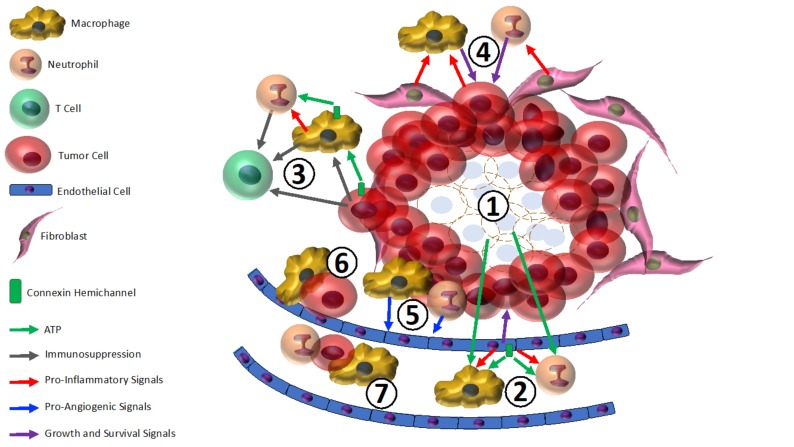
Over the past few decades, connexin hemichannels have become recognized as major players in modulating the inflammatory response. Chronic inflammation is documented to promote tumorigenesis and is a critical component of tumor progression. Furthermore, inflammation is strongly linked to angiogenesis, immunotolerance, invasiveness, metastasis, and resistance in breast cancers. In this review, the literature on the role of connexin hemichannels in inflammation is summarized, and the potential role for hemichannel-mediated inflammation in driving breast cancer progression is discussed. Lastly, the potential for connexin-based therapeutics to modulate the inflammatory component of the tumor microenvironment as an avenue for the treatment of breast cancer is also discussed.
在过去的几十年中,连接蛋白半通道已被认为是调节炎症反应的主要参与者。有文献记录表明,慢性炎症会促进肿瘤发生,是肿瘤进展的关键组成部分。此外,炎症与乳腺癌中的血管生成、免疫耐受、侵袭性、转移和耐药性密切相关。在这篇综述中,总结了连接蛋白半通道在炎症中的作用的文献,并讨论了半通道介导的炎症在推动乳腺癌进展中的潜在作用。最后,还讨论了基于连接蛋白的治疗方法调节肿瘤微环境炎症成分作为治疗乳腺癌的一种途径的潜力。