Fralin Biomedical Research Institute at Virginia Tech Carilion School of Medicine, Virginia Tech, Roanoke, VA 24016, USA.
Translational Biology, Medicine, and Health Graduate Program, Virginia Tech, Blacksburg, VA 24061, USA.
Int J Mol Sci. 2021 Sep 22;22(19):10186. doi: 10.3390/ijms221910186.
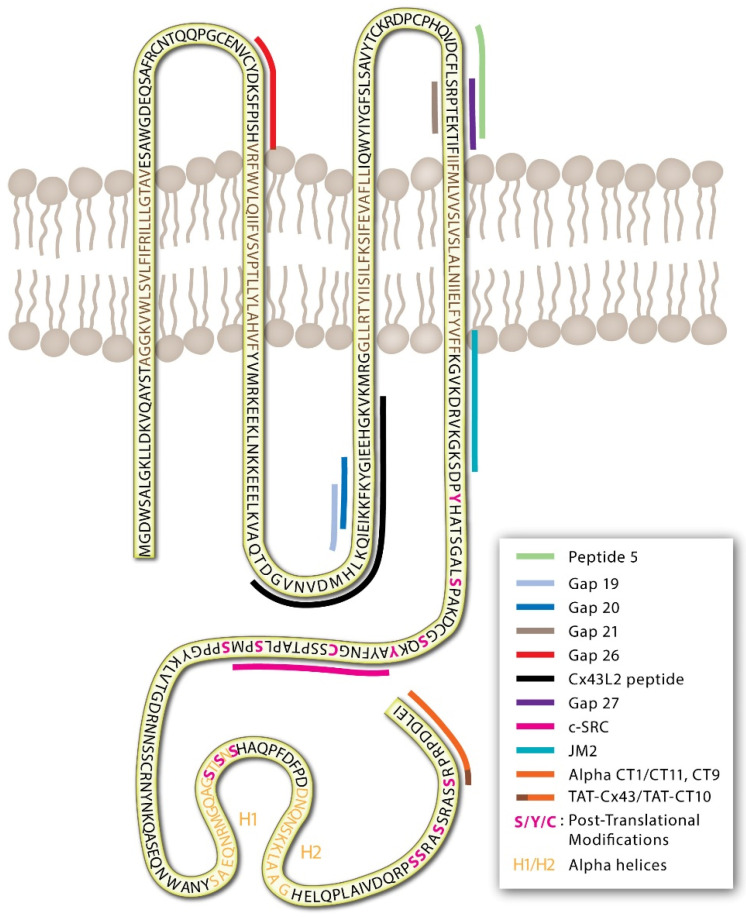
Gap junctions (GJ) and connexins play integral roles in cellular physiology and have been found to be involved in multiple pathophysiological states from cancer to cardiovascular disease. Studies over the last 60 years have demonstrated the utility of altering GJ signaling pathways in experimental models, which has led to them being attractive targets for therapeutic intervention. A number of different mechanisms have been proposed to regulate GJ signaling, including channel blocking, enhancing channel open state, and disrupting protein-protein interactions. The primary mechanism for this has been through the design of numerous peptides as therapeutics, that are either currently in early development or are in various stages of clinical trials. Despite over 25 years of research into connexin targeting peptides, the overall mechanisms of action are still poorly understood. In this overview, we discuss published connexin targeting peptides, their reported mechanisms of action, and the potential for these molecules in the treatment of disease.
间隙连接(GJ)和连接蛋白在细胞生理学中起着重要作用,并且已经发现它们参与了从癌症到心血管疾病等多种病理生理状态。过去 60 年的研究表明,改变实验模型中的 GJ 信号通路具有实用性,这使得它们成为治疗干预的有吸引力的靶点。已经提出了许多不同的机制来调节 GJ 信号,包括通道阻断、增强通道开放状态和破坏蛋白-蛋白相互作用。主要机制是通过设计许多作为治疗剂的肽,这些肽要么处于早期开发阶段,要么处于不同的临床试验阶段。尽管对连接蛋白靶向肽的研究已经超过 25 年,但这些分子的作用机制仍知之甚少。在这篇综述中,我们讨论了已发表的连接蛋白靶向肽,它们的报道作用机制,以及这些分子在疾病治疗中的潜力。