Department of Electrical Engineering, School of Engineering, Stanford University, Stanford, California, United States of America.
Center for Cancer Nanotechnology Excellence, Department of Radiology, School of Medicine, Stanford University, Stanford, California, United States of America.
PLoS One. 2018 Mar 30;13(3):e0194712. doi: 10.1371/journal.pone.0194712. eCollection 2018.
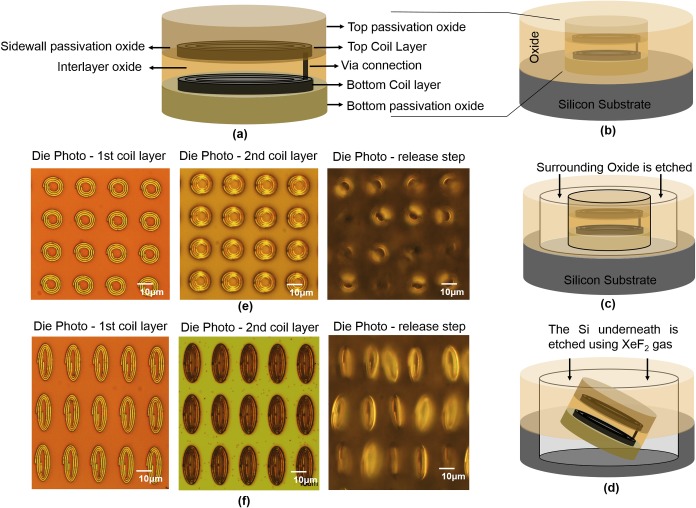
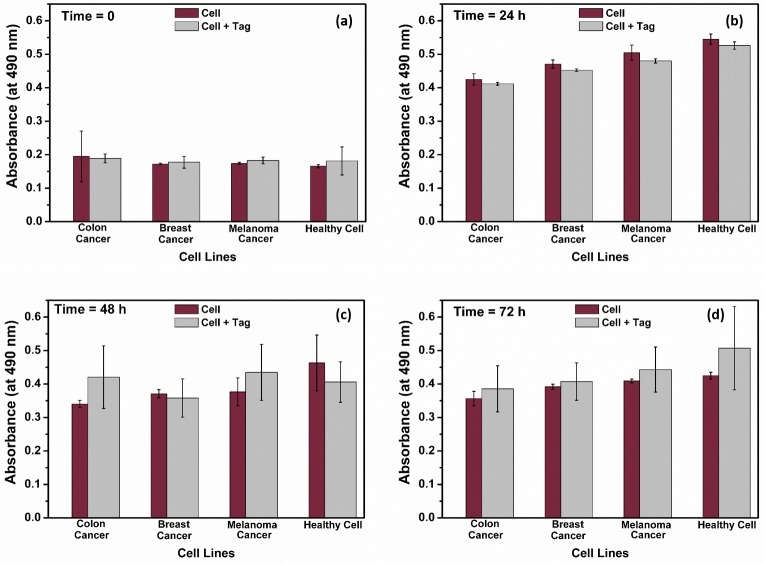
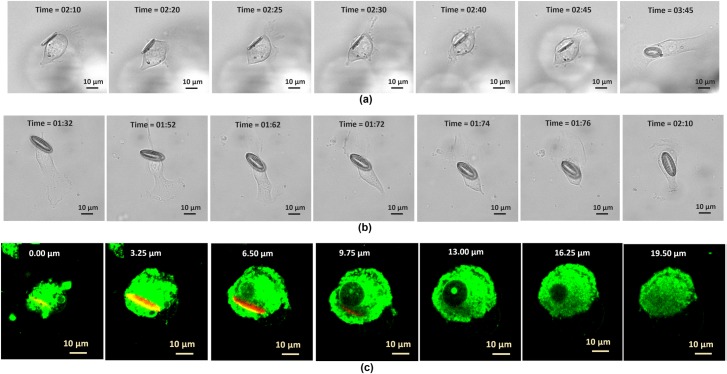
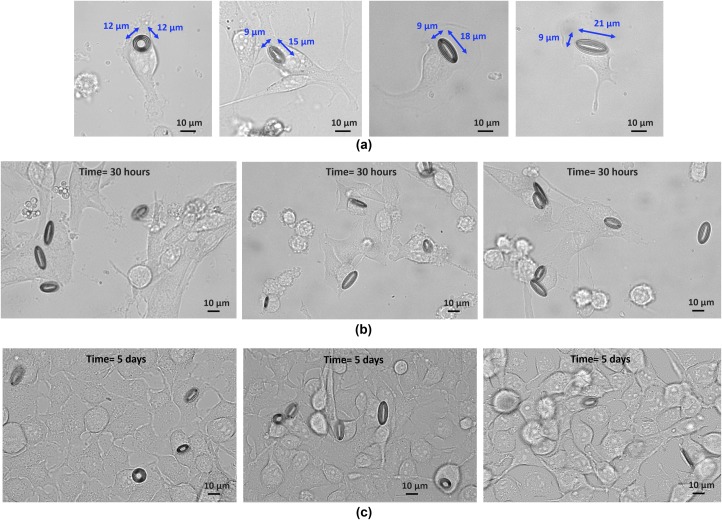
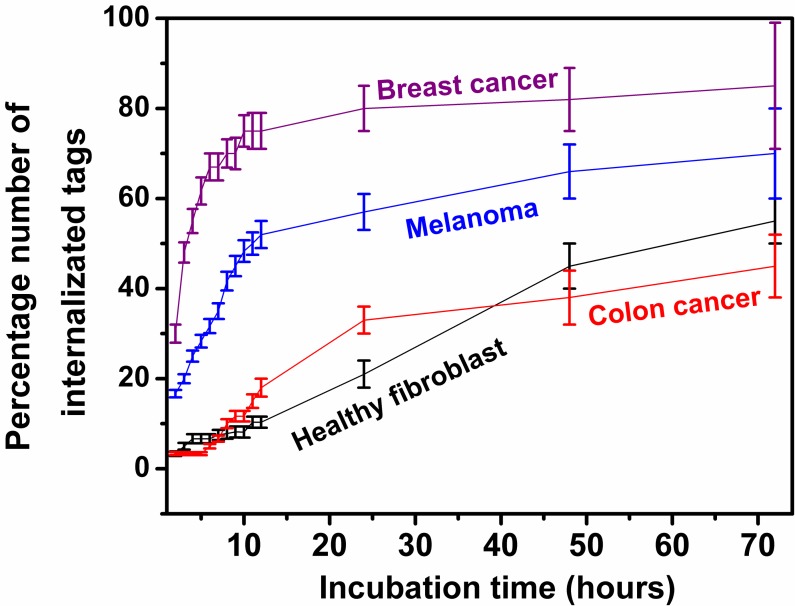
Continuous monitoring of physiological parameters inside a living cell will lead to major advances in our understanding of biology and complex diseases, such as cancer. It also enables the development of new medical diagnostics and therapeutics. Progress in nanofabrication and wireless communication has opened up the potential of making a wireless chip small enough that it can be wholly inserted into a living cell. To investigate how such chips could be internalized into various types of living single cells and how this process might affect cells' physiology, we designed and fabricated a series of multilayered micron-scale tag structures with different sizes as potential RFID (Radio Frequency IDentification) cell trackers. While the present structures are test structures that do not resonate, the tags that do resonate have similar structure from device fabrication, material properties, and device size point of view. The structures are in four different sizes, the largest with the lateral dimension of 9 μm × 21 μm. The thickness for these structures is kept constant at 1.5 μm. We demonstrate successful delivery of our fabricated chips into various types of living cells, such as melanoma skin cancer, breast cancer, colon cancer and healthy/normal fibroblast skin cells. To our surprise, we observed a remarkable internalization rate difference between each cell type; the uptake rate was faster for more aggressive cancer cells than the normal/healthy cells. Cell viability before and after tag cellular internalization and persistence of the internalized tags have also been recorded over the course of five days of incubation. These results establish the foundations of the possibility of long term, wireless, intracellular physiological signal monitoring.
对活细胞内生理参数的连续监测将推动我们对生物学和复杂疾病(如癌症)的理解取得重大进展。它还使新的医学诊断和治疗方法的发展成为可能。纳米制造和无线通信的进步使制造足够小的无线芯片成为可能,从而可以将其完全插入活细胞中。为了研究这种芯片如何被内化到各种类型的活单细胞中,以及这个过程如何影响细胞的生理学,我们设计并制造了一系列具有不同尺寸的多层微米级标记结构,作为潜在的射频识别(RFID)细胞追踪器。虽然目前的结构是不共振的测试结构,但具有共振的标签在从器件制造、材料特性和器件尺寸的角度来看具有相似的结构。这些结构有四种不同的尺寸,最大的横向尺寸为 9μm×21μm。这些结构的厚度保持在 1.5μm 不变。我们成功地将我们制造的芯片递送到各种类型的活细胞中,如黑色素皮肤癌、乳腺癌、结肠癌和健康/正常成纤维细胞。令我们惊讶的是,我们观察到每种细胞类型之间的内化率存在显著差异;侵袭性更强的癌细胞的摄取率比正常/健康细胞更快。在标签细胞内化前后以及在孵育五天的过程中记录了细胞内标记物的持续存在情况,以评估细胞活力。这些结果为长期、无线、细胞内生理信号监测的可能性奠定了基础。