Toledo Diana, Soldevila Núria, Torner Núria, Pérez-Lozano María José, Espejo Elena, Navarro Gemma, Egurrola Mikel, Domínguez Ángela
Epidemiología y Salud Pública, (CIBERESP), Consorcio Centro de Investigación Biomédica en Red, M.P, Madrid, Spain.
Facultat de Medicina, Universitat de Barcelona, Barcelona, Spain.
BMJ Open. 2018 Mar 30;8(3):e020243. doi: 10.1136/bmjopen-2017-020243.
Hospital readmission in patients admitted for community-acquired pneumonia (CAP) is frequent in the elderly and patients with multiple comorbidities, resulting in a clinical and economic burden. The aim of this study was to determine factors associated with 30-day readmission in patients with CAP.
A cross-sectional study.
The study was conducted in patients admitted to 20 hospitals in seven Spanish regions during two influenza seasons (2013-2014 and 2014-2015).
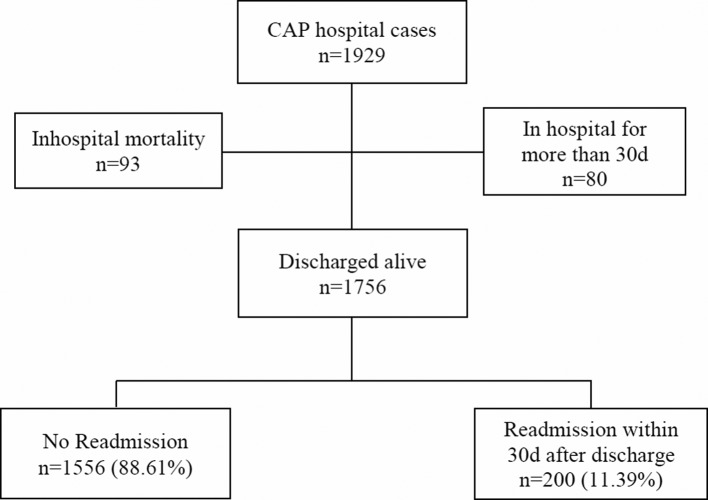
We included patients aged ≥65 years admitted through the emergency department with a diagnosis compatible with CAP. Patients who died during the initial hospitalisation and those hospitalised more than 30 days were excluded. Finally, 1756 CAP cases were included and of these, 200 (11.39%) were readmitted.
30-day readmission.
Factors associated with 30-day readmission were living with a person aged <15 years (adjusted OR (aOR) 2.10, 95% CI 1.01 to 4.41), >3 hospital visits during the 90 previous days (aOR 1.53, 95% CI 1.01 to 2.34), chronic respiratory failure (aOR 1.74, 95% CI 1.24 to 2.45), heart failure (aOR 1.69, 95% CI 1.21 to 2.35), chronic liver disease (aOR 2.27, 95% CI 1.20 to 4.31) and discharge to home with home healthcare (aOR 5.61, 95% CI 1.70 to 18.50). No associations were found with pneumococcal or seasonal influenza vaccination in any of the three previous seasons.
This study shows that 11.39% of patients aged ≥65 years initially hospitalised for CAP were readmitted within 30 days after discharge. Rehospitalisation was associated with preventable and non-preventable factors.
社区获得性肺炎(CAP)患者的医院再入院情况在老年人和患有多种合并症的患者中很常见,这会带来临床和经济负担。本研究的目的是确定与CAP患者30天再入院相关的因素。
一项横断面研究。
该研究在两个流感季节(2013 - 2014年和2014 - 2015年)期间,对西班牙七个地区20家医院收治的患者进行。
我们纳入了通过急诊科收治的年龄≥65岁且诊断符合CAP的患者。排除了在初次住院期间死亡的患者以及住院超过30天的患者。最终,纳入了1756例CAP病例,其中200例(11.39%)再次入院。
30天再入院情况。
与30天再入院相关的因素包括与年龄<15岁的人一起生活(调整后比值比(aOR)2.10,95%置信区间1.01至4.41)、前90天内门诊就诊>3次(aOR 1.53,95%置信区间1.01至2.34)、慢性呼吸衰竭(aOR 1.74,95%置信区间1.24至2.45)、心力衰竭(aOR 1.69,95%置信区间1.21至2.35)、慢性肝病(aOR 2.27,95%置信区间1.20至4.31)以及出院后接受家庭医疗护理回家(aOR 5.61,95%置信区间1.70至18.50)。在前三个季节中的任何一个季节,均未发现与肺炎球菌或季节性流感疫苗接种有关联。
本研究表明,最初因CAP住院的≥65岁患者中有11.39%在出院后30天内再次入院。再次住院与可预防和不可预防的因素相关。