Zang Yu, Liu Jiao, Tang Xue Xi, Zhou Bin
College of Marine Life Science, Ocean University of China, Qingdao, China.
Institute of Oceanology, Chinese Academy of Sciences, Qingdao, China.
PeerJ. 2018 Mar 26;6:e4532. doi: 10.7717/peerj.4532. eCollection 2018.
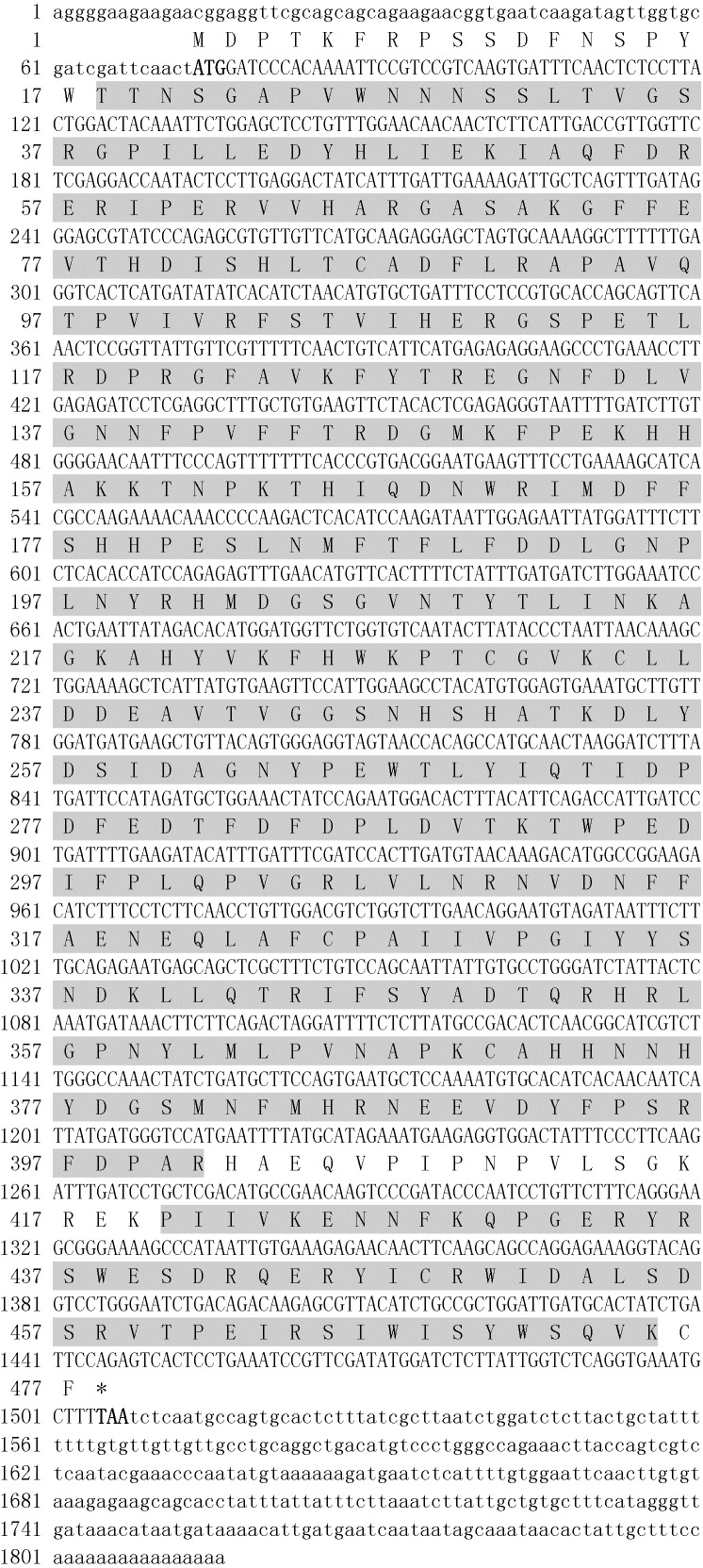
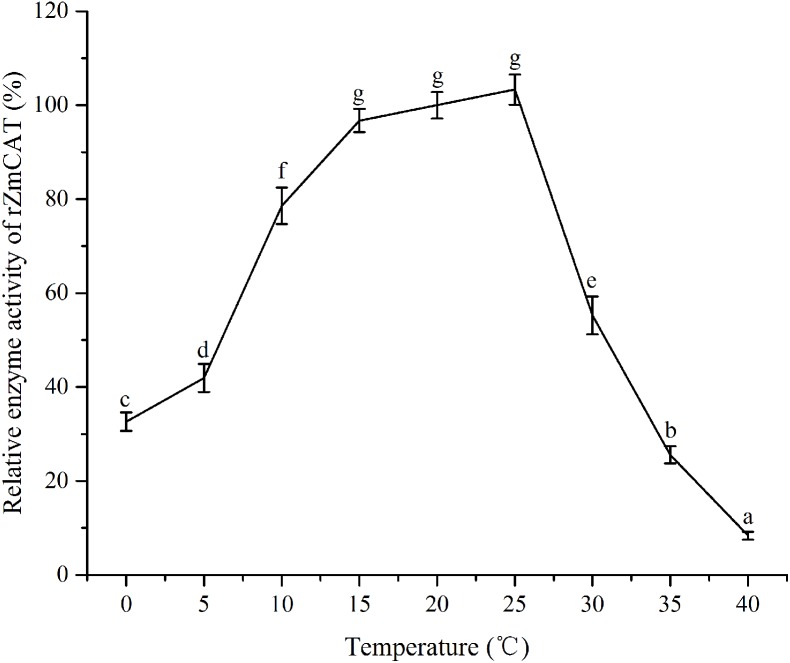
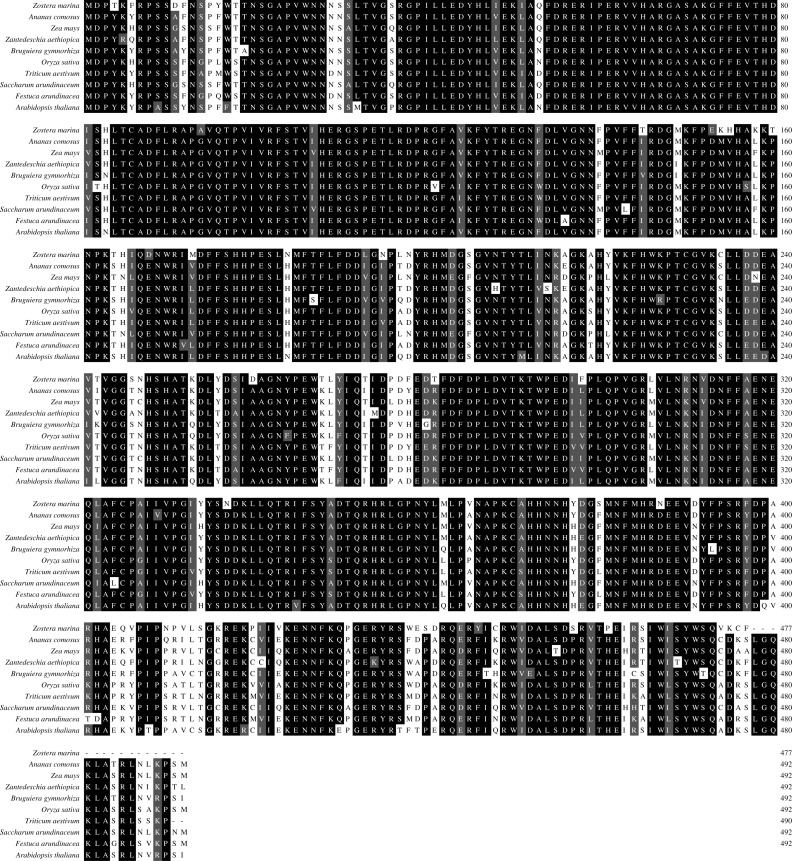
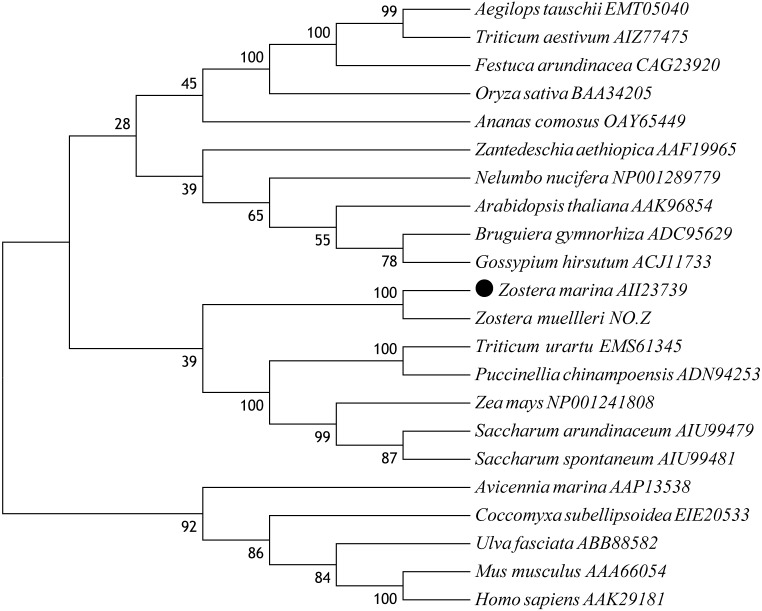
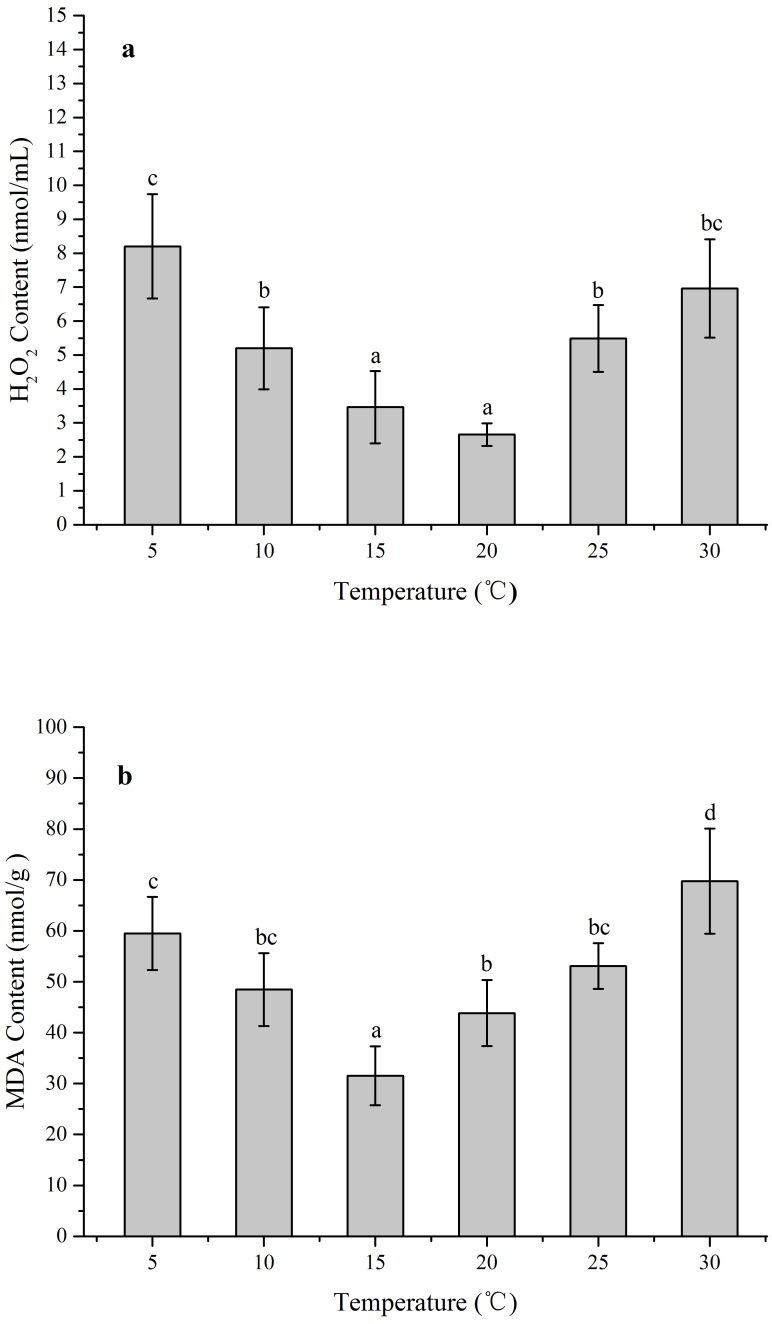
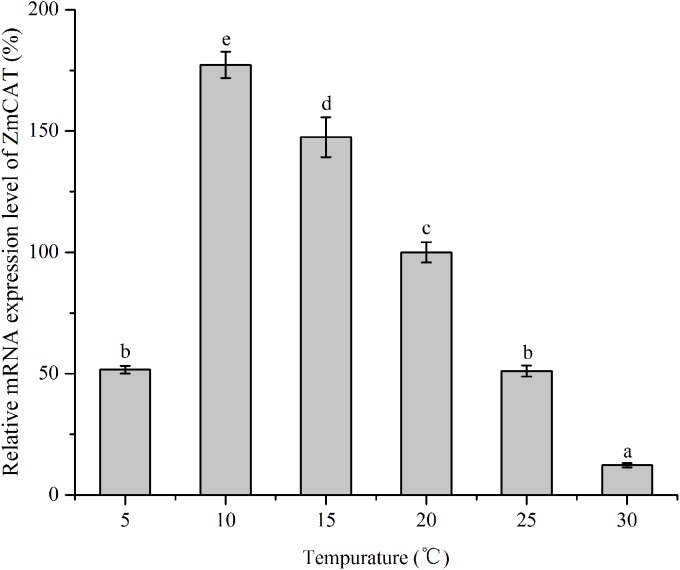
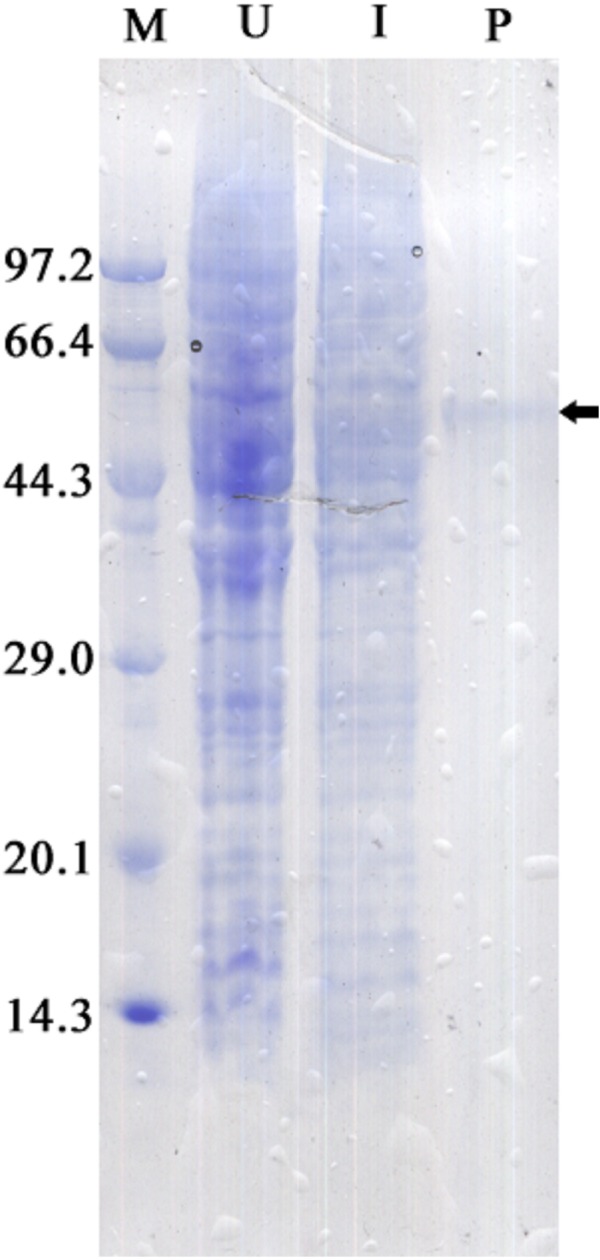
Catalase (CAT) is an antioxidant enzyme that plays a significant role in cellular protection against oxidative damage by degradation of hydrogen peroxide to oxygen and water. In the present study, the complete CAT cDNA sequence of was identified through expressed sequence tags (EST) analysis and the rapid amplification of cDNA ends (RACE) technique. The nucleotide sequence of CAT cDNA consisted of 1,816 bp with a 1,434 bp open reading frame (ORF), encoding a polypeptide of 477 amino acid residues, which possessed significant homology to other known plant CATs. The molecular mass of the predicted protein was 55.3 kDa with an estimated isoelectric point of 6.40. Phylogenetic analysis showed that CAT was closely related to CAT from gramineous species. In response to temperature stress, HO and MDA contents in increased significantly with cold stress (<10 °C) and heat stress (>25 °C). CAT expression was significantly upregulated at temperatures from 5 to 10 °C and then gradually downregulated, reaching its lowest expression at 30 °C. Recombinant CAT protein exhibited strong antioxidant activity over a wide temperature range, with the highest rCAT activity observed at 25 °C and a higher relative activity retained even with heat stress. All these results indicated that CAT was a member of the plant CAT family and involved in minimizing oxidative damage effects in under temperature stress.
过氧化氢酶(CAT)是一种抗氧化酶,通过将过氧化氢降解为氧气和水,在细胞抵御氧化损伤过程中发挥重要作用。在本研究中,通过表达序列标签(EST)分析和cDNA末端快速扩增(RACE)技术鉴定了[具体物种]的完整CAT cDNA序列。CAT cDNA的核苷酸序列由1816 bp组成,具有1434 bp的开放阅读框(ORF),编码一个由477个氨基酸残基组成的多肽,该多肽与其他已知植物CAT具有显著同源性。预测蛋白质的分子量为55.3 kDa,估计等电点为6.40。系统发育分析表明,CAT与禾本科物种的CAT密切相关。响应温度胁迫,[具体物种]中的过氧化氢(HO)和丙二醛(MDA)含量在冷胁迫(<10°C)和热胁迫(>25°C)下显著增加。CAT表达在5至10°C时显著上调,然后逐渐下调,在30°C时达到最低表达。重组CAT蛋白在较宽温度范围内表现出较强的抗氧化活性,在25°C时观察到最高的rCAT活性,即使在热胁迫下也保留较高的相对活性。所有这些结果表明,CAT是植物CAT家族的成员,参与减轻[具体物种]在温度胁迫下的氧化损伤效应。