Departamento de Epidemiologia, Faculdade de Saúde Pública, Universidade de São Paulo, São Paulo, Brasil.
Laboratório de Parasitoses por flagelados, Superintendência de Controle de Endemias, Secretaria de Estado da Saúde, Mogi Guaçu, São Paulo, Brasil.
PLoS Negl Trop Dis. 2018 Apr 2;12(4):e0006333. doi: 10.1371/journal.pntd.0006333. eCollection 2018 Apr.
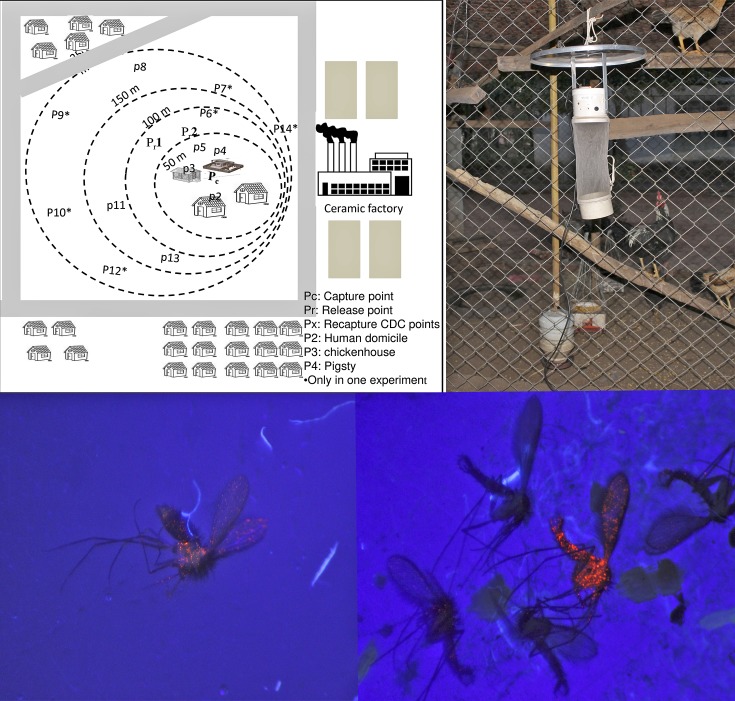
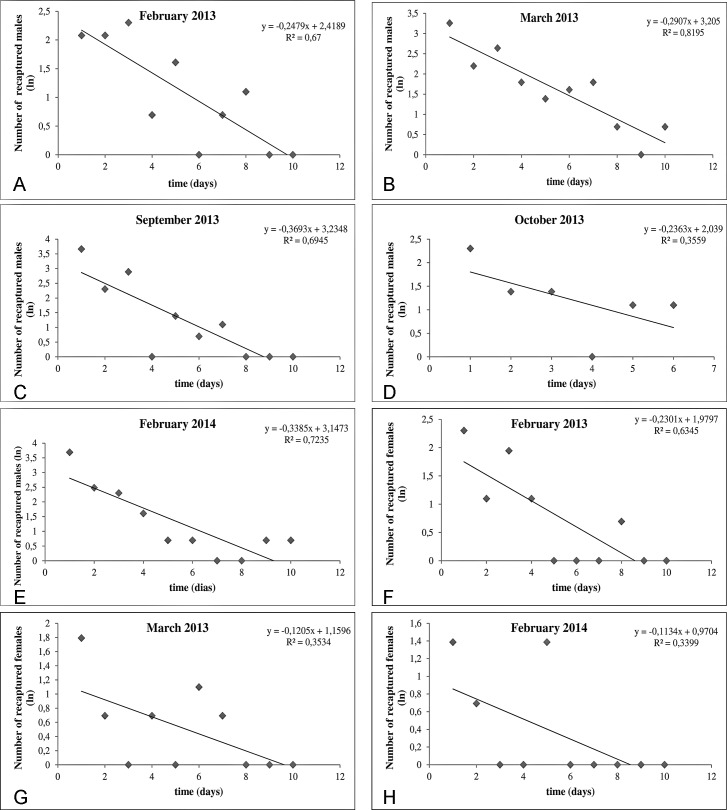
Zoonotic Visceral leishmaniasis (ZVL) is a neglected tropical disease that in the Americas is caused by the infection of Leishmania infantum and the domestic dog (Canis familiaris) is the main parasite reservoir in urban areas. The parasite is mainly transmitted by populations of the sibling species Lutzomyia longipalpis that has been spreading in countries including Brazil, Argentina, Paraguay and more recently Uruguay. Although bionomic parameters such as population survival and the duration of the gonotrophic cycle are critical in evaluating vector capacity, field studies have rarely been applied to sand fly populations. The present study sought to evaluate basic bionomic parameters related to the vectorial capacity of the (S)-9-methylgermacrene-B population of the Lu. longipalpis complex in a visceral leishmaniasis area of Sao Paulo state. The daily survival rate, the duration of the gonotrophic cycle and the dispersal pattern were evaluated through the mark- release-recapture method. A total of 1,547 males and 401 females were marked and released in five experiments carried out between February 2013 and February 2014. The higher recapture rates occurred within 100 meters of the release point and the estimated daily survival rates varied between 0.69 and 0.89 for females and between 0.69 and 0.79 for males. The minimum duration of the gonotrophic cycle observed was five days. The absolute population size, calculated ranged from 900 to 4,857 females and from 2,882 to 9,543 males. Our results demonstrate a high survival rate of this vector population and low dispersal that could be associated with the presence of all necessary conditions for its establishment and maintenance in the peridomiciles of this area. Our findings contribute to the basic data necessary for the understanding of ZVL dynamics and the evaluation of the implementation of prevention and control measures.
人兽共患内脏利什曼病(ZVL)是一种被忽视的热带病,在美洲由感染利什曼原虫引起,而家犬(Canis familiaris)是城市地区的主要寄生虫储存宿主。寄生虫主要通过亲缘种卢氏长须虻(Lutzomyia longipalpis)的种群传播,该种群在巴西、阿根廷、巴拉圭等国不断扩散,最近也蔓延到了乌拉圭。尽管种群生存和两性生殖周期持续时间等生物生态学参数对于评估媒介能力至关重要,但实地研究很少应用于沙蝇种群。本研究旨在评估与内脏利什曼病发生地区的 Lu. longipalpis 复合体(S)-9-甲基-金合欢烯-B 种群媒介能力相关的基本生物生态学参数。采用标记-释放-重捕法评估每日存活率、两性生殖周期持续时间和扩散模式。在 2013 年 2 月至 2014 年 2 月期间进行的五次实验中,共标记和释放了 1547 只雄性和 401 只雌性。在释放点 100 米范围内的重捕率较高,估计雌性的每日存活率在 0.69 至 0.89 之间,雄性在 0.69 至 0.79 之间。观察到的两性生殖周期最短持续时间为五天。计算得出的绝对种群数量,范围从 900 到 4857 只雌性和 2882 到 9543 只雄性。我们的研究结果表明,该媒介种群具有较高的存活率和较低的扩散率,这可能与该地区周边环境中建立和维持该种群的所有必要条件有关。我们的研究结果为理解 ZVL 动态和评估预防控制措施的实施提供了必要的基础数据。