UKCRC Centre of Excellence for Public Health (NI), Ulster University, Jordanstown, County Antrim, Northern Ireland.
Institute of Nursing and Health Research, Ulster University, Jordanstown, County Antrim, Northern Ireland.
BMC Public Health. 2018 Apr 2;18(1):431. doi: 10.1186/s12889-018-5265-4.
Poor balance is associated with an increased risk of falling, disability and death in older populations. To better inform policies and help reduce the human and economic cost of falls, this novel review explores the effects of free-living physical activity on balance in older (50 years and over) healthy community-dwelling adults.
Search methods: CENTRAL, Bone, Joint and Muscle Trauma Group Specialised register and CDSR in the Cochrane Library, MEDLINE, EMBASE, CINAHL, PsychINFO, and AMED were searched from inception to 7th June 2016.
Intervention and observational studies investigating the effects of free-living PA on balance in healthy community-dwelling adults (50 years and older).
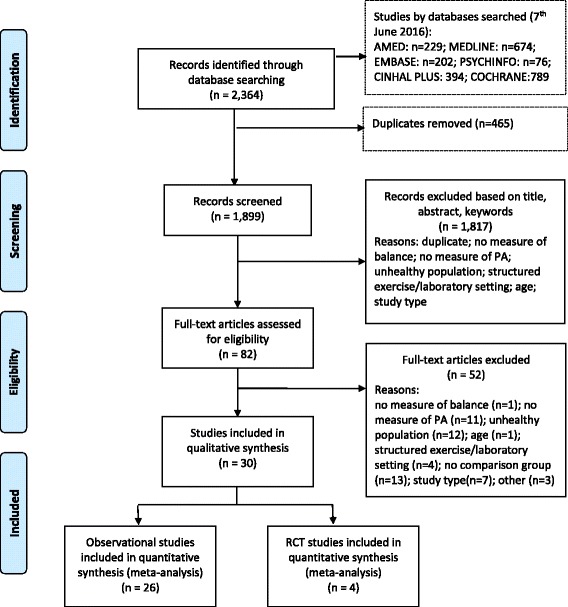
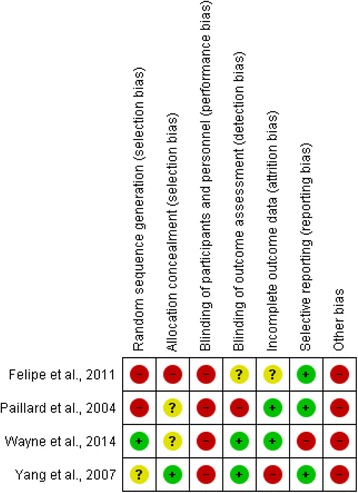
Thirty studies were eligible for inclusion. Data extraction and risk of bias assessment were independently carried out by two review authors. Due to the variety of outcome measures used in studies, balance outcomes from observational studies were pooled as standardised mean differences or mean difference where appropriate and 95% confidence intervals, and outcomes from RCTs were synthesised using a best evidence approach.
Limited evidence provided by a small number of RCTs, and evidence from observational studies of moderate methodological quality, suggest that free-living PA of between one and 21 years' duration improves measures of balance in older healthy community-dwelling adults. Statistical analysis of observational studies found significant effects in favour of more active groups for neuromuscular measures such as gait speed; functionality using Timed Up and Go, Single Leg Stance, and Activities of Balance Confidence Scale; flexibility using the forward reach test; and strength using the isometric knee extension test and ultrasound. A significant effect was also observed for less active groups on a single sensory measure of balance, the knee joint repositioning test.
There is some evidence that free-living PA is effective in improving balance outcomes in older healthy adults, but future research should include higher quality studies that focus on a consensus of balance measures that are clinically relevant and explore the effects of free-living PA on balance over the longer-term.
在老年人中,平衡能力差与跌倒、残疾和死亡的风险增加有关。为了更好地制定政策,帮助降低跌倒造成的人力和经济成本,本综述探讨了日常生活中的体力活动对 50 岁及以上健康社区居住成年人平衡能力的影响。
检索策略:CENTRAL、Cochrane 协作网下骨、关节和肌肉创伤组专业注册库、Cochrane 图书馆、MEDLINE、EMBASE、CINAHL、PsycINFO 和 AMED 从建库至 2016 年 6 月 7 日。
干预和观察性研究,研究对象为健康社区居住的成年人(50 岁及以上),探讨日常生活中的体力活动对平衡能力的影响。
30 项研究符合纳入标准。两名综述作者独立进行数据提取和偏倚风险评估。由于研究中使用的结局测量指标多种多样,因此对观察性研究的平衡结局进行了合并分析,使用标准化均数差或均数差值(适用时)和 95%置信区间表示,对 RCT 的结局则使用最佳证据方法进行综合分析。
为数不多的 RCT 提供的证据有限,且观察性研究的证据质量为中等,表明日常生活中的体力活动持续 1 至 21 年可改善健康的社区居住老年人的平衡能力。对观察性研究的统计学分析发现,更活跃组在步态速度等神经肌肉测量指标、计时起立-行走测试、单腿站立测试、平衡信心活动量表、前伸测试等功能、等速膝关节伸展试验和超声检查等力量测试中具有显著的优势,而不太活跃组在膝关节重定位测试等单一感觉平衡测试中具有显著的优势。
有一些证据表明,日常生活中的体力活动对改善老年人的平衡能力有一定效果,但未来的研究应包括更高质量的研究,重点关注临床相关的共识平衡测量指标,并探讨日常生活中的体力活动对平衡能力的长期影响。