Department of Surgery, University of California at Los Angeles, Los Angeles, CA, 90095, USA.
Department of Molecular, Cell, and Developmental Biology, University of California at Los Angeles, Los Angeles, CA, 90095, USA.
Sci Rep. 2018 Apr 3;8(1):5430. doi: 10.1038/s41598-018-23653-3.
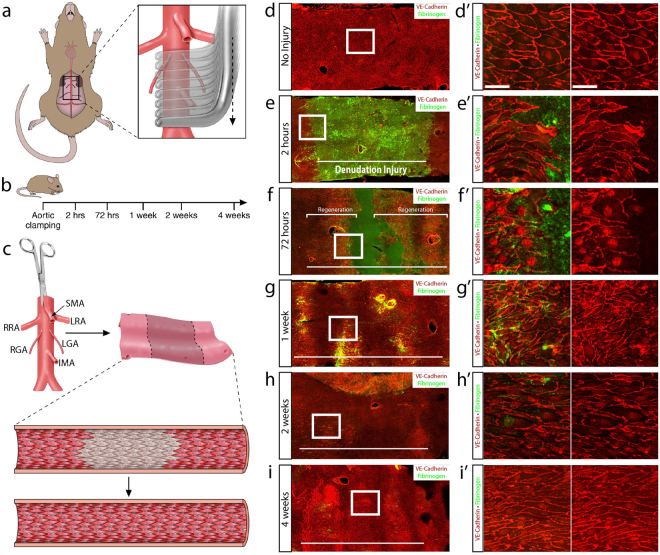
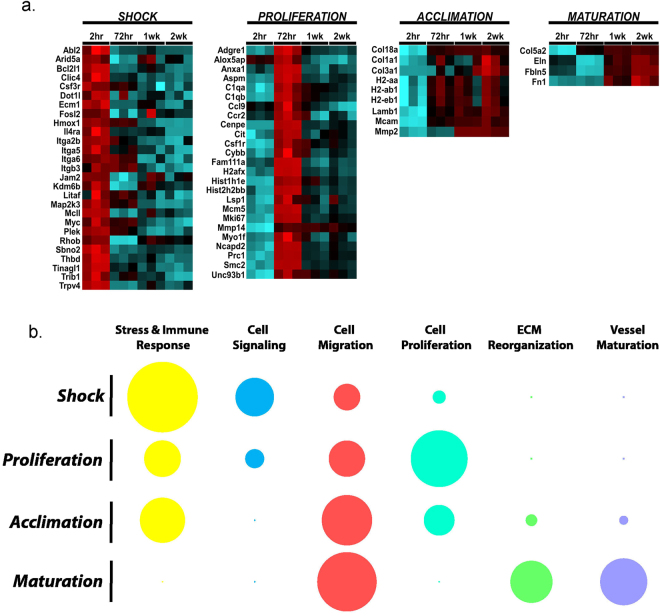
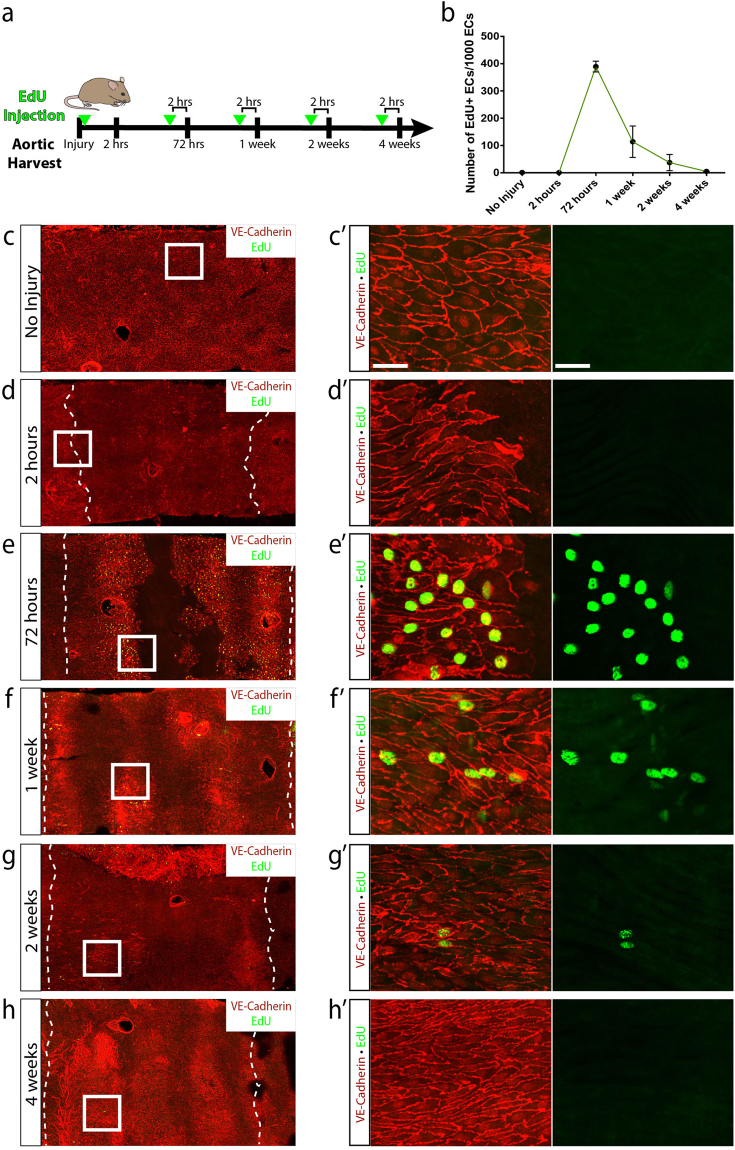
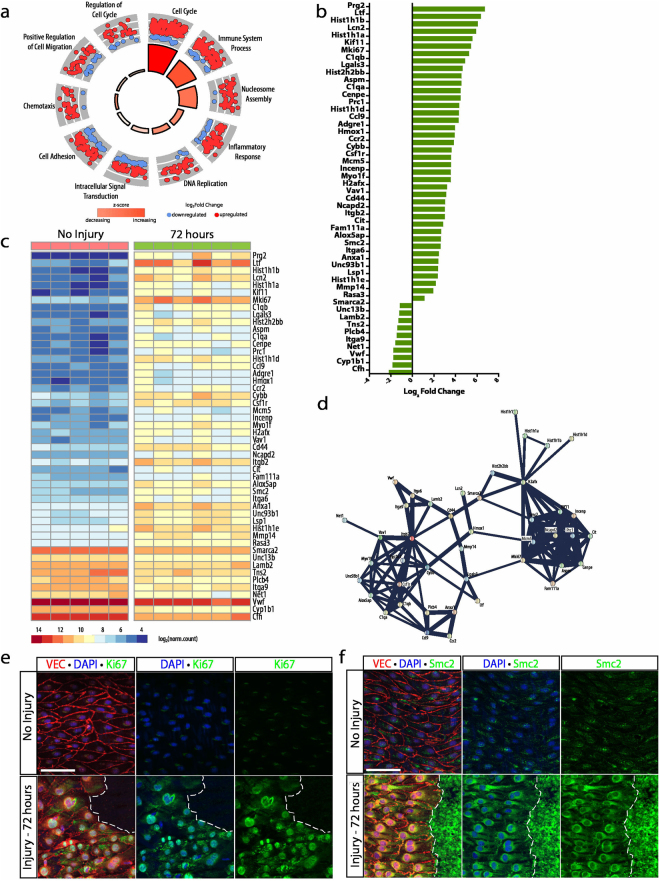
The molecular mechanisms underlying vascular regeneration and repair are largely unknown. To gain insight into this process, we developed a method of intima denudation, characterized the progression of endothelial healing, and performed transcriptome analysis over time. Next-generation RNA sequencing (RNAseq) provided a quantitative and unbiased gene expression profile during in vivo regeneration following denudation injury. Our data indicate that shortly after injury, cells immediately adjacent to the wound mount a robust and rapid response with upregulation of genes like Jun, Fos, Myc, as well as cell adhesion genes. This was quickly followed by a wave of proliferative genes. After completion of endothelial healing a vigorous array of extracellular matrix transcripts were upregulated. Gene ontology enrichment and protein network analysis were used to identify transcriptional profiles over time. Further data mining revealed four distinct stages of regeneration: shock, proliferation, acclimation, and maturation. The transcriptional signature of those stages provides insight into the regenerative machinery responsible for arterial repair under normal physiologic conditions.
血管再生和修复的分子机制在很大程度上尚不清楚。为了深入了解这一过程,我们开发了一种内膜剥脱方法,对内皮愈合的进程进行了特征描述,并随时间进行了转录组分析。下一代 RNA 测序 (RNAseq) 提供了在剥脱损伤后体内再生过程中的定量和无偏倚的基因表达谱。我们的数据表明,在损伤后不久,紧邻伤口的细胞立即启动了一个强大而快速的反应,上调了 Jun、Fos、Myc 等基因以及细胞黏附基因。紧接着是一波增殖基因。内皮愈合完成后,大量细胞外基质转录本上调。基因本体富集和蛋白质网络分析用于随时间识别转录谱。进一步的数据挖掘揭示了再生的四个不同阶段:休克、增殖、适应和成熟。这些阶段的转录特征为负责正常生理条件下动脉修复的再生机制提供了深入了解。