Department of Anatomy, School of Biomedical Sciences, University of Otago, P.O. Box 56, Dunedin, 9054, New Zealand.
Department of Biology, University of Fribourg, Fribourg, Switzerland.
Sci Rep. 2018 Apr 3;8(1):5518. doi: 10.1038/s41598-018-23749-w.
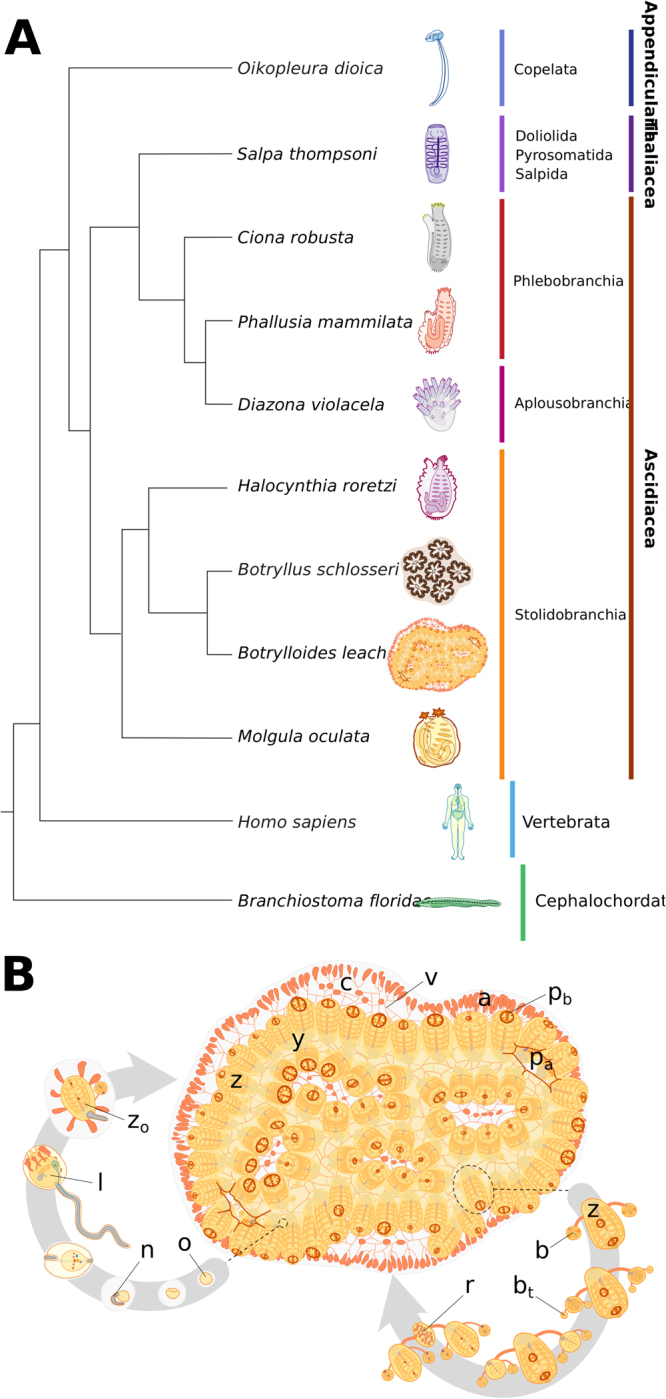
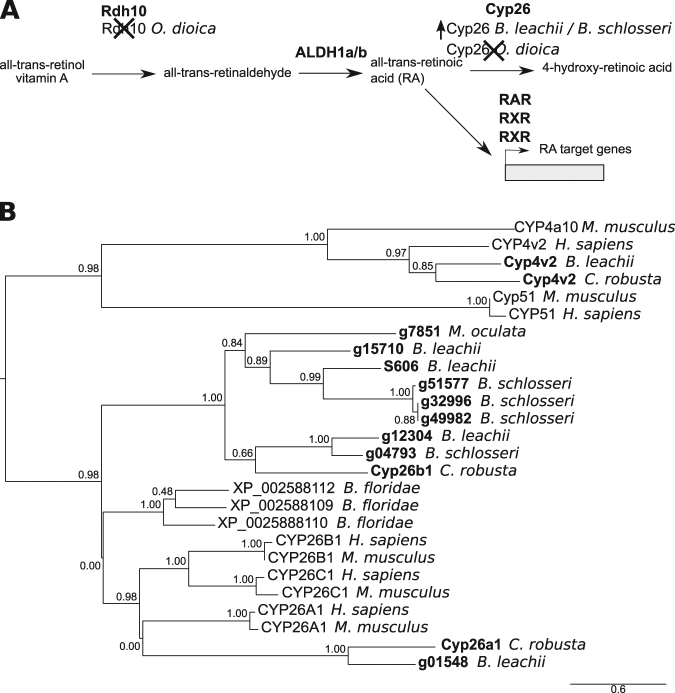
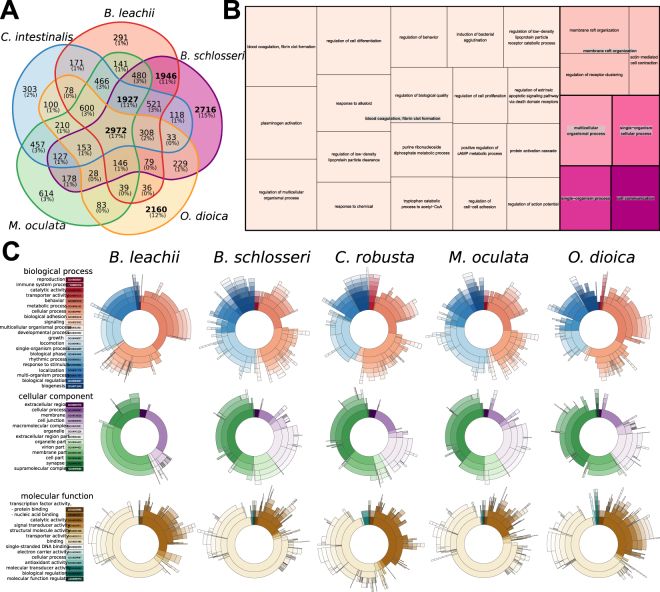
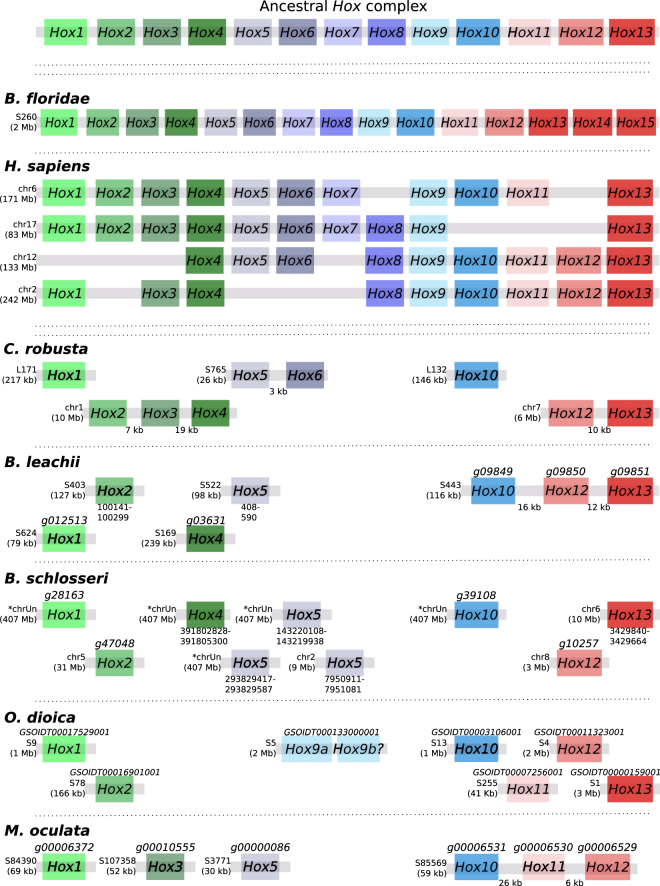
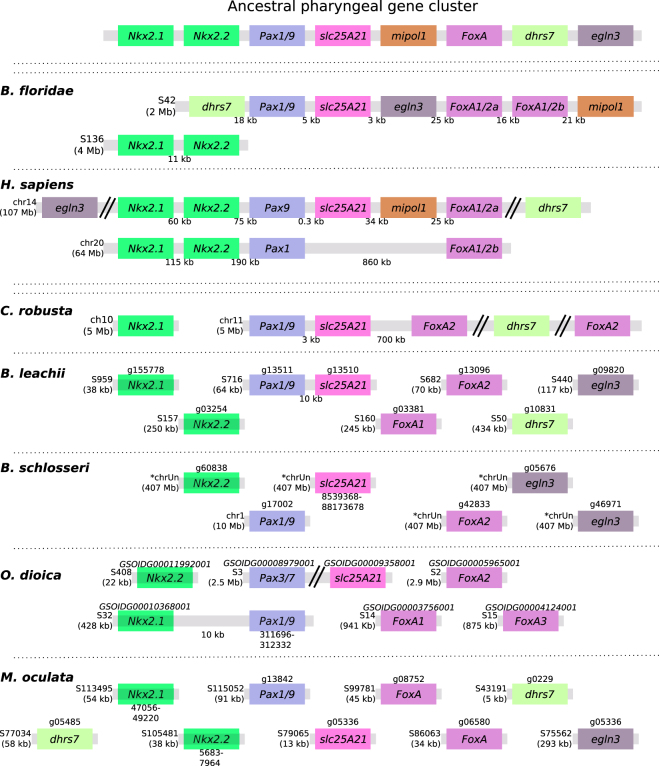
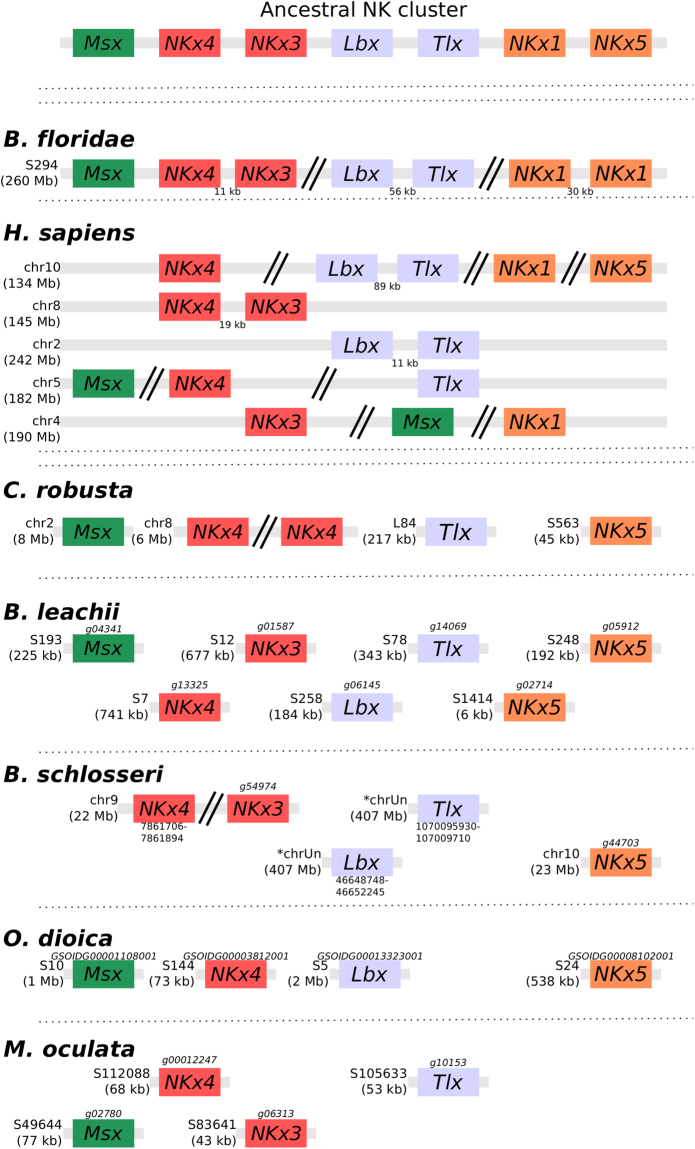
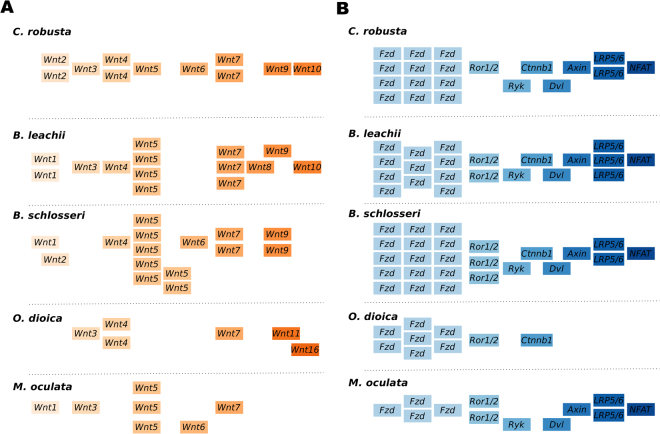
Tunicates are marine invertebrates that compose the closest phylogenetic group to the vertebrates. These chordates present a particularly diverse range of regenerative abilities and life-history strategies. Consequently, tunicates provide an extraordinary perspective into the emergence and diversity of these traits. Here we describe the genome sequencing, annotation and analysis of the Stolidobranchian Botrylloides leachii. We have produced a high-quality 159 Mb assembly, 82% of the predicted 194 Mb genome. Analysing genome size, gene number, repetitive elements, orthologs clustering and gene ontology terms show that B. leachii has a genomic architecture similar to that of most solitary tunicates, while other recently sequenced colonial ascidians have undergone genome expansion. In addition, ortholog clustering has identified groups of candidate genes for the study of colonialism and whole-body regeneration. By analysing the structure and composition of conserved gene linkages, we observed examples of cluster breaks and gene dispersions, suggesting that several lineage-specific genome rearrangements occurred during tunicate evolution. We also found lineage-specific gene gain and loss within conserved cell-signalling pathways. Such examples of genetic changes within conserved cell-signalling pathways commonly associated with regeneration and development that may underlie some of the diverse regenerative abilities observed in tunicates. Overall, these results provide a novel resource for the study of tunicates and of colonial ascidians.
被囊动物是海洋无脊椎动物,是与脊椎动物最接近的进化群体。这些脊索动物表现出特别多样化的再生能力和生活史策略。因此,被囊动物为这些特征的出现和多样性提供了一个非凡的视角。在这里,我们描述了 Stolidobranchian Botrylloides leachii 的基因组测序、注释和分析。我们产生了一个高质量的 159Mb 组装,占预测的 194Mb 基因组的 82%。分析基因组大小、基因数量、重复元件、同源聚类和基因本体论术语表明,B. leachii 的基因组结构与大多数独居被囊动物相似,而其他最近测序的群居海鞘则经历了基因组扩张。此外,同源聚类鉴定了用于研究群体生活和全身再生的候选基因群。通过分析保守基因连接的结构和组成,我们观察到了聚类断裂和基因离散的例子,这表明在被囊动物进化过程中发生了几次谱系特异性的基因组重排。我们还在保守的细胞信号通路中发现了谱系特异性的基因增益和丢失。这些与再生和发育相关的保守细胞信号通路中的遗传变化的例子可能是被囊动物观察到的多样化再生能力的基础。总的来说,这些结果为被囊动物和群居海鞘的研究提供了一个新的资源。