Ma Haiming, Zhang Guina, Mou Chunrong, Fu Xiujuan, Chen Yadan
Department of Pharmacy, China-Japan Union Hospital of Jilin University, Changchun, China.
Linyi City 120 Emergency Command Center, Linyi, China.
Front Pharmacol. 2018 Mar 20;9:156. doi: 10.3389/fphar.2018.00156. eCollection 2018.
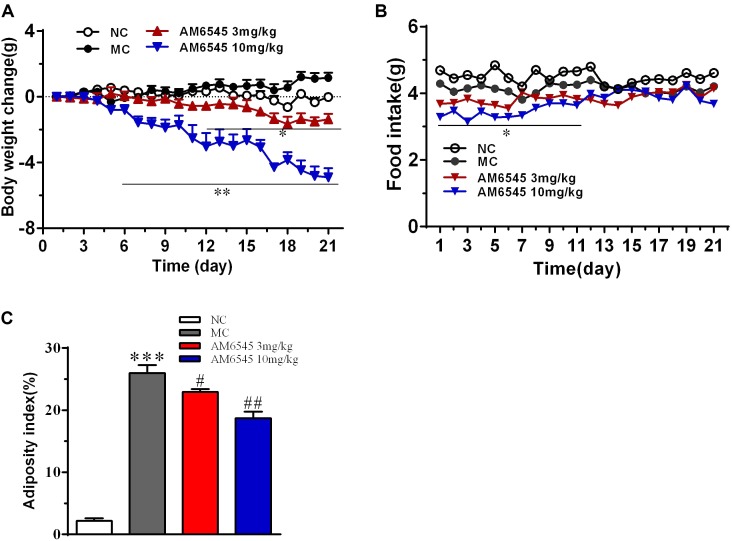
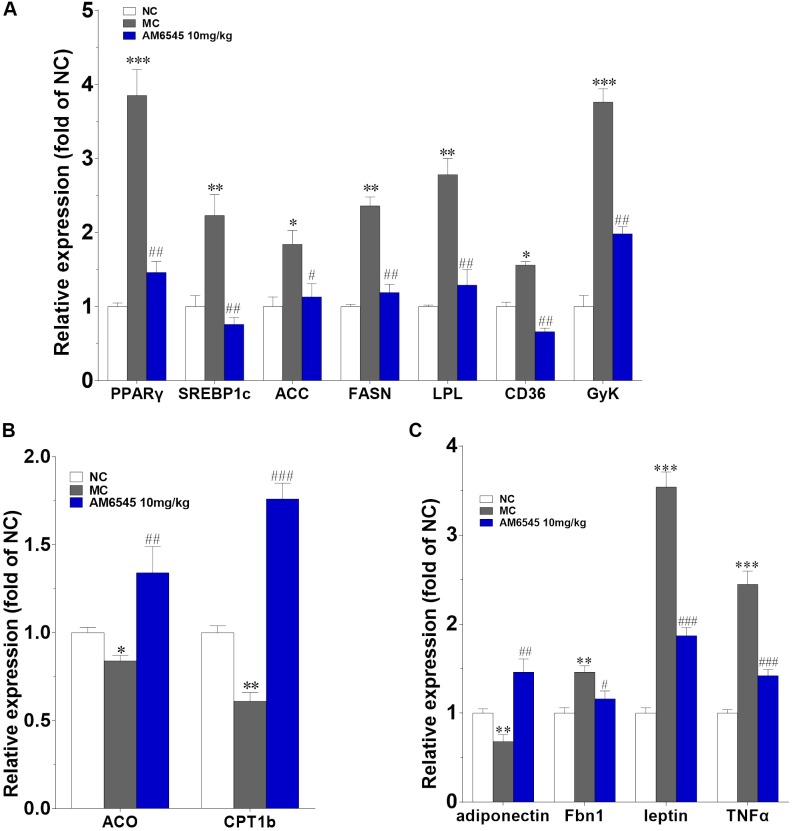
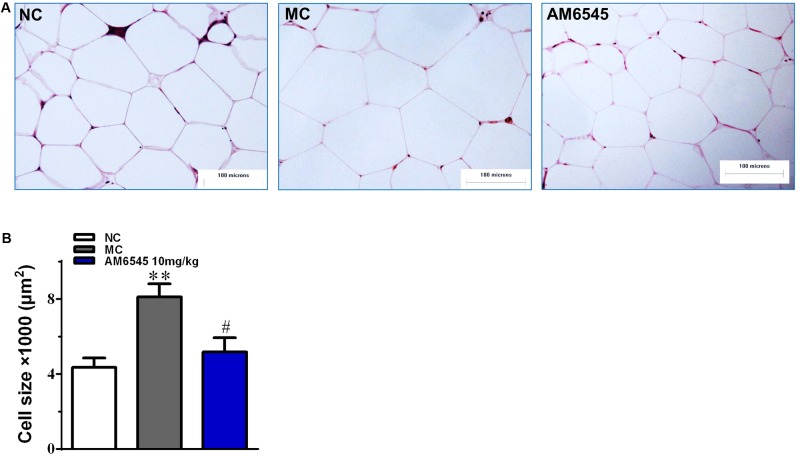
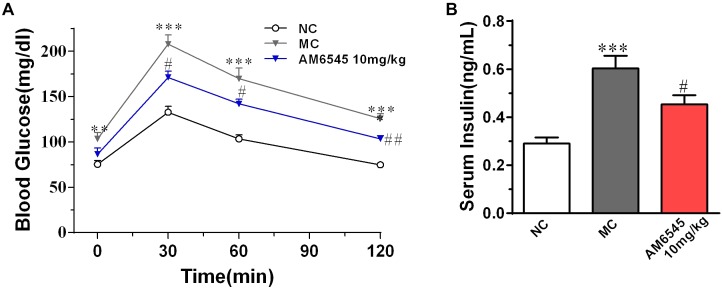
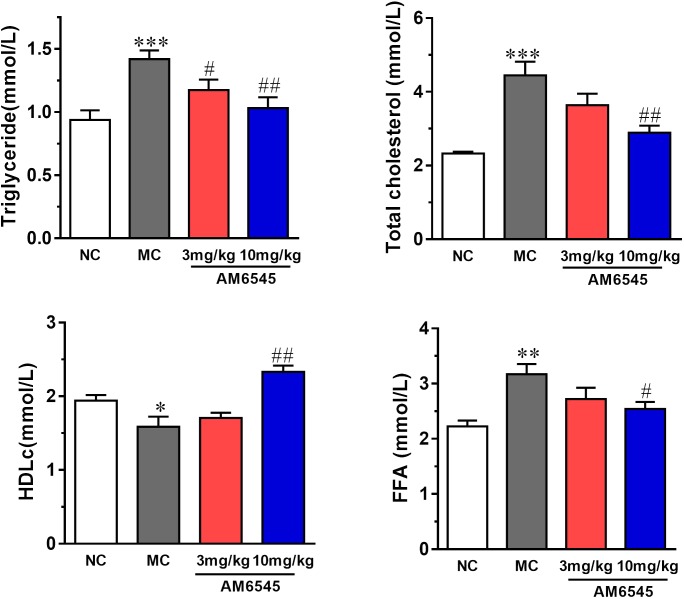
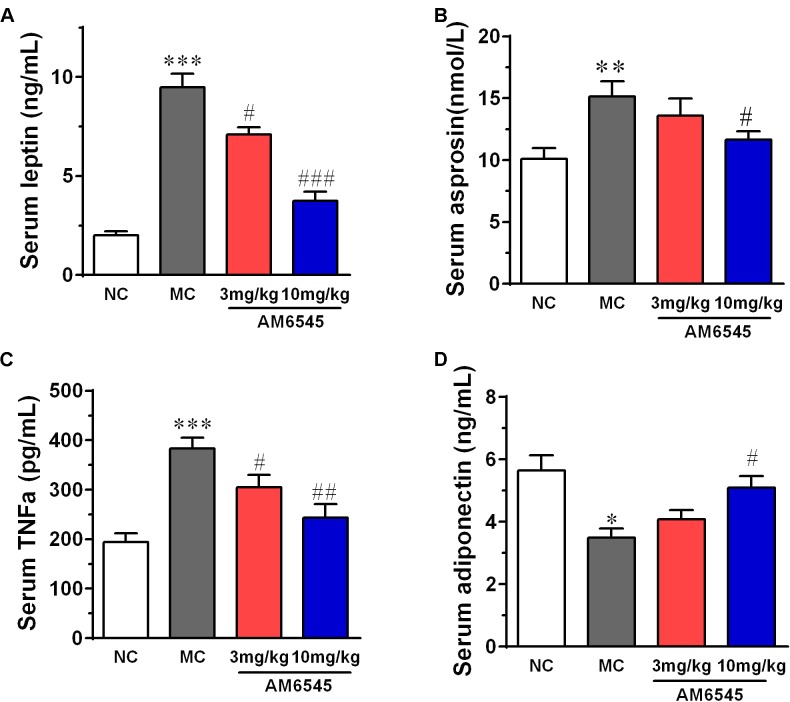
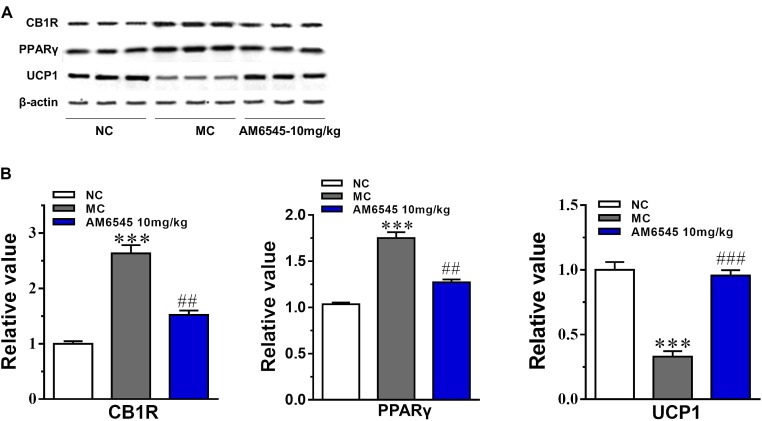
Effect of peripheral cannabinoid receptor 1 (CB1R) blockade by AM6545 in the monosodium glutamate (MSG)-induced hypometabolic and hypothalamic obesity was observed, and the impact on intraperitoneal adipose tissue and adipokines was investigated. The MSG mice is characterized by excessive abdominal obesity, and combined with dyslipidemia and insulin resistance. 3-Week AM6545 treatment dose-dependently decreased the body weight, intraperitoneal fat mass, and rectified the accompanied dyslipidemia include elevated serum triglyceride, total cholesterol, free fatty acids, and lowered LDLc level. Glucose intolerance and hyperinsulinemia were also alleviated. But AM6545 didn't affect the food-intake consistently through the experiment. In line with the reduction on fat mass, the size of adipocyte was reduced markedly. Most interestingly, AM6545 showed significant improvement on levels of circulating adipokines including lowering leptin, asprosin and TNFα, and increasing HMW adiponectin. Correspondingly, dysregulated gene expression of lipogenesis, lipolysis, and adipokines in the adipose tissue were nearly recovered to normal level after AM6545 treatment. Additionally, western blot analysis revealed that AM6545 corrected the elevated CB1R and PPARγ protein expression, while increased the key energy uncoupling protein UCP1 expression in adipose tissue. Taken together, the current study indicates that AM6545 induced a comprehensive metabolic improvement in the MSG mice including counteracting the hypometabolic and hypothalamic obesity, and improving the accompanied dyslipidemia and insulin resistance. One key underlying mechanism is related to ameliorate on the metabolic deregulation of adipose tissue, the synthesis and secretion of adipokines were thus rectified, and finally the catabolism was increased and the anabolism was reduced in intraperitoneal adipose tissue. Findings from this study will provide the valuable information about peripheral CB1R antagonist in managing hypometabolic obesity.
观察了外周大麻素受体1(CB1R)拮抗剂AM6545对味精(MSG)诱导的低代谢和下丘脑性肥胖的影响,并研究了其对腹膜内脂肪组织和脂肪因子的作用。MSG小鼠的特征是腹部过度肥胖,并伴有血脂异常和胰岛素抵抗。3周的AM6545治疗剂量依赖性地降低了体重、腹膜内脂肪量,并纠正了伴随的血脂异常,包括血清甘油三酯、总胆固醇、游离脂肪酸升高以及低密度脂蛋白胆固醇水平降低。葡萄糖耐量和高胰岛素血症也得到缓解。但在整个实验过程中,AM6545对食物摄入量没有持续影响。与脂肪量的减少一致,脂肪细胞的大小明显减小。最有趣的是,AM6545对循环脂肪因子水平有显著改善,包括降低瘦素、阿朴脂蛋白和肿瘤坏死因子α,以及增加高分子量脂联素。相应地,AM6545治疗后,脂肪组织中脂肪生成、脂肪分解和脂肪因子的基因表达失调几乎恢复到正常水平。此外,蛋白质印迹分析显示,AM6545纠正了脂肪组织中升高的CB1R和过氧化物酶体增殖物激活受体γ(PPARγ)蛋白表达,同时增加了关键能量解偶联蛋白UCP1的表达。综上所述,本研究表明,AM6545可使MSG小鼠的代谢得到全面改善,包括对抗低代谢和下丘脑性肥胖,以及改善伴随的血脂异常和胰岛素抵抗。一个关键的潜在机制与改善脂肪组织的代谢失调有关,从而纠正了脂肪因子的合成和分泌,最终增加了腹膜内脂肪组织的分解代谢并减少了合成代谢。本研究结果将为外周CB1R拮抗剂治疗低代谢性肥胖提供有价值的信息。