Yalcin Ozlem, Jani Vivek P, Johnson Paul C, Cabrales Pedro
Koç University School of Medicine, Sariyer, Istanbul, Turkey.
Department of Bioengineering, University of California, San Diego, San Diego, La Jolla, CA, United States.
Front Physiol. 2018 Mar 16;9:168. doi: 10.3389/fphys.2018.00168. eCollection 2018.
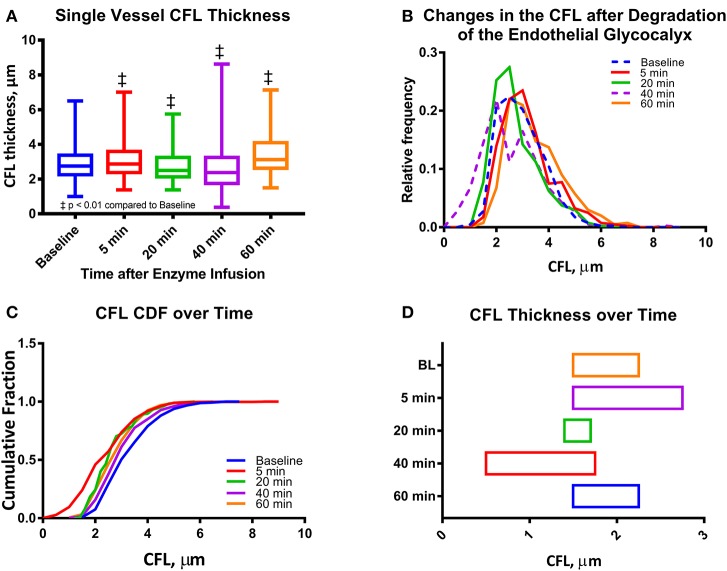
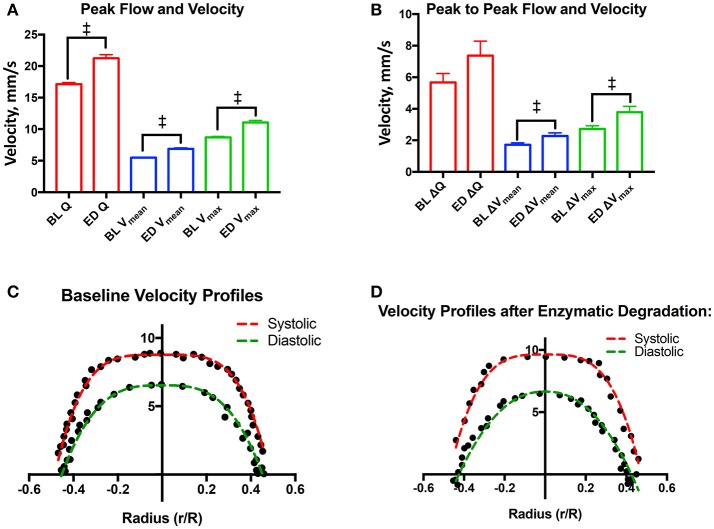
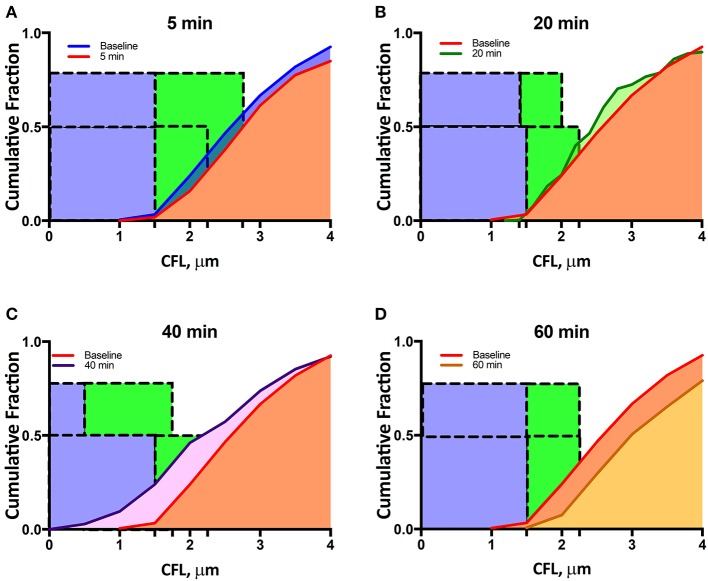
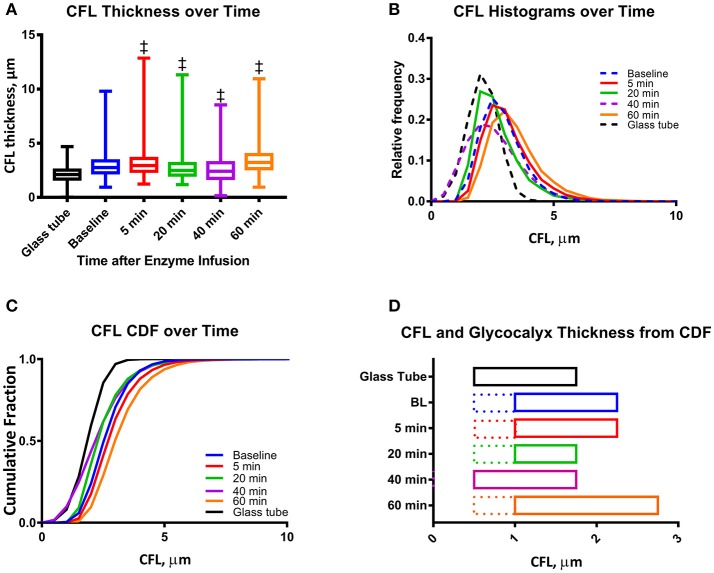
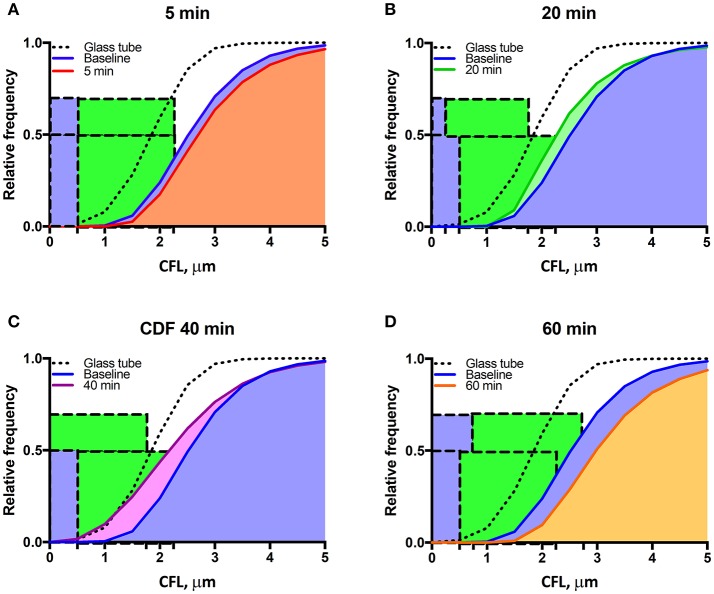
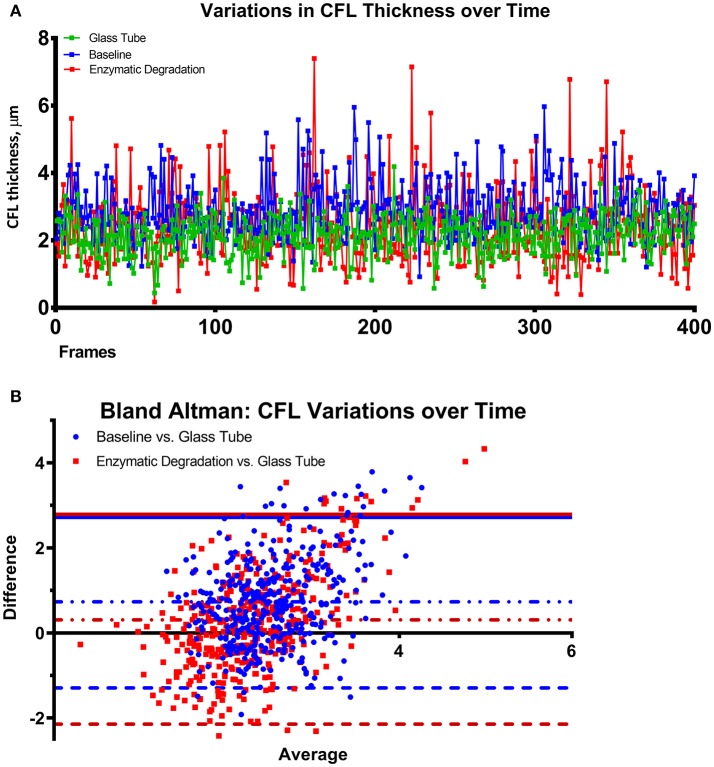
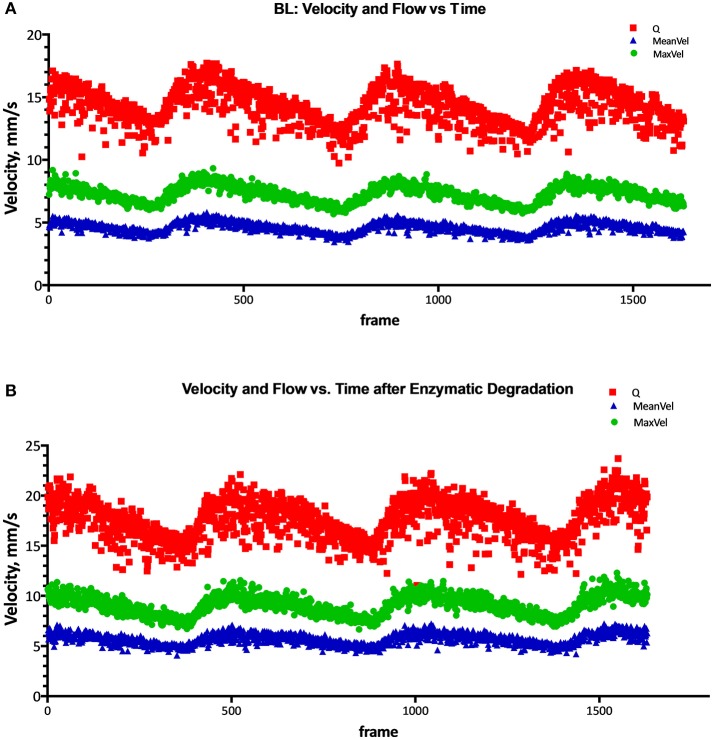
The endothelial glycocalyx is a complex network of glycoproteins, proteoglycans, and glycosaminoglycans; it lines the vascular endothelial cells facing the lumen of blood vessels forming the endothelial glycocalyx layer (EGL). This study aims to investigate the microvascular hemodynamics implications of the EGL by quantifying changes in blood flow hydrodynamics post-enzymatic degradation of the glycocalyx layer. High-speed intravital microscopy videos of small arteries (around 35 μm) of the rat cremaster muscle were recorded at various time points after enzymatic degradation of the EGL. The thickness of the cell free layer (CFL), blood flow velocity profiles, and volumetric flow rates were quantified. Hydrodynamic effects of the presence of the EGL were observed in the differences between the thickness of CFL in microvessels with an intact EGL and glass tubes of similar diameters. Maximal changes in the thickness of CFL were observed 40 min post-enzymatic degradation of the EGL. Analysis of the frequency distribution of the thickness of CFL allows for estimation of the thickness of the endothelial surface layer (ESL), the plasma layer, and the glycocalyx. Peak flow, maximum velocity, and mean velocity were found to statistically increase by 24, 27, and 25%, respectively, after enzymatic degradation of the glycocalyx. The change in peak-to-peak maximum velocity and mean velocity were found to statistically increase by 39 and 32%, respectively, after 40 min post-enzymatic degradation of the EGL. The bluntness of blood flow velocity profiles was found to be reduced post-degradation of the EGL, as the exclusion volume occupied by the EGL increased the effective volume impermeable to RBCs in microvessels. This study presents the effects of the EGL on microvascular hemodynamics. Enzymatic degradation of the EGL resulted in a decrease in the thickness of CFL, an increase in blood velocity, blood flow, and decrease of the bluntness of the blood flow velocity profile in small arterioles. In summary, the EGL functions as a molecular sieve to solute transport and as a lubrication layer to protect the endothelium from red blood cell (RBC) motion near the vessel wall, determining wall shear stress.
内皮糖萼是由糖蛋白、蛋白聚糖和糖胺聚糖组成的复杂网络;它排列在面向血管腔的血管内皮细胞表面,形成内皮糖萼层(EGL)。本研究旨在通过量化糖萼层酶解后血流动力学的变化,探讨EGL对微血管血流动力学的影响。在EGL酶解后的不同时间点,记录大鼠提睾肌小动脉(约35μm)的高速活体显微镜视频。对无细胞层(CFL)的厚度、血流速度分布和体积流量进行了量化。在具有完整EGL的微血管和直径相似的玻璃管中,观察到CFL厚度差异中EGL存在的流体动力学效应。在EGL酶解后40分钟观察到CFL厚度的最大变化。对CFL厚度的频率分布分析有助于估计内皮表面层(ESL)、血浆层和糖萼的厚度。糖萼酶解后,峰值流量、最大速度和平均速度分别在统计学上增加了24%、27%和25%。在EGL酶解后40分钟,峰峰值最大速度和平均速度的变化在统计学上分别增加了39%和32%。发现EGL降解后血流速度分布的钝度降低,因为EGL占据的排除体积增加了微血管中红细胞不可渗透的有效体积。本研究展示了EGL对微血管血流动力学的影响。EGL的酶解导致小动脉中CFL厚度减小、血流速度和血流量增加,以及血流速度分布钝度降低。总之,EGL起到分子筛对溶质运输的作用,并作为润滑层保护内皮免受血管壁附近红细胞(RBC)运动的影响,从而决定壁面剪应力。