Liu Chang, Liu Bao, Liu Lu, Zhang Er-Long, Sun Bind-da, Xu Gang, Chen Jian, Gao Yu-Qi
Institute of Medicine and Hygienic Equipment for High Altitude Region, College of High Altitude Military Medicine, Army Medical University, Third Military Medical University, Chongqing, China.
Key Laboratory of High Altitude Environmental Medicine, Army Medical University, Third Military Medical University, Ministry of Education, Chongqing, China.
Front Physiol. 2018 Mar 16;9:236. doi: 10.3389/fphys.2018.00236. eCollection 2018.
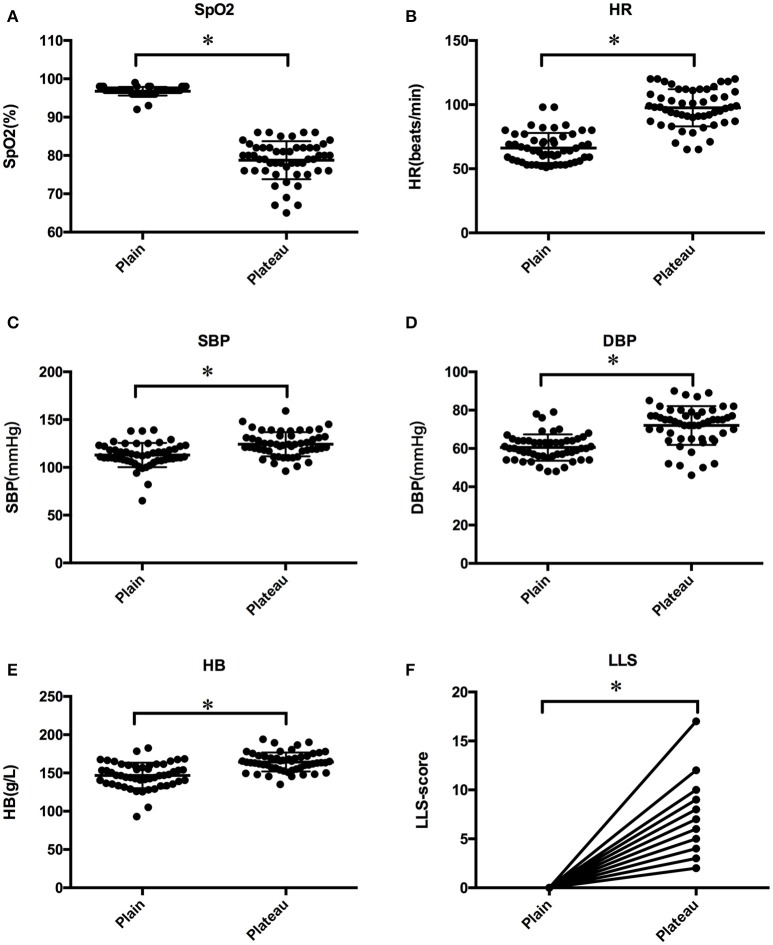
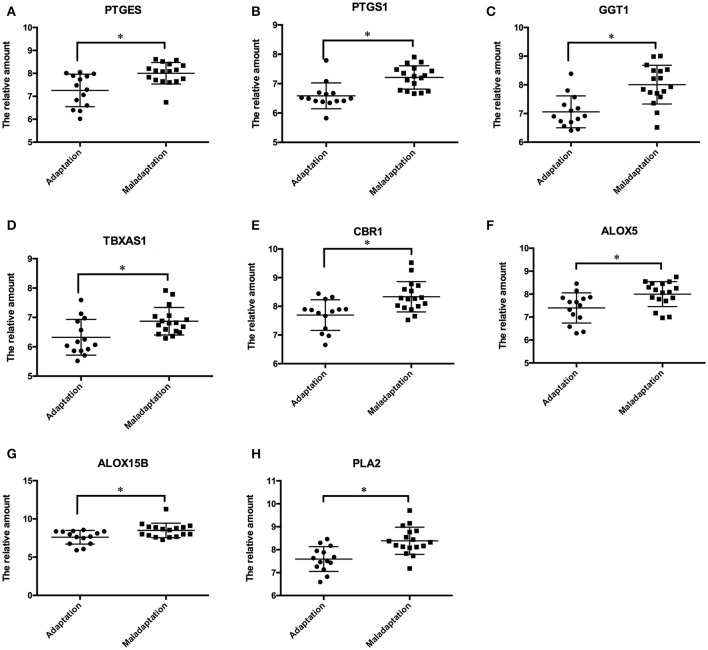
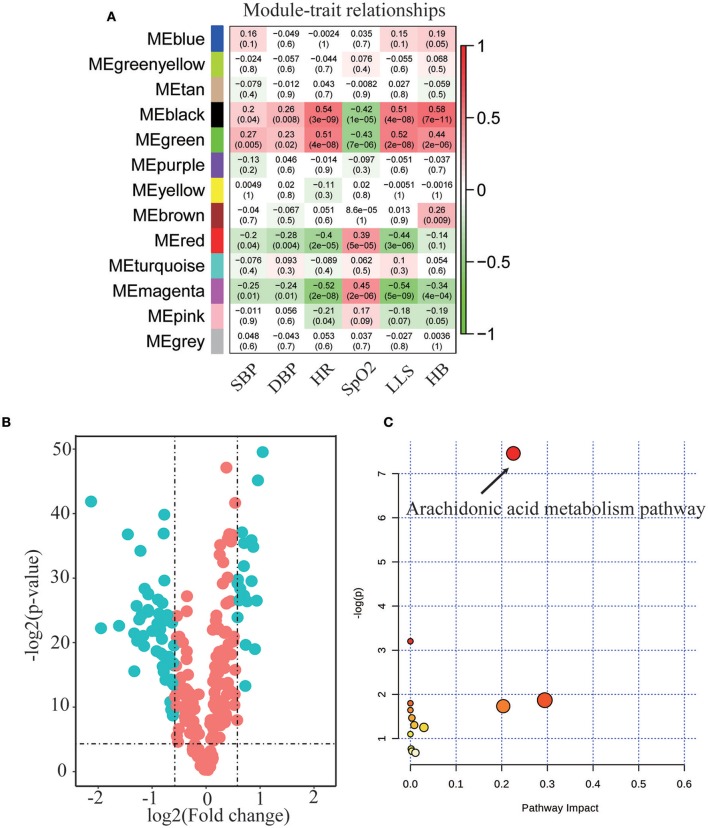
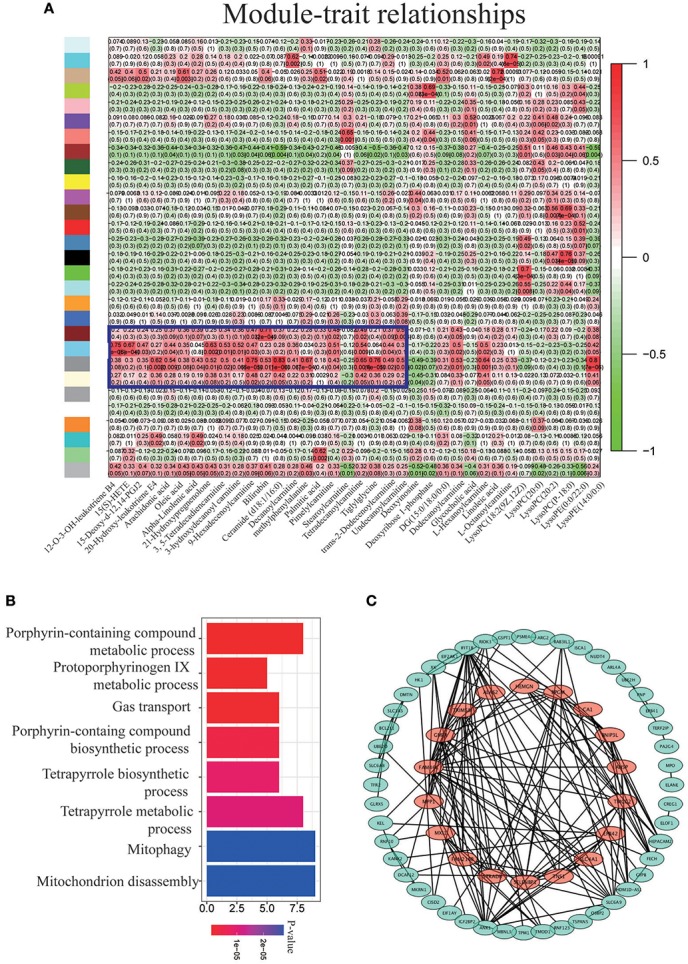
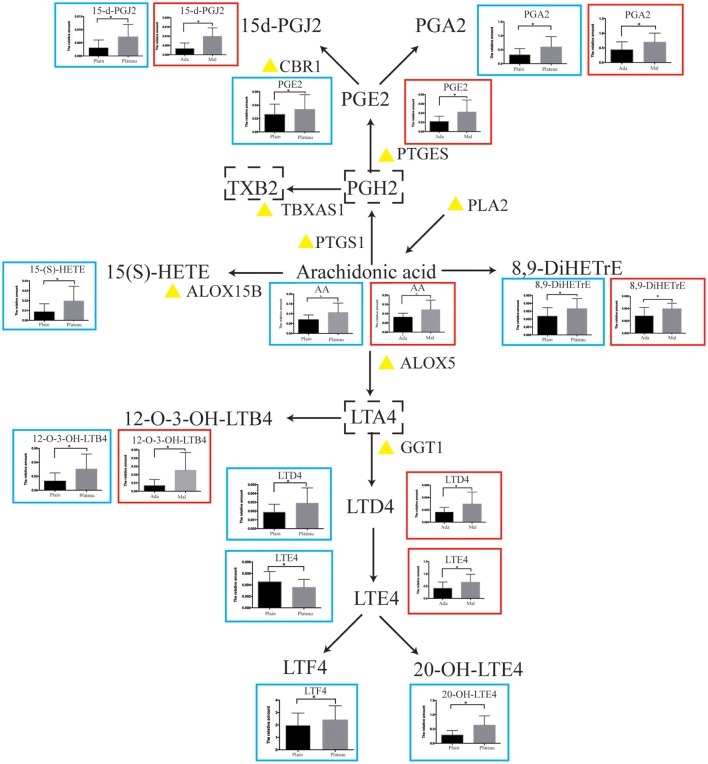
The modulation of arachidonic acid (AA) metabolism pathway is identified in metabolic alterations after hypoxia exposure, but its biological function is controversial. We aimed at integrating plasma metabolomic and transcriptomic approaches to systematically explore the roles of the AA metabolism pathway in response to acute hypoxia using an acute mountain sickness (AMS) model. Blood samples were obtained from 53 enrolled subjects before and after exposure to high altitude. Ultra-performance liquid chromatography-quadrupole time-of-flight mass spectrometry and RNA sequencing were separately performed for metabolomic and transcriptomic profiling, respectively. Influential modules comprising essential metabolites and genes were identified by weighted gene co-expression network analysis (WGCNA) after integrating metabolic information with phenotypic and transcriptomic datasets, respectively. Enrolled subjects exhibited diverse response manners to hypoxia. Combined with obviously altered heart rate, oxygen saturation, hemoglobin, and Lake Louise Score (LLS), metabolomic profiling detected that 36 metabolites were highly related to clinical features in hypoxia responses, out of which 27 were upregulated and nine were downregulated, and could be mapped to AA metabolism pathway significantly. Integrated analysis of metabolomic and transcriptomic data revealed that these dominant molecules showed remarkable association with genes in gas transport incapacitation and disorders of hemoglobin metabolism pathways, such as ALAS2, HEMGN. After detailed description of AA metabolism pathway, we found that the molecules of 15-d-PGJ2, PGA2, PGE2, 12-O-3-OH-LTB4, LTD4, LTE4 were significantly up-regulated after hypoxia stimuli, and increased in those with poor response manner to hypoxia particularly. Further analysis in another cohort showed that genes in AA metabolism pathway such as PTGES, PTGS1, GGT1, TBAS1 et al. were excessively elevated in subjects in maladaptation to hypoxia. This is the first study to construct the map of AA metabolism pathway in response to hypoxia and reveal the crosstalk between phenotypic variation under hypoxia and the AA metabolism pathway. These findings may improve our understanding of the advanced pathophysiological mechanisms in acute hypoxic diseases and provide new insights into critical roles of the AA metabolism pathway in the development and prevention of these diseases.
花生四烯酸(AA)代谢途径的调节在缺氧暴露后的代谢改变中已被确定,但其生物学功能仍存在争议。我们旨在整合血浆代谢组学和转录组学方法,使用急性高原病(AMS)模型系统地探索AA代谢途径在急性缺氧反应中的作用。从53名入组受试者在暴露于高海拔之前和之后采集血样。分别对代谢组学和转录组学进行分析,采用超高效液相色谱-四极杆飞行时间质谱法和RNA测序。在将代谢信息与表型和转录组数据集整合后,通过加权基因共表达网络分析(WGCNA)确定了包含必需代谢物和基因的有影响的模块。入组受试者对缺氧表现出不同的反应方式。结合心率、血氧饱和度、血红蛋白和路易斯湖评分(LLS)的明显变化,代谢组学分析检测到36种代谢物与缺氧反应中的临床特征高度相关,其中27种上调,9种下调,并且可显著映射到AA代谢途径。代谢组学和转录组学数据的综合分析表明,这些主要分子与气体运输功能丧失和血红蛋白代谢途径紊乱中的基因显示出显著关联,如ALAS2、HEMGN。在详细描述AA代谢途径后,我们发现15-d-PGJ2、PGA2、PGE2、12-O-3-OH-LTB4、LTD4、LTE4分子在缺氧刺激后显著上调,在对缺氧反应较差的受试者中尤其增加。在另一个队列中的进一步分析表明,AA代谢途径中的基因如PTGES、PTGS1、GGT1、TBAS1等在适应缺氧不良的受试者中过度升高。这是第一项构建响应缺氧的AA代谢途径图谱并揭示缺氧下表型变异与AA代谢途径之间相互作用的研究。这些发现可能会提高我们对急性缺氧疾病高级病理生理机制的理解,并为AA代谢途径在这些疾病的发生和预防中的关键作用提供新的见解。