Saposnik Gustavo, Montalban Xavier
Outcomes and Decision Neuroscience lab, Division of Neurology, Department of Medicine, St. Michael's Hospital, University of Toronto, Toronto, ON, Canada.
Laboratory for Social and Neural Systems Research, Department of Economics, University of Zurich, Zurich, Switzerland.
Front Neurol. 2018 Mar 20;9:174. doi: 10.3389/fneur.2018.00174. eCollection 2018.
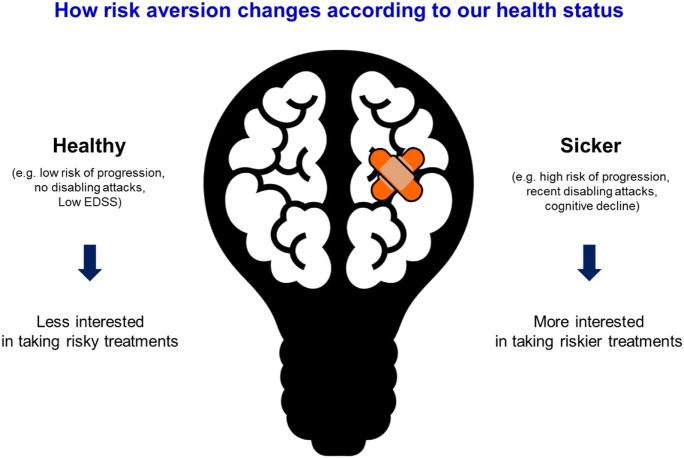
The landscape of multiple sclerosis (MS) treatment is constantly changing. Significant heterogeneity exists in the efficacy and risks associated with these therapies. Therefore, clinicians have the challenge to tailor treatment based on several factors (disease activity level, risk of progression, individual patient preferences and characteristics, personal expertise, etc.), to identify the optimal balance between safety and efficacy. However, most clinicians have limited education in decision-making and formal training in risk management. Together, these factors may lead to therapeutic inertia (TI); defined as the absence of treatment initiation or intensification when therapeutic goals are unmet. TI may lead to suboptimal treatments choices, worse clinical outcomes, and more disability. This article provides a succinct overview on factors influencing TI in MS care.
多发性硬化症(MS)的治疗格局在不断变化。这些疗法在疗效和风险方面存在显著的异质性。因此,临床医生面临着根据多种因素(疾病活动水平、进展风险、个体患者偏好和特征、个人专业知识等)来调整治疗方案的挑战,以确定安全性和有效性之间的最佳平衡。然而,大多数临床医生在决策方面的教育有限,在风险管理方面也缺乏正规培训。这些因素共同作用可能导致治疗惰性(TI),即当治疗目标未达成时,未开始治疗或未加强治疗。TI可能导致治疗选择次优、临床结果更差以及更多的残疾。本文简要概述了影响MS护理中TI的因素。