Saposnik Gustavo, Mamdani Muhammad, Terzaghi Maria, Saladino Maria Laura, Silva Berenice, Tobler Philippe N, Caceres Fernando
Division of Neurology, Department of Medicine, St. Michael's Hospital, University of Toronto Toronto, ON, Canada.
Laboratory for Social and Neural Systems Research, Department of Economics, University of Zurich Zurich, Switzerland.
Front Neurol. 2018 Oct 12;9:835. doi: 10.3389/fneur.2018.00835. eCollection 2018.
The prescription of generic (non-proprietary) compared to brand-name drugs is increasing worldwide. In many developing and emerging countries, generics companies market products at similar costs as brand-name competitors benefiting from more flexible compliance rules and regulations for marketing their products in the health system. Together, this phenomenon may influence prescriber's behavior (e.g., maintaining the same treatment despite guideline's recommendations or despite evidence of disease progression). To compare the prevalence of therapeutic inertia (TI) between primary prescription of brand-name vs. generic drugs in the management of MS in Argentina. We conducted a population-based online study comprising 117 neurologists with expertise in MS. Participants answered questions regarding their clinical practice, most commonly prescribed disease modifying agents, and therapeutic choices of 10 simulated case-scenarios that assessed TI. Inertia was defined as the lack of treatment initiation or escalation despite evidence of clinical and radiological activity (8 case-scenarios, 720 individual responses). We created the generic-brand name score (GBS) according to the 5 most frequently prescribed generic ( = 16) vs. brand-name ( = 9) drugs for MS, where scores higher than 1 indicated higher prescription of generic drugs and scores lower than 1 indicated higher prescription of brand-name agents. Candidate predictors of prescribing generic drugs included demographic data, MS specialist vs. general neurologist, practice setting, years of practice, volume of MS patients, risk preferences, costs of annual treatment. population-based prospective study using including neurologists who care for patients with multiple sclerosis across Argentina. prescription of generic vs. brand-name MS drugs Therapeutic inertia (TI), defined as lack of treatment escalation when goals are unmet. Secondary outcomes included factors associated with generic drug prescription and costs of MS treatment. Ninety participants completed the study (completion rate 76.9%). TI was observed in 153 (21.3%) of participants' responses. The evaluation of aggregate responses revealed a mean GBS score (SD) of 3.44 (2.1), with 46 (51.1%) participants having a GBS equal to or higher than 1. Older age (OR 1.19; 95% CI 1.00-1.42), being a general neurologist (OR 3.91; 95% CI 1.19-12.8), and being more willing to take risks in multiple domains (SOEP score OR 1.06, 95% CI 1.01-1.12) were associated with higher prescription of generic drugs in MS care. Costs of treatment were not associated with prescribing generic drugs. There was no difference in the annual costs of MS treatment for primary prescribers of brand-name vs. generic drugs (67,500 US$ vs. 67,496 US$; = 0.99). The evaluation of individual responses revealed that participants with higher prescription of generics-reflected by a higher GBS-had higher incident risk of TI (mean GBS 3.61 for TI vs. 2.96 for no TI; < 0.001). Multivariate analysis revealed that a prescription of generic agents was associated with an increased incident risk of TI (OR 1.56; 95%CI 1.07-2.29). There was no difference in the annual costs of MS treatment for participants that exhibited TI vs. those without TI (67,426 US$ vs. 67,704 US$; = 0.66). General neurologist, older age, and willingness to take risks were associated with increased prescription of generic drugs despite similar costs compared to brand-name agents. In our study, the prescription of generic-MS drugs was associated with a higher incident risk of therapeutic inertia.
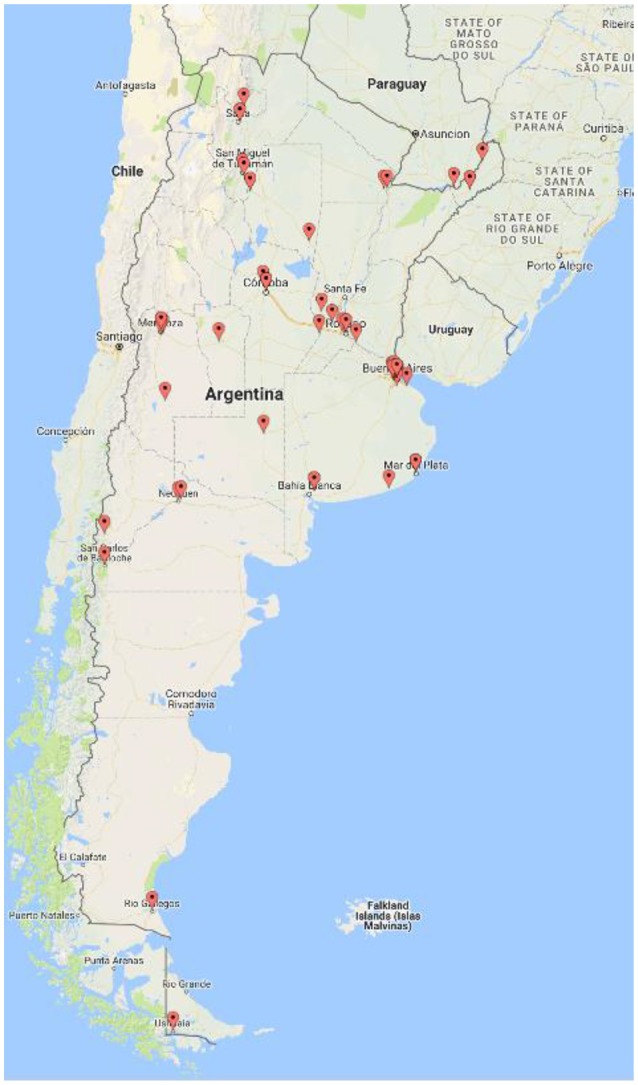
与品牌药相比,通用名(非专利)药物的处方量在全球范围内不断增加。在许多发展中国家和新兴国家,通用名药物公司以与品牌药竞争对手相似的成本销售产品,它们受益于在医疗系统中营销产品时更为灵活的合规规则和条例。总体而言,这种现象可能会影响开处方者的行为(例如,尽管有指南建议或疾病进展的证据,但仍维持相同的治疗方案)。为比较阿根廷多发性硬化症(MS)治疗中品牌药与通用名药物初始处方时治疗惰性(TI)的发生率。我们开展了一项基于人群的在线研究,纳入了117名具有MS专业知识的神经科医生。参与者回答了有关其临床实践、最常处方的疾病修正药物以及10个评估TI的模拟病例场景的治疗选择等问题。惰性被定义为尽管有临床和影像学活动的证据,但仍未开始治疗或升级治疗(8个病例场景,720个个体回答)。我们根据MS最常处方的5种通用名药物(=16种)与品牌药(=9种)创建了通用名-品牌名评分(GBS),其中得分高于1表明通用名药物处方量更高,得分低于1表明品牌药处方量更高。处方通用名药物的候选预测因素包括人口统计学数据、MS专科医生与普通神经科医生、执业环境、执业年限、MS患者数量、风险偏好、年度治疗费用。一项基于人群的前瞻性研究,纳入了阿根廷各地照顾多发性硬化症患者的神经科医生。品牌名与通用名MS药物的处方治疗惰性(TI),定义为目标未达成时缺乏治疗升级。次要结果包括与通用名药物处方相关的因素以及MS治疗费用。90名参与者完成了研究(完成率76.9%)。在参与者的回答中,有153例(21.3%)观察到TI。对总体回答的评估显示,GBS评分的平均值(标准差)为3.44(2.1),46名(51.1%)参与者的GBS等于或高于1。年龄较大(比值比1.19;95%置信区间1.00-1.42)、是普通神经科医生(比值比3.91;95%置信区间1.19-12.8)以及在多个领域更愿意冒险(社会经济面板调查评分比值比1.06,95%置信区间1.01-1.12)与MS护理中通用名药物的较高处方量相关。治疗费用与处方通用名药物无关。品牌药与通用名药物初始处方者的MS年度治疗费用无差异(67,500美元对67,496美元;P=0.99)。对个体回答的评估显示,通用名药物处方量较高的参与者(以较高的GBS反映)TI的发生风险较高(TI组的平均GBS为3.61,无TI组为2.96;P<0.001)。多变量分析显示,处方通用名药物与TI的发生风险增加相关(比值比1.56;95%置信区间1.07-2.29)。出现TI的参与者与未出现TI的参与者的MS年度治疗费用无差异(67,426美元对67,704美元;P=0.66)。普通神经科医生、年龄较大以及愿意冒险与通用名药物处方量增加相关,尽管与品牌药相比成本相似。在我们的研究中,通用名MS药物的处方与治疗惰性的较高发生风险相关。

