Stein Ofer, Granot David
Institute of Plant Sciences, Agricultural Research Organization, The Volcani Center, Rishon LeZion, Israel.
Front Plant Sci. 2018 Mar 16;9:339. doi: 10.3389/fpls.2018.00339. eCollection 2018.
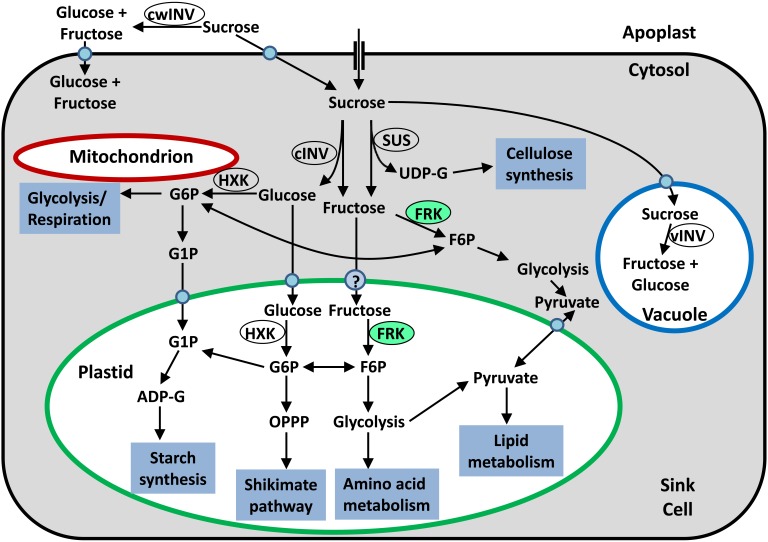
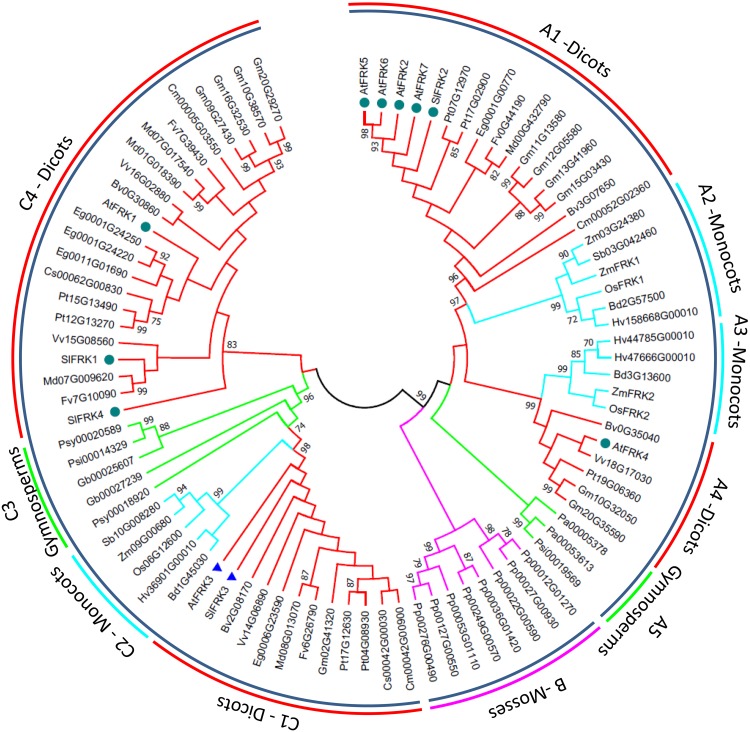
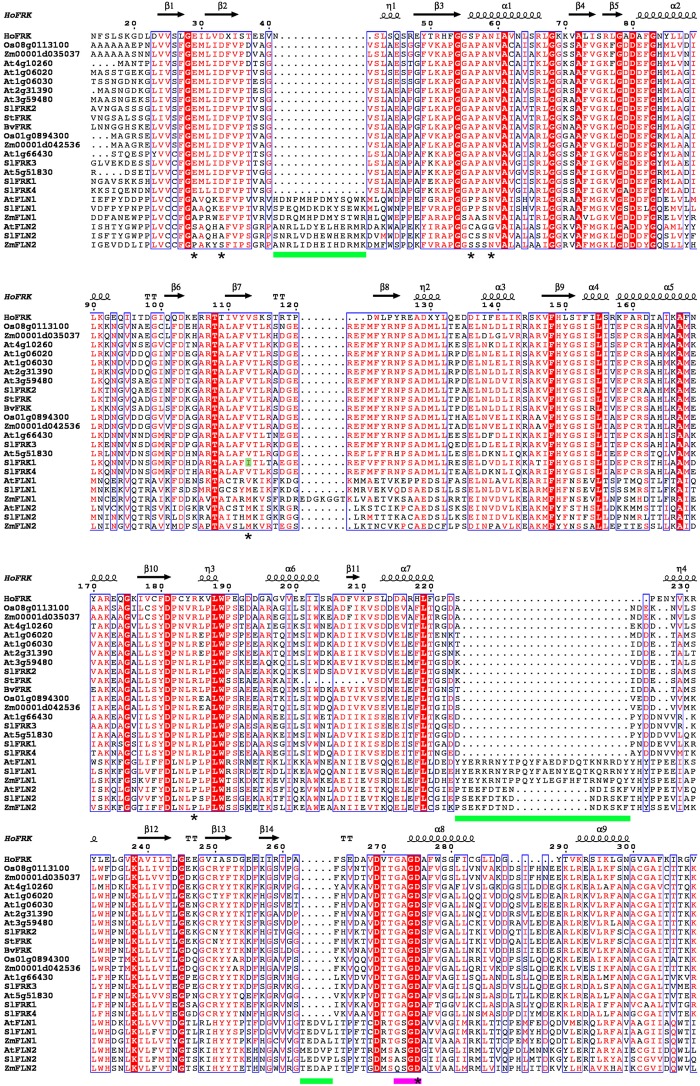
Sucrose, a glucose-fructose disaccharide, is the main sugar transported in the phloem of most plants and is the origin of most of the organic matter. Upon arrival in sink tissues, the sucrose must be cleaved by invertase or sucrose synthase. Both sucrose-cleaving enzymes yield free fructose, which must be phosphorylated by either fructokinase (FRK) or hexokinase (HXK). The affinity of FRK to fructose is much higher than that of HXK, making FRKs central for fructose metabolism. An FRK gene family seems to exist in most, if not all plants and usually consists of several cytosolic FRKs and a single plastidic FRK. These genes are expressed mainly in sink tissues such as roots, stems, flowers, fruits, and seeds, with lower levels of expression often seen in leaves. Plant FRK enzymes vary in their biochemical properties such as affinity for fructose, inhibition by their substrate (i.e., fructose), and expression level in different tissues. This review describes recently revealed roles of plant FRKs in plant development, including the combined roles of the plastidic and cytosolic FRKs in vascular tissues and seed development.
蔗糖是一种葡萄糖 - 果糖二糖,是大多数植物韧皮部运输的主要糖类,也是大多数有机物的来源。到达库组织后,蔗糖必须被转化酶或蔗糖合酶裂解。这两种蔗糖裂解酶都会产生游离果糖,游离果糖必须被果糖激酶(FRK)或己糖激酶(HXK)磷酸化。FRK对果糖的亲和力远高于HXK,这使得FRK在果糖代谢中起核心作用。FRK基因家族似乎存在于大多数(即便不是所有)植物中,通常由几个胞质FRK和一个质体FRK组成。这些基因主要在根、茎、花、果实和种子等库组织中表达,在叶片中表达水平通常较低。植物FRK酶在生化特性方面存在差异,如对果糖的亲和力、被其底物(即果糖)抑制的情况以及在不同组织中的表达水平。本综述描述了植物FRK最近在植物发育中揭示的作用,包括质体和胞质FRK在维管组织和种子发育中的联合作用。