Key Laboratory of Biology and Genetic Resources of Tropical Crops, Ministry of Agriculture, Institute of Tropical Bioscience and Biotechnology, Chinese Academy of Tropical Agricultural Sciences, Haikou 571101, China.
College of Agriculture, Hainan University, Haikou 570228, China.
Int J Mol Sci. 2017 Nov 12;18(11):2398. doi: 10.3390/ijms18112398.
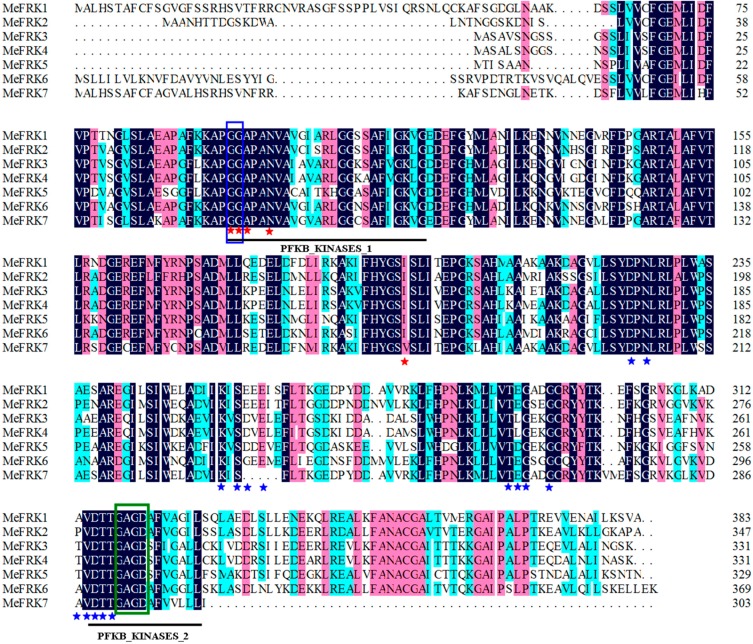
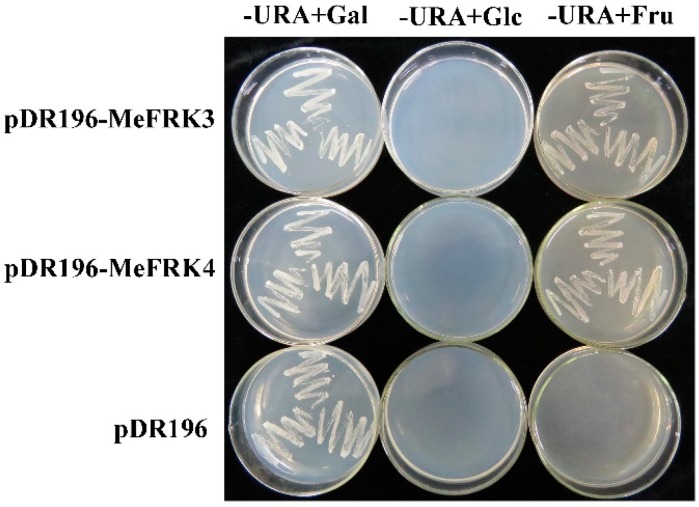
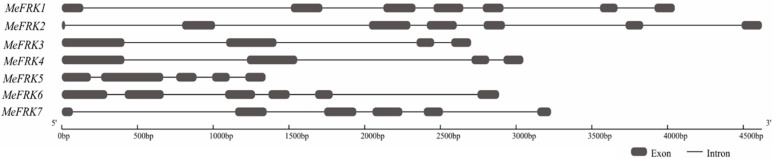
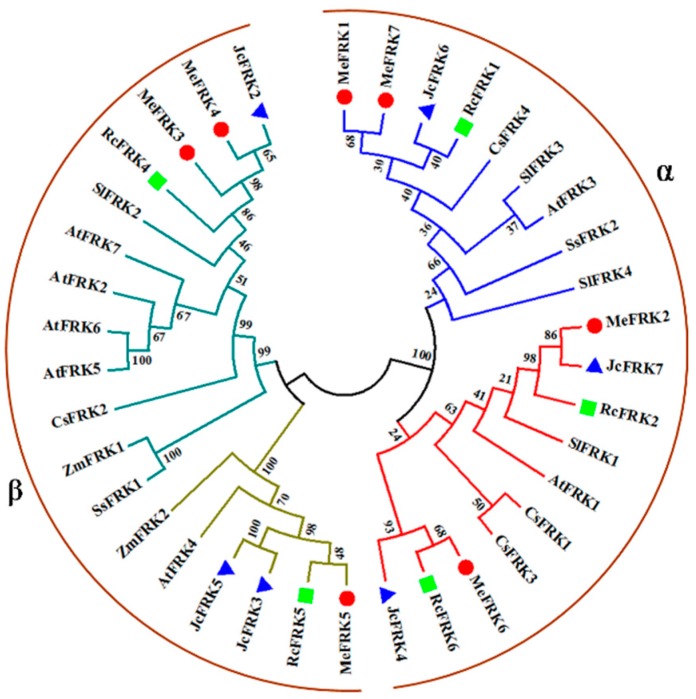
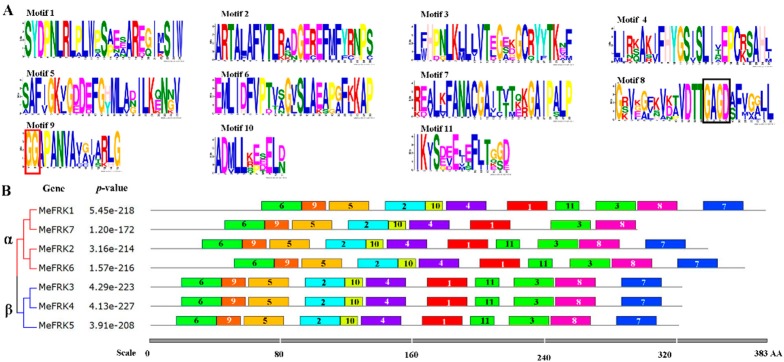
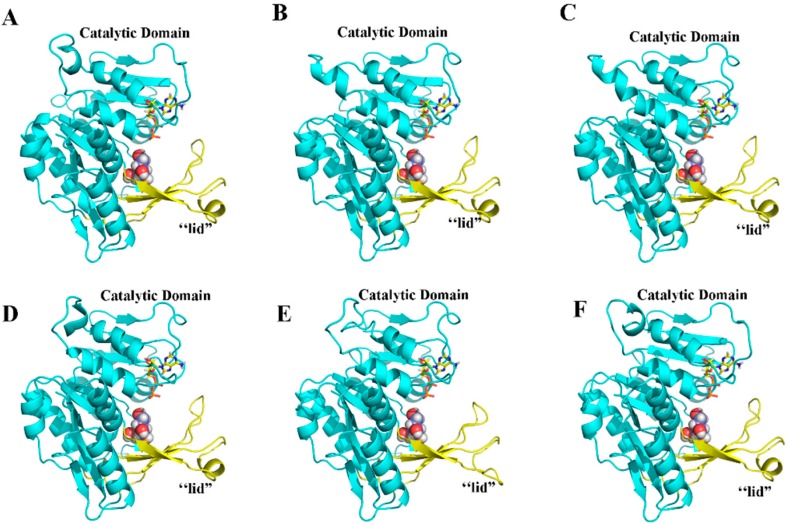
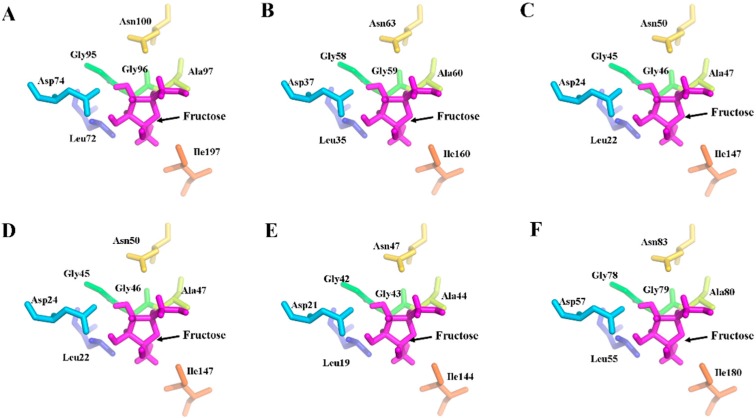
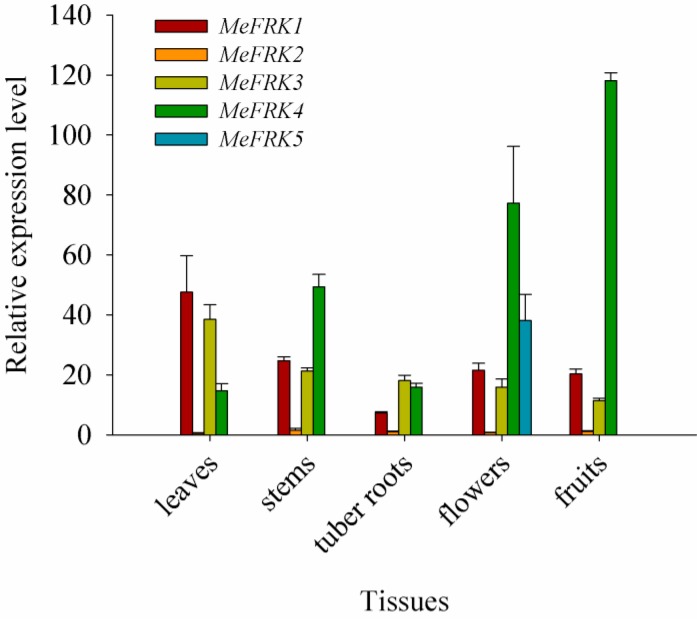
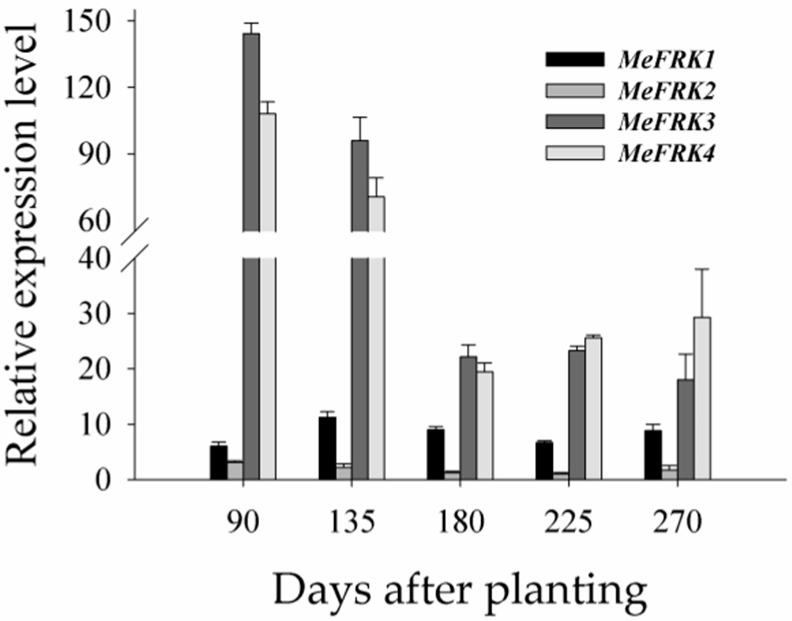
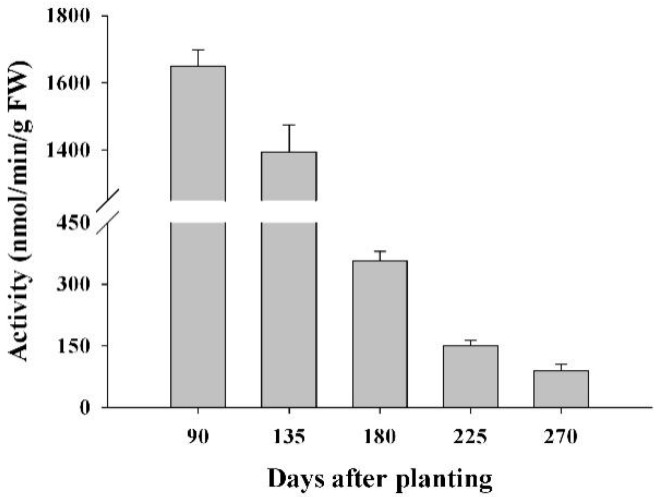
Fructokinase (FRK) proteins play important roles in catalyzing fructose phosphorylation and participate in the carbohydrate metabolism of storage organs in plants. To investigate the roles of FRKs in cassava tuber root development, seven genes (-) were identified, and - were isolated. Phylogenetic analysis revealed that the family genes can be divided into α (, , , ) and β (, , ) groups. All the MeFRK proteins have typical conserved regions and substrate binding residues similar to those of the FRKs. The overall predicted three-dimensional structures of MeFRK1-6 were similar, folding into a catalytic domain and a β-sheet ''lid" region, forming a substrate binding cleft, which contains many residues involved in the binding to fructose. The gene and the predicted three-dimensional structures of and were the most similar. displayed different expression patterns across different tissues, including leaves, stems, tuber roots, flowers, and fruits. In tuber roots, the expressions of and were much higher compared to those of the other genes. Notably, the expression of and as well as the enzymatic activity of FRK were higher at the initial and early expanding tuber stages and were lower at the later expanding and mature tuber stages. The FRK activity of MeFRK3 and MeFRK4 was identified by the functional complementation of triple mutant yeast cells that were unable to phosphorylate either glucose or fructose. The gene expression and enzymatic activity of and suggest that they might be the main enzymes in fructose phosphorylation for regulating the formation of tuber roots and starch accumulation at the tuber root initial and expanding stages.
果糖激酶(FRK)蛋白在催化果糖磷酸化过程中发挥重要作用,参与植物贮藏器官的碳水化合物代谢。为研究 FRK 在木薯块根发育中的作用,鉴定到 7 个基因(-),并分离得到-。系统进化分析表明,FRK 家族基因可分为α(,,,)和β(,,)两个亚组。所有 MeFRK 蛋白都具有典型的保守区域和与 FRKs 相似的底物结合残基。MeFRK1-6 的整体预测三维结构相似,折叠成催化结构域和β-片层“盖”区,形成一个底物结合裂隙,其中包含许多参与与果糖结合的残基。与 和 的基因和预测三维结构最为相似。在不同组织中,表现出不同的表达模式,包括叶片、茎、块根、花和果实。在块根中,与其他基因相比,和 的表达水平要高得多。值得注意的是,和 的表达以及 FRK 的酶活性在块根初始和早期扩展阶段较高,而在后期扩展和成熟阶段较低。通过功能互补不能磷酸化葡萄糖或果糖的三突变酵母细胞鉴定出 MeFRK3 和 MeFRK4 的 FRK 活性。和 的基因表达和酶活性表明,它们可能是调节块根形成和淀粉积累的果糖磷酸化的主要酶。