Chen Yihong, Zhang Qing, Hu Weichang, Zhang Xingtan, Wang Liming, Hua Xiuting, Yu Qingyi, Ming Ray, Zhang Jisen
Center for Genomics and Biotechnology, Fujian Provincial Key Laboratory of Haixia Applied Plant Systems Biology, Haixia Institute of Science and Technology (HIST), Fujian Agriculture and Forestry University, Fuzhou, 350002, China.
College of Life Sciences, Fujian Normal University, Fuzhou, 350117, China.
BMC Genomics. 2017 Feb 21;18(1):197. doi: 10.1186/s12864-017-3535-7.
Sugarcane is an important sugar crop contributing up to about 80% of the world sugar production. Efforts to characterize the genes involved in sugar metabolism at the molecular level are growing since increasing sugar content is a major goal in the breeding of new sugarcane varieties. Fructokinases (FRK) are the main fructose phosphorylating enzymes with high substrate specificity and affinity.
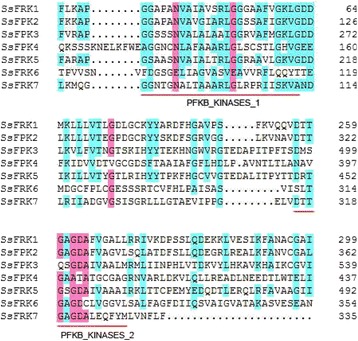
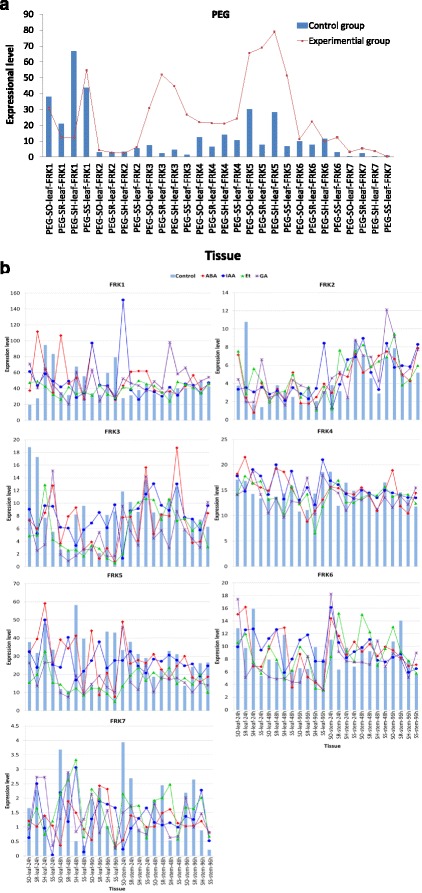
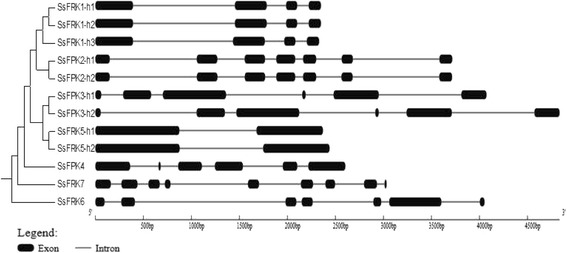
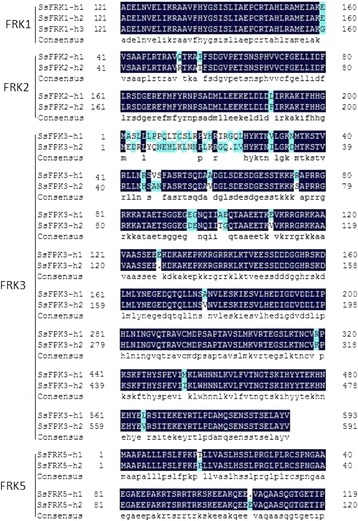
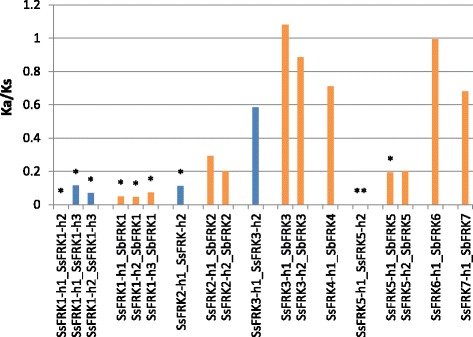
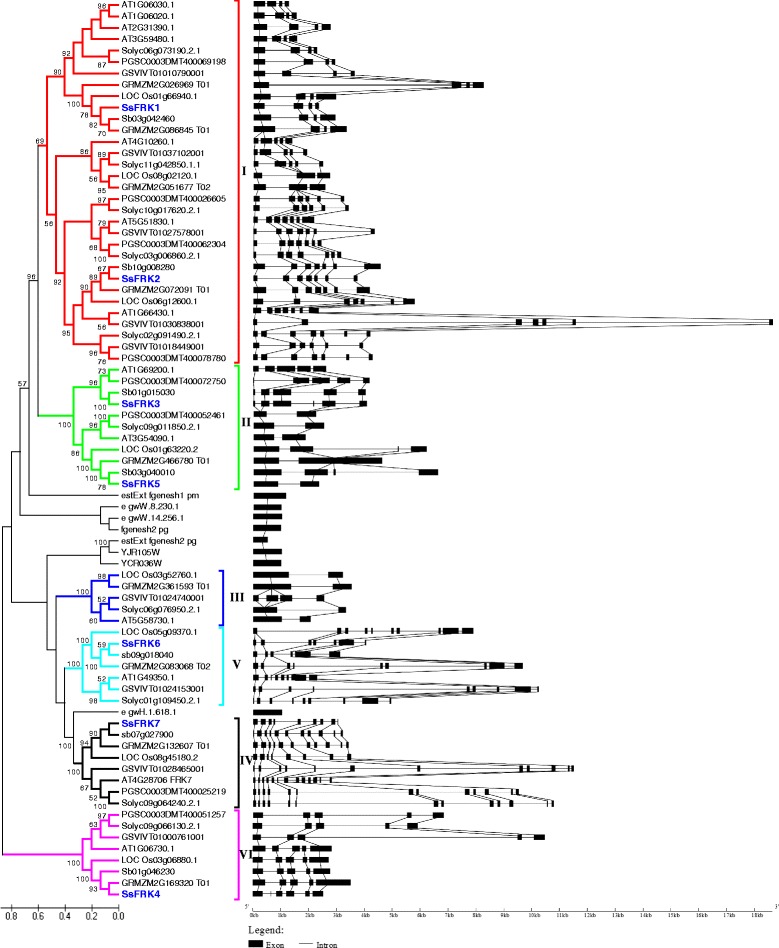
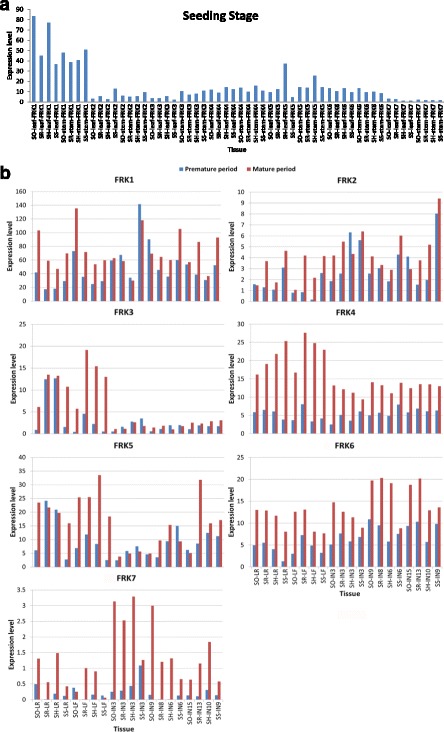
In this study, by combining comparative genomics approaches with BAC resources, seven fructokinase genes were identified in S. spontaneum. Phylogenetic analysis based on representative monocotyledon and dicotyledon plant species suggested that the FRK gene family is ancient and its evolutionary history can be traced in duplicated descending order: SsFRK4, SsFRK6/SsFRK7,SsFRK5, SsFRK3 and SsFRK1/SsFRK2. Among the close orthologs, the number and position of exons in FRKs were conserved; in contrast, the size of introns varied among the paralogous FRKs in Saccharum. Genomic constraints were analyzed within the gene alleles and between S. spontaneum and Sorghum bicolor, and gene expression analysis was performed under drought stress and with exogenous applications of plant hormones. FRK1, which was under strong functional constraint selection, was conserved among the gene allelic haplotypes, and displayed dominant expression levels among the gene families in the control conditions, suggesting that FRK1 plays a major role in the phosphorylation of fructose. FRK3 and FRK5 were dramatically induced under drought stress, and FRK5 was also found to increase its expression levels in the mature stage of Saccharum. Similarly, FRK3 and FRK5 were induced in response to drought stress in Saccharum. FRK2 and FRK7 displayed lower expression levels than the other FRK family members; FRK2 was under strong genomic selection constraints whereas FRK7 was under neutral selection. FRK7 may have become functionally redundant in Saccharum through pseudogenization. FRK4 and FRK6 shared the most similar expression pattern: FRK4 was revealed to have higher expression levels in mature tissues than in premature tissues of Saccharum, and FRK6 presented a slight increase under drought stress.
Our study presents a comprehensive genomic study of the entire FRK gene family in Saccharum, providing the foundations for approaches to characterize the molecular mechanism regulated by the SsFRK family in sugarcane.
甘蔗是一种重要的糖料作物,其产量约占世界食糖产量的80%。由于提高糖分含量是甘蔗新品种选育的主要目标,因此在分子水平上对参与糖代谢的基因进行表征的研究日益增多。果糖激酶(FRK)是主要的果糖磷酸化酶,具有高底物特异性和亲和力。
在本研究中,通过将比较基因组学方法与BAC资源相结合,在割手密中鉴定出7个果糖激酶基因。基于代表性单子叶和双子叶植物物种的系统发育分析表明,FRK基因家族很古老,其进化历史可以按重复递减顺序追溯:SsFRK4、SsFRK6/SsFRK7、SsFRK5、SsFRK3和SsFRK1/SsFRK2。在密切的直系同源基因中,FRK中外显子的数量和位置是保守的;相反,甘蔗中旁系同源FRK的内含子大小各不相同。分析了基因等位基因之间以及割手密和高粱之间的基因组限制,并在干旱胁迫和外源施用植物激素的情况下进行了基因表达分析。受到强烈功能限制选择的FRK1在基因等位基因单倍型中是保守的,并且在对照条件下在基因家族中显示出主导表达水平,这表明FRK1在果糖磷酸化中起主要作用。FRK3和FRK5在干旱胁迫下被显著诱导,并且还发现FRK5在甘蔗成熟阶段其表达水平增加。同样,FRK3和FRK5在甘蔗中响应干旱胁迫而被诱导。FRK2和FRK7的表达水平低于其他FRK家族成员;FRK2受到强烈的基因组选择限制,而FRK7受到中性选择。FRK7可能通过假基因化在甘蔗中变得功能冗余。FRK4和FRK6具有最相似的表达模式:FRK4在甘蔗成熟组织中的表达水平高于未成熟组织,并且FRK6在干旱胁迫下略有增加。
我们的研究对甘蔗中整个FRK基因家族进行了全面的基因组研究,为表征甘蔗中SsFRK家族调控的分子机制的方法奠定了基础。