Haughton Christina F, Silfee Valerie J, Wang Monica L, Lopez-Cepero Andrea C, Estabrook David P, Frisard Christine, Rosal Milagros C, Pagoto Sherry L, Lemon Stephenie C
University of Massachusetts Medical School, Worcester, MA, USA.
Boston University School of Public Health, Boston, MA, USA.
Prev Med Rep. 2018 Feb 2;9:131-137. doi: 10.1016/j.pmedr.2018.01.012. eCollection 2018 Mar.
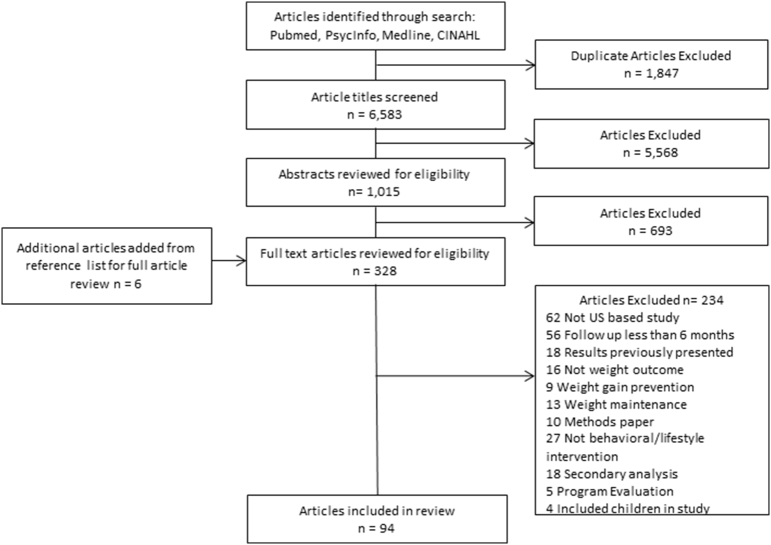
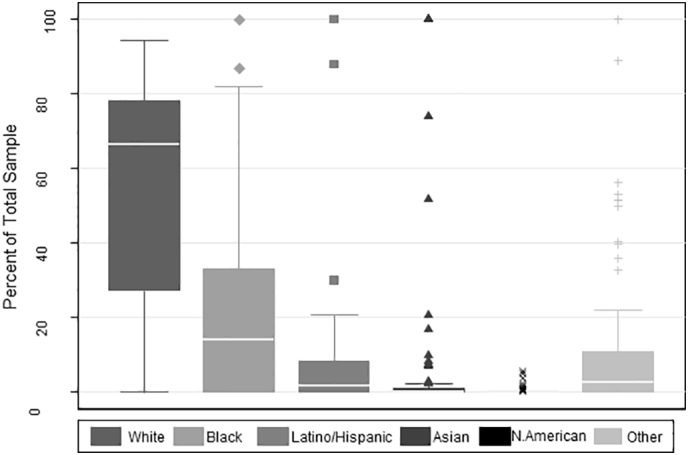
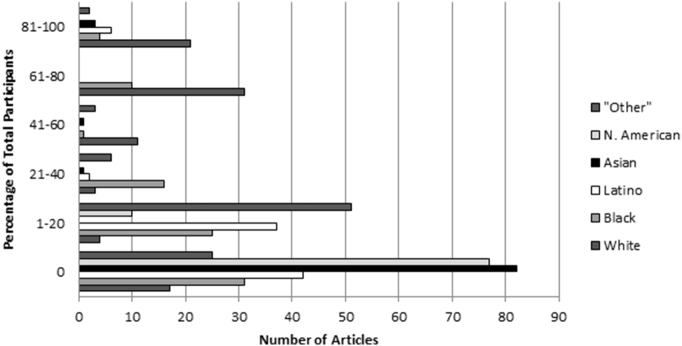
Obesity remains a persistent public health and health disparity concern in the United States. Eliminating health disparities, particularly among racial/ethnic minority groups, is a major health priority in the US. The primary aim of this review was to evaluate representation of racial/ethnic sub-group members in behavioral weight loss interventions conducted among adults in the United States. The secondary aims were to assess recruitment and study design approaches to include racial/ethnic groups and the extent of racial/ethnic sub-group analyses conducted in these studies. PubMed, PsycInfo, Medline, and CINAHL were searched for behavioral weight loss intervention trials conducted in 2009-2015 using keywords: weight, loss, overweight, obese, intervention and trial. Most of the 94 studies included a majority of White participants compared to any other racial/ethnic group. Across the included studies, 58.9% of participants were White, 18.2% were African American, 8.7% were Hispanic/Latino, 5.0% were Asian and 1.0% were Native Americans. An additional 8.2% were categorized as "Other". Nine of the 94 studies exclusively included minority samples. Lack of adequate representation of racial and ethnic minority populations in behavioral trials limits the generalizability and potential public health impact of these interventions to groups that might most benefit from weight loss. Given racial/ethnic disparities in obesity rates and the burden of obesity and obesity-related diseases among minority groups in the United States, greater inclusion in weight loss intervention studies is warranted.
在美国,肥胖仍然是一个长期存在的公共卫生问题以及健康差距问题。消除健康差距,尤其是在种族/族裔少数群体之间,是美国的一项主要卫生优先事项。本综述的主要目的是评估美国成年人行为减肥干预措施中种族/族裔亚组成员的代表性。次要目的是评估纳入种族/族裔群体的招募和研究设计方法,以及这些研究中进行的种族/族裔亚组分析的程度。通过在PubMed、PsycInfo、Medline和CINAHL数据库中检索2009 - 2015年进行的行为减肥干预试验,检索词为:体重、减轻、超重、肥胖、干预和试验。与任何其他种族/族裔群体相比,94项研究中的大多数研究纳入的白人参与者占多数。在所纳入的研究中,58.9%的参与者为白人,18.2%为非裔美国人,8.7%为西班牙裔/拉丁裔,5.0%为亚裔,1.0%为美洲原住民。另外8.2%被归类为“其他”。94项研究中有9项专门纳入了少数群体样本。行为试验中缺乏种族和族裔少数群体的充分代表性,限制了这些干预措施对可能最受益于减肥的群体的普遍性和潜在公共卫生影响。鉴于美国少数群体在肥胖率以及肥胖和肥胖相关疾病负担方面存在种族/族裔差异,有必要让更多少数群体参与减肥干预研究。