Center for Inflammation, Immunity and Infection, Institute for Biomedical Sciences, Georgia State University, Atlanta, GA, United States of America.
Neuroscience Institute, Georgia State University, Atlanta, GA, United States of America.
PLoS One. 2018 Apr 4;13(4):e0195310. doi: 10.1371/journal.pone.0195310. eCollection 2018.
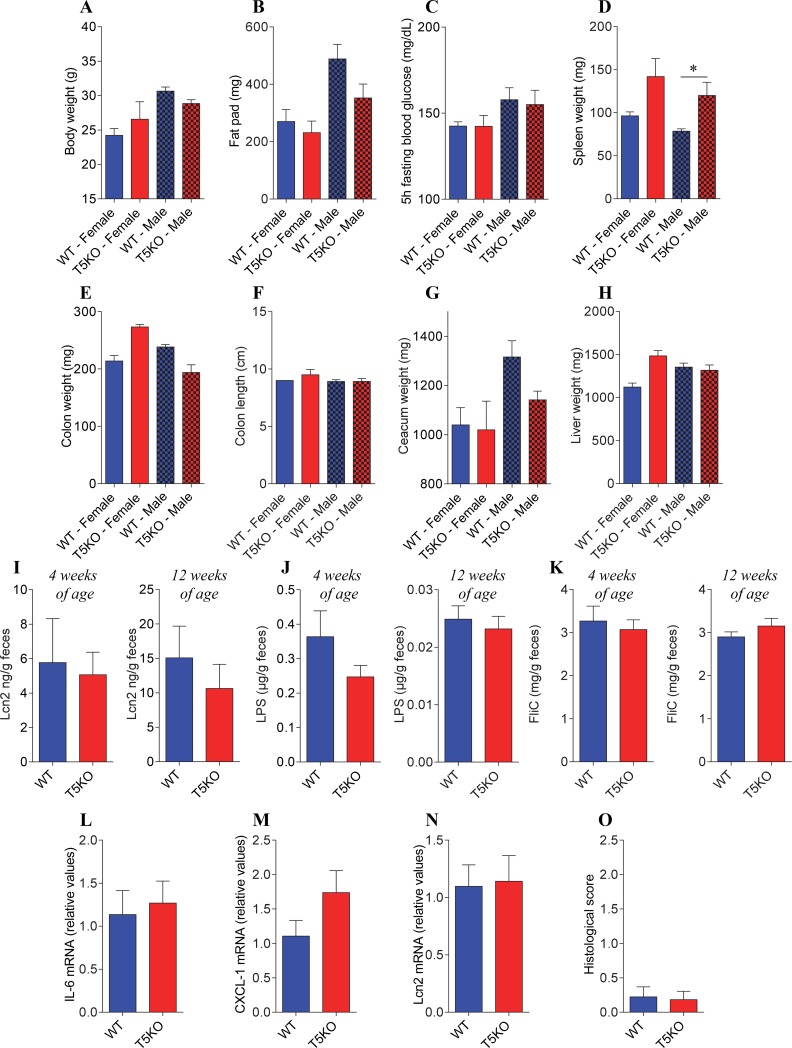
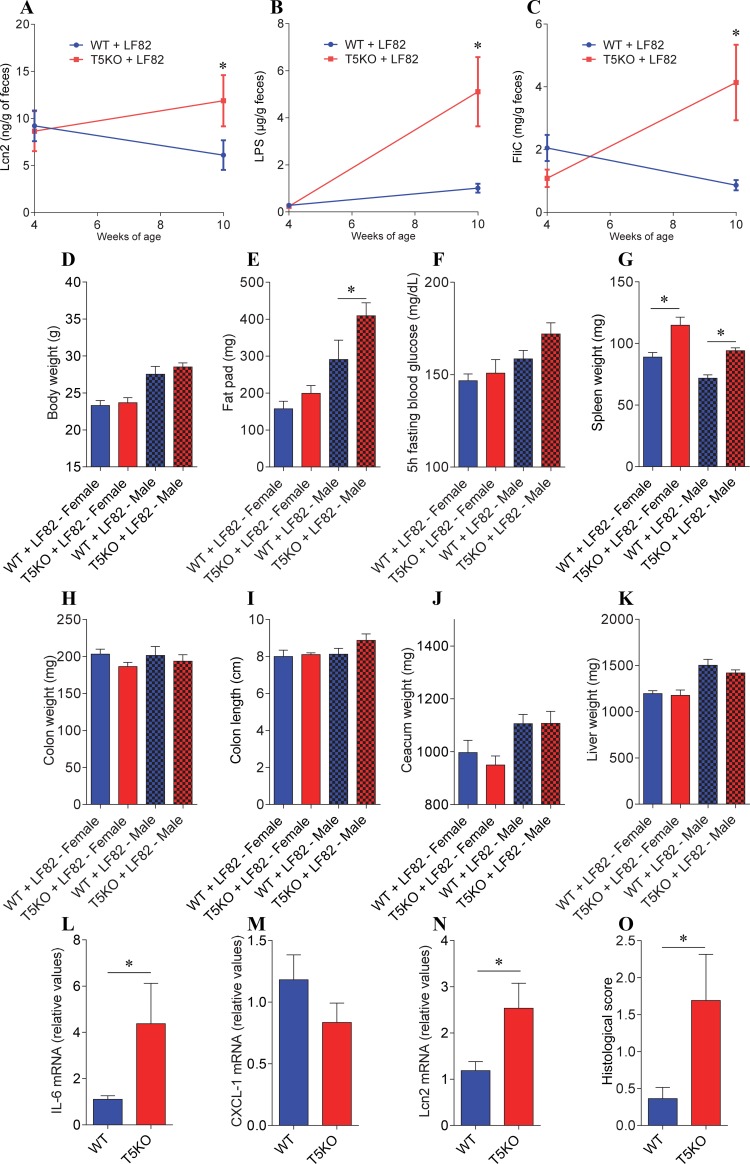
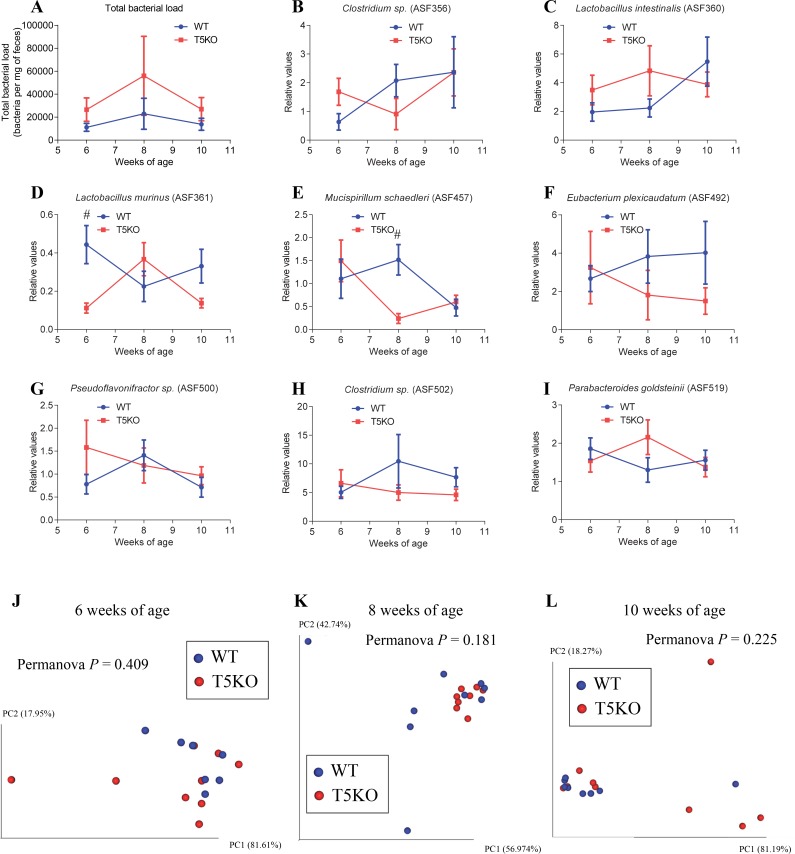
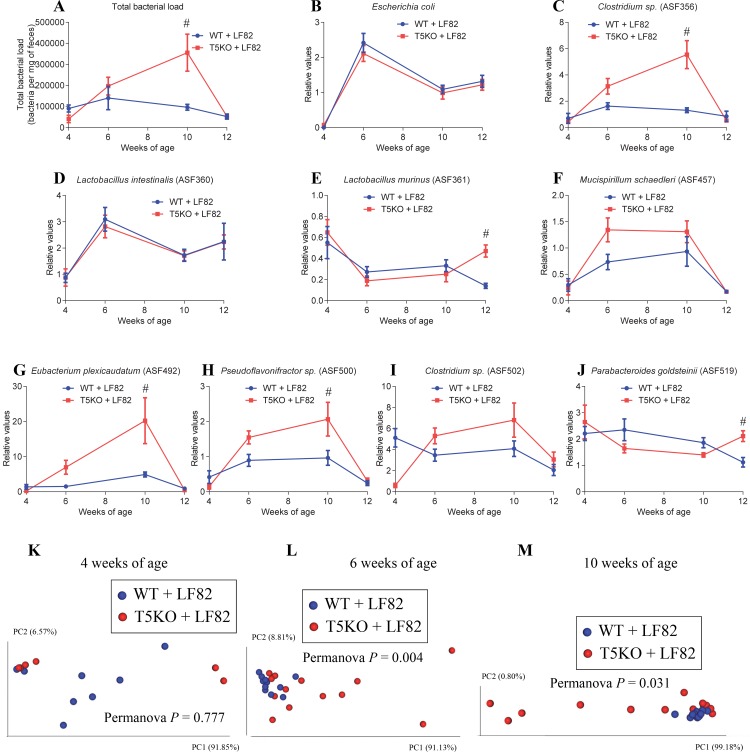
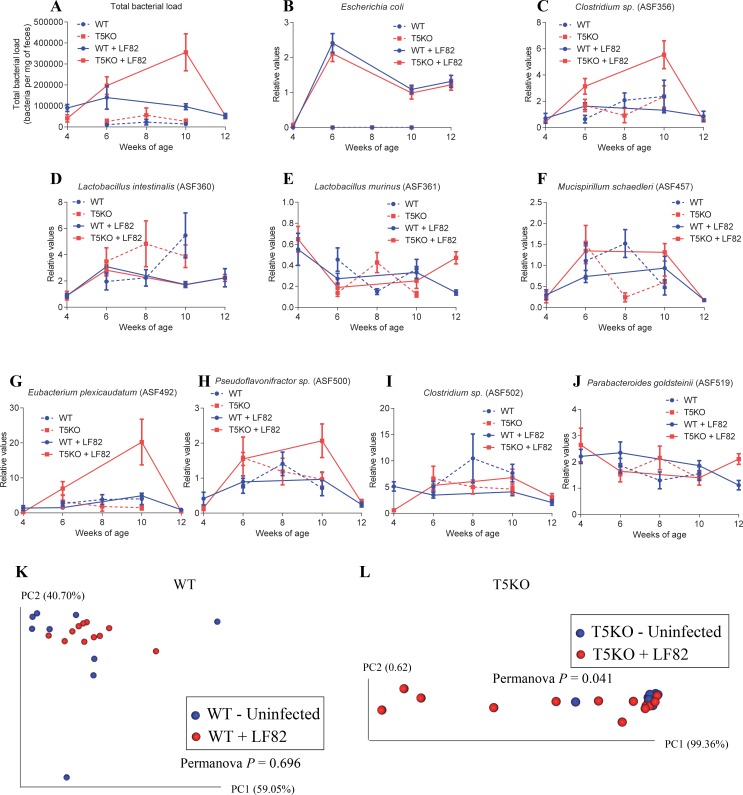
Inability to maintain a stable and beneficial microbiota is associated with chronic gut inflammation, which classically manifests as colitis but may more commonly exist as low-grade inflammation that promotes metabolic syndrome. Alterations in microbiota, and associated inflammation, can originate from dysfunction in host proteins that manage the microbiota, such as the flagellin receptor TLR5. That the complete absence of a microbiota (i.e. germfree conditions) eliminates all evidence of inflammation in TLR5-deficient mice demonstrates that this model of gut inflammation is microbiota-dependent. We hypothesize that such microbiota dependency reflects an inability to manage pathobionts, such as Adherent-Invasive E. coli (AIEC). Herein, we examined the extent to which microbiota mismanagement and associated inflammation in TLR5-deficient mice would manifest in a limited and pathobiont-free microbiota. For this purpose, WT and TLR5-deficient mice were generated and maintained with the 8-member consortium of bacteria referred to as "Altered Schaedler Flora" (ASF). Such ASF animals were subsequently inoculated with AIEC reference strain LF82. Feces were assayed for bacterial loads, fecal lipopolysaccharide and flagellin loads, fecal inflammatory marker lipocalin-2 and microbiota composition.
Relative to similarly maintained WT mice, mice lacking TLR5 (T5KO) did not display low-grade intestinal inflammation nor metabolic syndrome under ASF conditions. Concomitantly, the ASF microbial community was similar between WT and T5KO mice, while inoculation with AIEC strain LF82 resulted in alteration of the ASF community in T5KO mice compared to WT control animals. AIEC LF82 inoculation in ASF T5KO mice resulted in microbiota components having elevated levels of bioactive lipopolysaccharide and flagellin, a modest level of low-grade inflammation and increased adiposity.
In a limited-complexity pathobiont-free microbiota, loss of the flagellin receptor TLR5 does not impact microbiota composition nor its ability to promote inflammation. Addition of AIEC to this ecosystem perturbs microbiota composition, increases levels of lipopolysaccharide and flagellin, but only modestly promotes gut inflammation and adiposity, suggesting that the phenotypes previously associated with loss of this innate immune receptor require disruption of complex microbiota.
无法维持稳定和有益的微生物群落与慢性肠道炎症有关,慢性肠道炎症通常表现为结肠炎,但更常见的是低度炎症,促进代谢综合征。微生物群落的改变和相关炎症可能源于宿主蛋白的功能障碍,这些蛋白管理着微生物群落,如鞭毛蛋白受体 TLR5。完全缺乏微生物群落(即无菌条件)消除了 TLR5 缺陷小鼠所有炎症的证据,证明这种肠道炎症模型依赖于微生物群落。我们假设这种对微生物群落的依赖反映了无法管理病原体的能力,例如粘附侵袭性大肠杆菌(AIEC)。在此,我们研究了 TLR5 缺陷小鼠中微生物群落管理不善和相关炎症在有限且无病原体的微生物群落中的表现程度。为此,生成并维持了 WT 和 TLR5 缺陷小鼠,并使用称为“改变的 Schaedler 菌群”(ASF)的 8 种细菌联合体。随后,将 ASF 动物接种 AIEC 参考菌株 LF82。检测粪便中的细菌负荷、粪便中的脂多糖和鞭毛蛋白负荷、粪便中的炎症标志物脂钙素-2 和微生物群落组成。
与同样维持的 WT 小鼠相比,缺乏 TLR5(T5KO)的小鼠在 ASF 条件下没有表现出低度肠道炎症或代谢综合征。同时,ASF 微生物群落在 WT 和 T5KO 小鼠之间相似,而在 WT 对照动物中,接种 AIEC 菌株 LF82 导致 T5KO 小鼠的 ASF 群落发生改变。在 ASF T5KO 小鼠中接种 AIEC LF82 导致微生物群落成分的生物活性脂多糖和鞭毛蛋白水平升高、低度炎症和肥胖程度增加。
在有限复杂性的无病原体微生物群落中,缺乏鞭毛蛋白受体 TLR5 不会影响微生物群落组成或其促进炎症的能力。将 AIEC 添加到这个生态系统中会扰乱微生物群落组成,增加脂多糖和鞭毛蛋白的水平,但只会适度促进肠道炎症和肥胖,这表明以前与失去这种先天免疫受体相关的表型需要破坏复杂的微生物群落。