Department of Medical Cell Biology, Institute of Molecular Embryology and Genetics, Kumamoto University, Kumamoto 860-0811, Japan.
Department of Pediatrics, Graduate School of Medical Sciences, Kumamoto University, Kumamoto 860-0811, Japan.
Nucleic Acids Res. 2018 Jun 20;46(11):5441-5454. doi: 10.1093/nar/gky234.
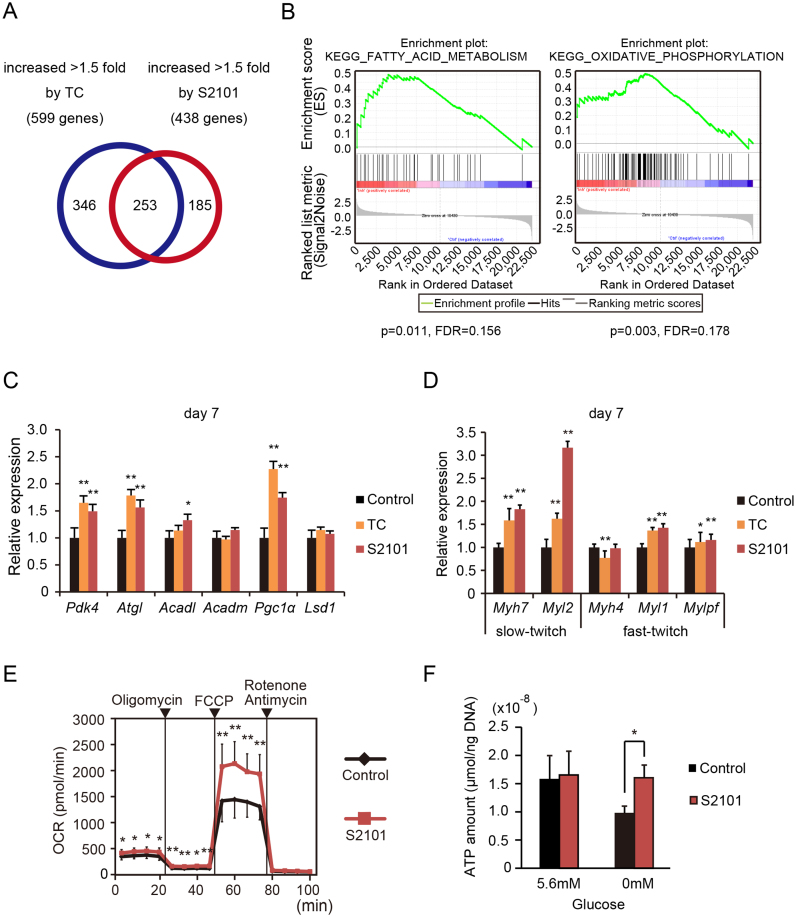
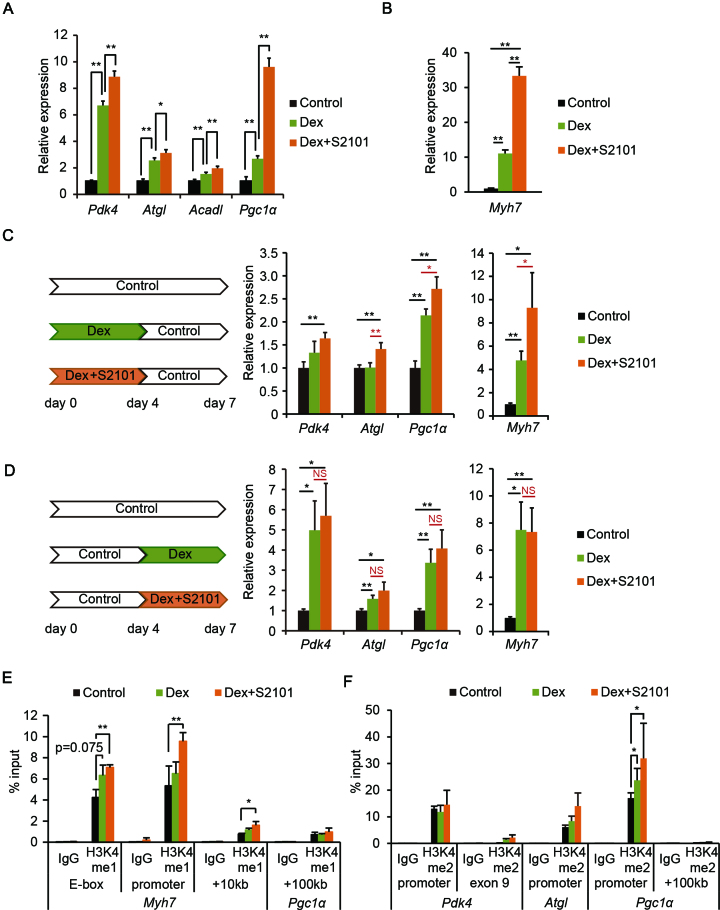
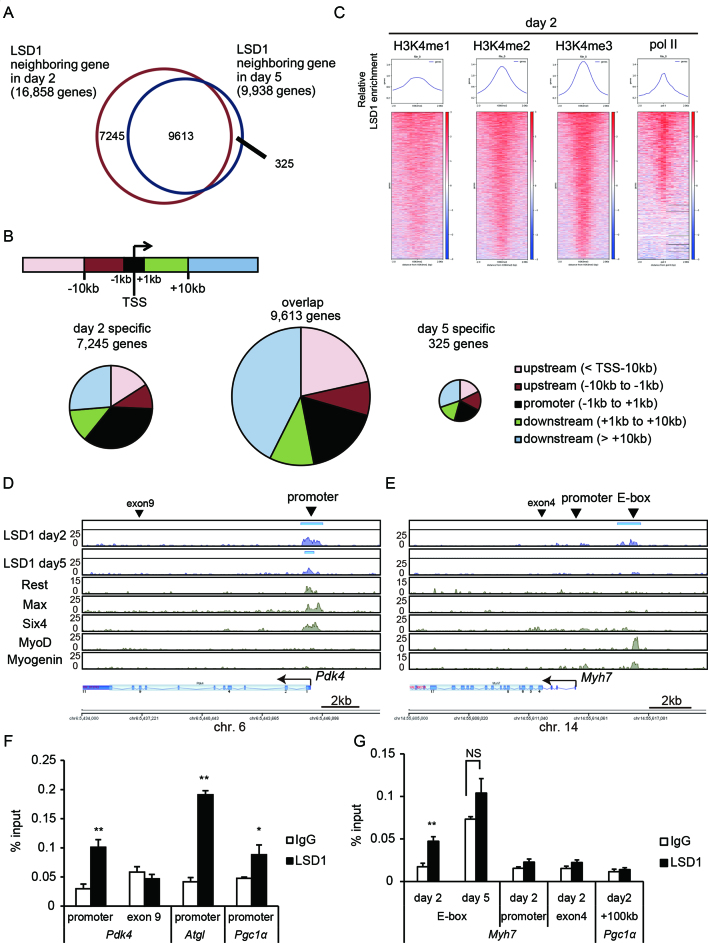
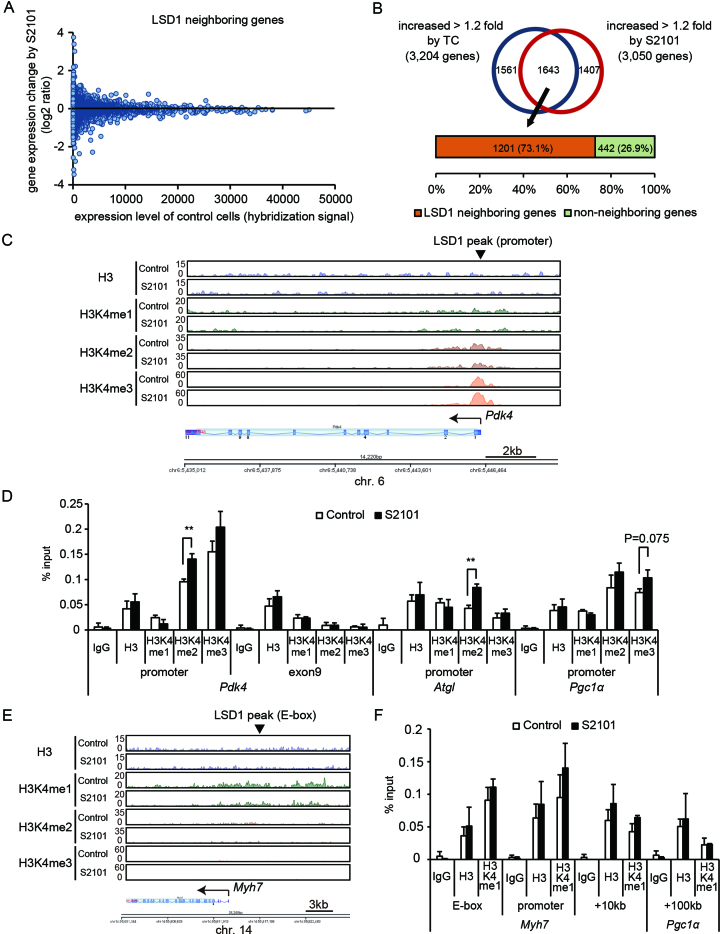
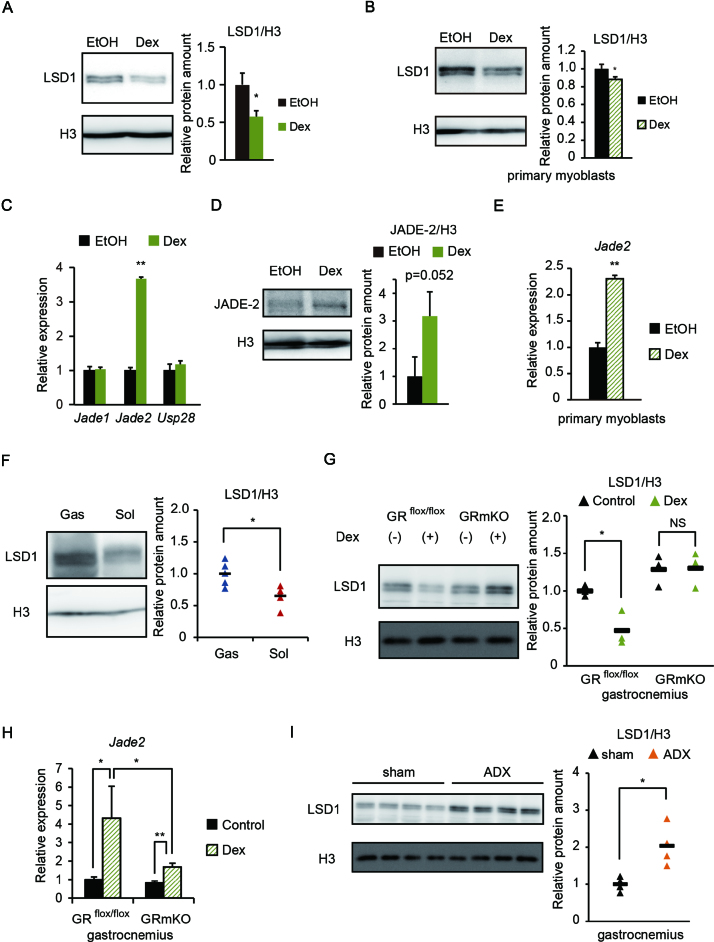
The metabolic properties of cells are formed under the influence of environmental factors such as nutrients and hormones. Although such a metabolic program is likely initiated through epigenetic mechanisms, the direct links between metabolic cues and activities of chromatin modifiers remain largely unknown. In this study, we show that lysine-specific demethylase-1 (LSD1) controls the metabolic program in myogenic differentiation, under the action of catabolic hormone, glucocorticoids. By using transcriptomic and epigenomic approaches, we revealed that LSD1 bound to oxidative metabolism and slow-twitch myosin genes, and repressed their expression. Consistent with this, loss of LSD1 activity during differentiation enhanced the oxidative capacity of myotubes. By testing the effects of various hormones, we found that LSD1 levels were decreased by treatment with the glucocorticoid dexamethasone (Dex) in cultured myoblasts and in skeletal muscle from mice. Mechanistically, glucocorticoid signaling induced expression of a ubiquitin E3 ligase, JADE-2, which was responsible for proteasomal degradation of LSD1. Consequently, in differentiating myoblasts, chemical inhibition of LSD1, in combination with Dex treatment, synergistically de-repressed oxidative metabolism genes, concomitant with increased histone H3 lysine 4 methylation at these loci. These findings demonstrated that LSD1 serves as an epigenetic regulator linking glucocorticoid action to metabolic programming during myogenic differentiation.
细胞的代谢特性是在营养物质和激素等环境因素的影响下形成的。尽管这种代谢程序可能是通过表观遗传机制启动的,但代谢线索与染色质修饰酶活性之间的直接联系在很大程度上仍然未知。在这项研究中,我们表明赖氨酸特异性去甲基酶 1(LSD1)在分解代谢激素糖皮质激素的作用下,控制着成肌分化中的代谢程序。通过转录组学和表观基因组学方法,我们发现 LSD1 与氧化代谢和慢肌肌球蛋白基因结合,并抑制它们的表达。与此一致的是,在分化过程中 LSD1 活性的丧失增强了肌管的氧化能力。通过测试各种激素的作用,我们发现 LSD1 水平在培养的成肌细胞和小鼠骨骼肌中经糖皮质激素地塞米松(Dex)处理后降低。在机制上,糖皮质激素信号诱导了泛素 E3 连接酶 JADE-2 的表达,后者负责 LSD1 的蛋白酶体降解。因此,在分化的成肌细胞中,LSD1 的化学抑制与 Dex 处理联合使用,协同地去抑制氧化代谢基因,同时这些基因座处的组蛋白 H3 赖氨酸 4 甲基化增加。这些发现表明,LSD1 作为一种表观遗传调节剂,将糖皮质激素的作用与成肌分化过程中的代谢编程联系起来。