Université de Strasbourg, CNRS, Inserm, IGBMC UMR 7104- UMR-S 1258, F-67400, Illkirch, France.
Klinik für Urologie und Zentrale Klinische Forschung, Klinikum der Albert-Ludwigs-Universität Freiburg, D-79106, Freiburg, Germany.
Nat Commun. 2024 Apr 26;15(1):3563. doi: 10.1038/s41467-024-47846-9.
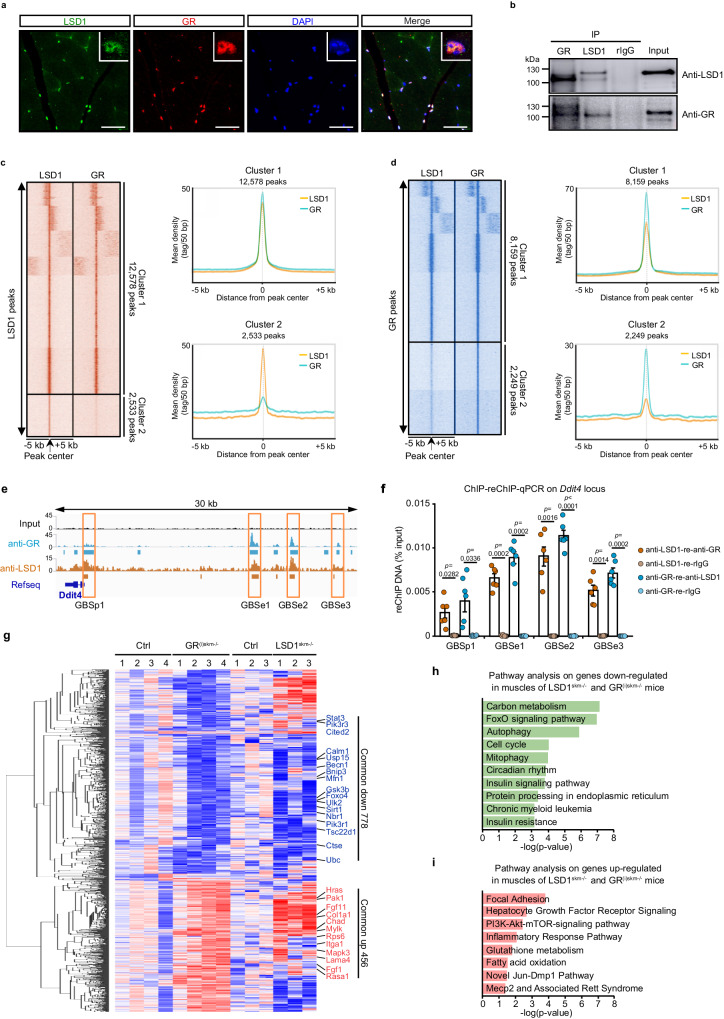
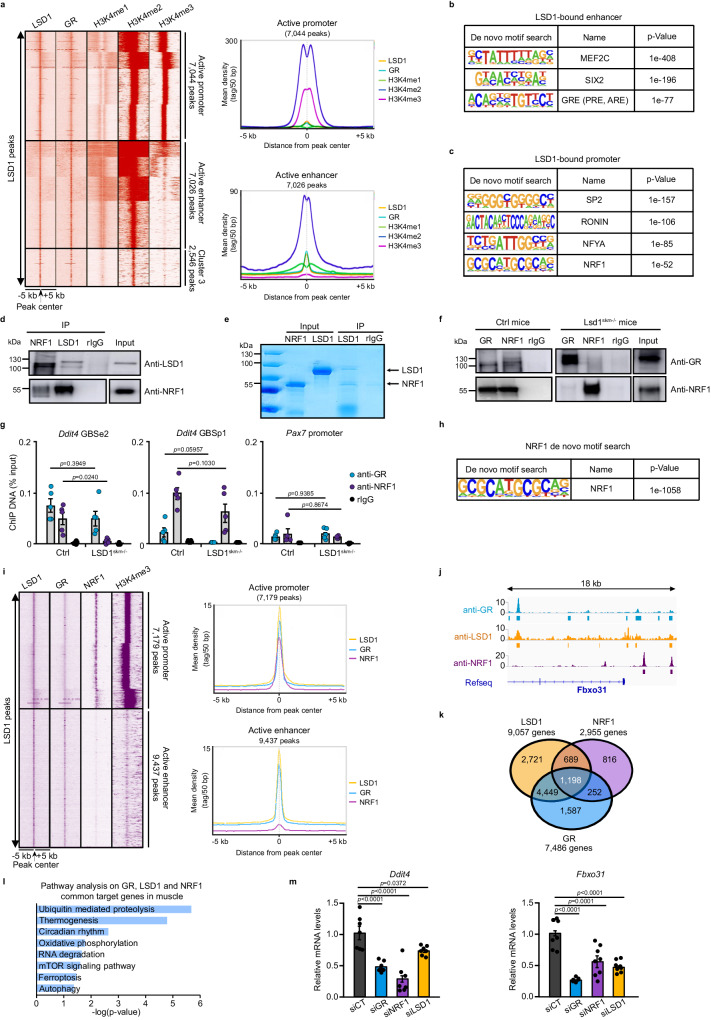
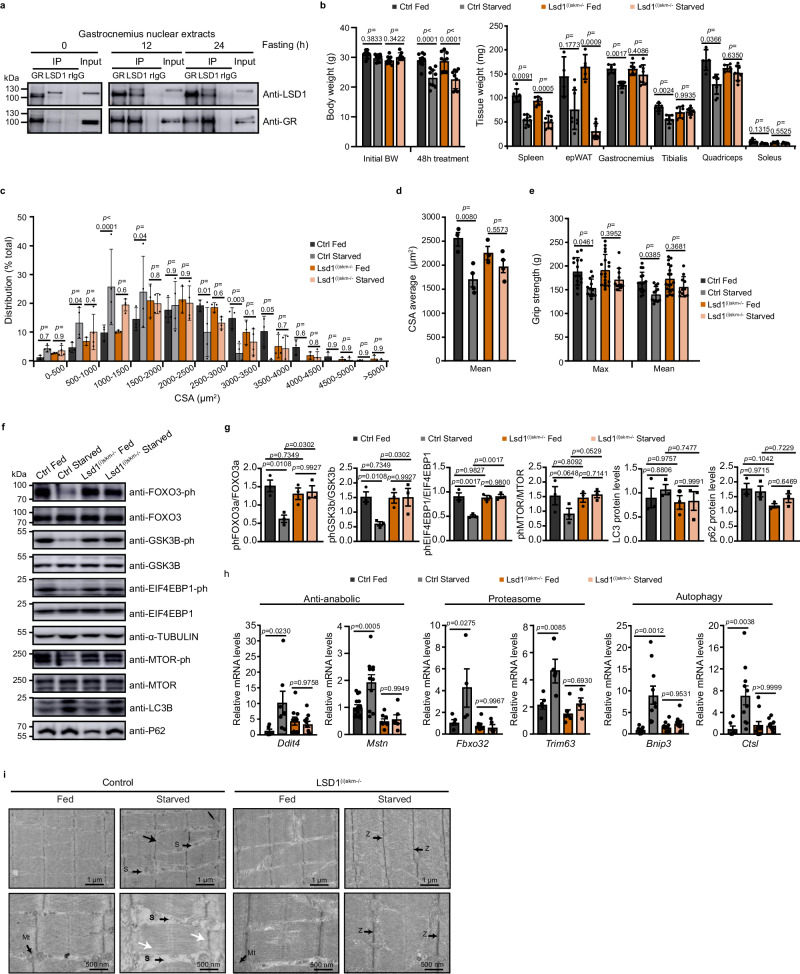
Synthetic glucocorticoids (GC), such as dexamethasone, are extensively used to treat chronic inflammation and autoimmune disorders. However, long-term treatments are limited by various side effects, including muscle atrophy. GC activities are mediated by the glucocorticoid receptor (GR), that regulates target gene expression in various tissues in association with cell-specific co-regulators. Here we show that GR and the lysine-specific demethylase 1 (LSD1) interact in myofibers of male mice, and that LSD1 connects GR-bound enhancers with NRF1-associated promoters to stimulate target gene expression. In addition, we unravel that LSD1 demethylase activity is required for triggering starvation- and dexamethasone-induced skeletal muscle proteolysis in collaboration with GR. Importantly, inhibition of LSD1 circumvents muscle wasting induced by pharmacological levels of dexamethasone, without affecting their anti-inflammatory activities. Thus, our findings provide mechanistic insights into the muscle-specific GC activities, and highlight the therapeutic potential of targeting GR co-regulators to limit corticotherapy-induced side effects.
合成糖皮质激素(GC),如地塞米松,被广泛用于治疗慢性炎症和自身免疫性疾病。然而,长期治疗受到各种副作用的限制,包括肌肉萎缩。GC 活性是通过糖皮质激素受体(GR)介导的,GR 与细胞特异性共调节剂一起调节各种组织中的靶基因表达。在这里,我们表明 GR 和赖氨酸特异性去甲基酶 1(LSD1)在雄性小鼠的肌纤维中相互作用,并且 LSD1 将 GR 结合的增强子与 NRF1 相关的启动子连接起来,以刺激靶基因表达。此外,我们揭示 LSD1 去甲基酶活性对于与 GR 合作触发饥饿和地塞米松诱导的骨骼肌蛋白水解是必需的。重要的是,抑制 LSD1 可以避免药理学水平的地塞米松引起的肌肉消耗,而不影响其抗炎活性。因此,我们的研究结果为肌肉特异性 GC 活性提供了机制上的见解,并强调了靶向 GR 共调节剂以限制皮质激素治疗引起的副作用的治疗潜力。