Division of Human Genetics, Medical University of Innsbruck, 6020 Innsbruck, Austria.
Oroboros Instruments Corporation, 6020 Innsbruck, Austria.
Proc Natl Acad Sci U S A. 2018 Apr 17;115(16):4158-4163. doi: 10.1073/pnas.1719407115. Epub 2018 Apr 4.
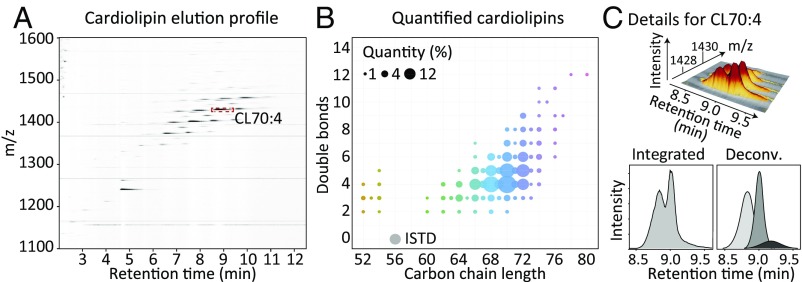
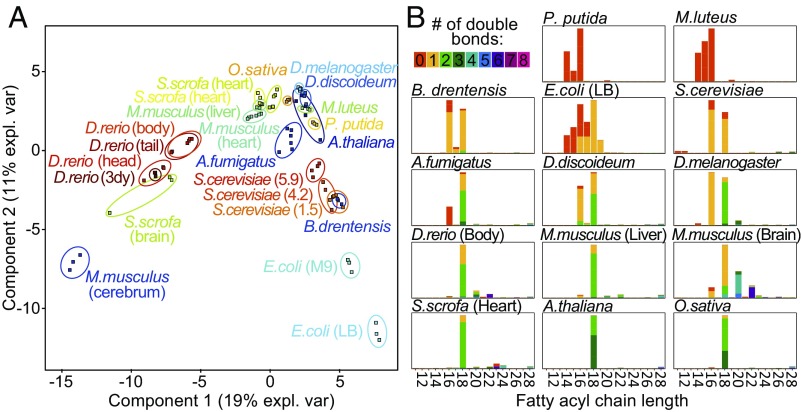
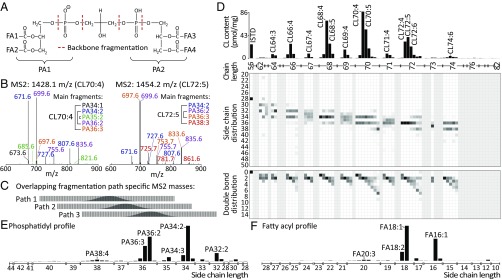
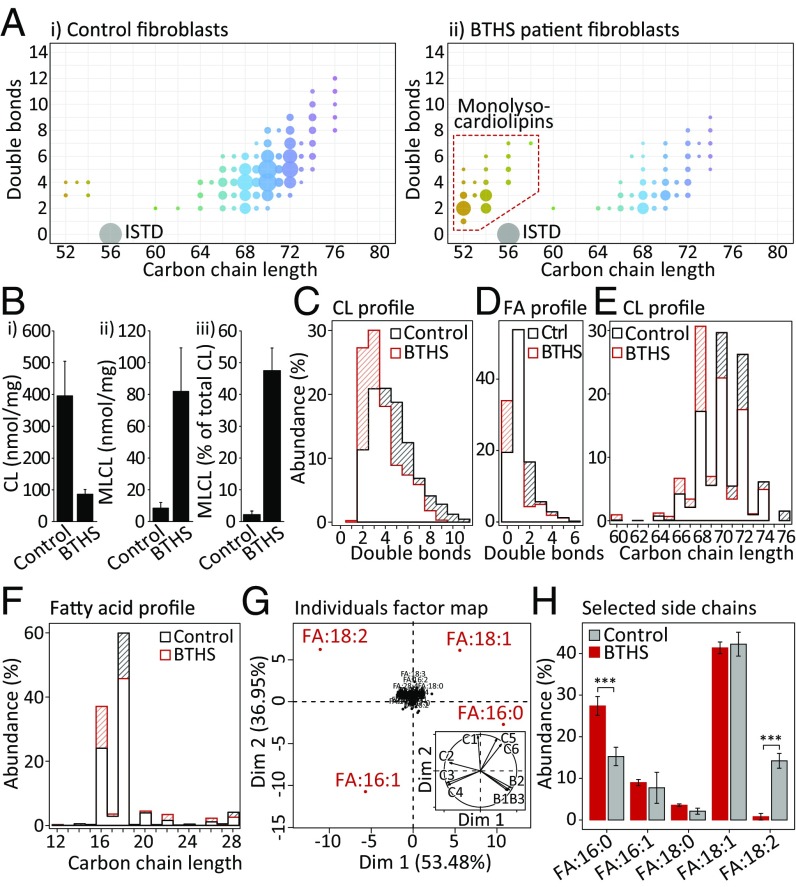
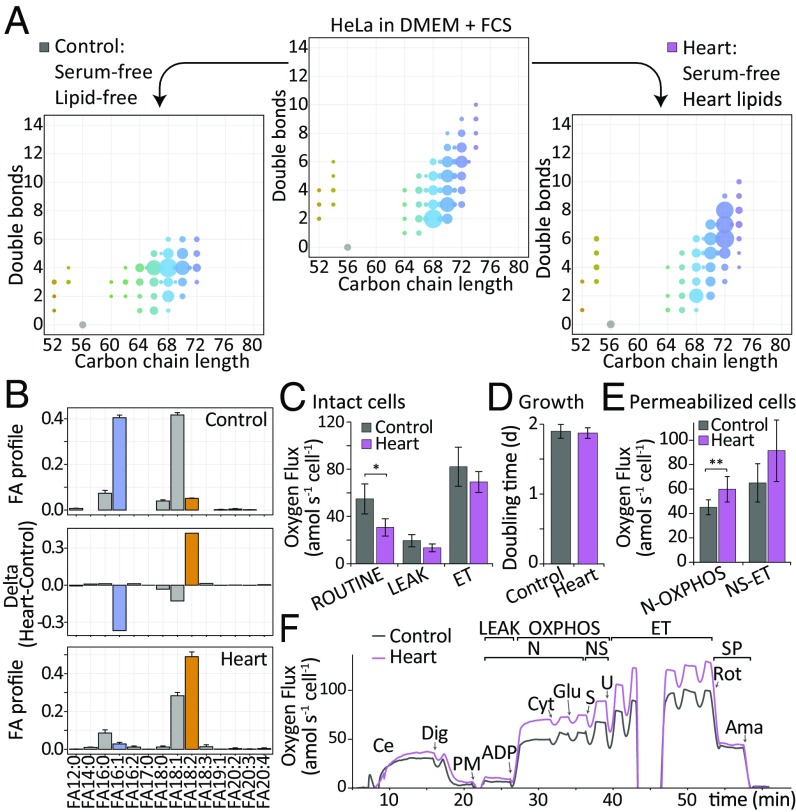
Current strategies used to quantitatively describe the biological diversity of lipids by mass spectrometry are often limited in assessing the exact structural variability of individual molecular species in detail. A major challenge is represented by the extensive isobaric overlap present among lipids, hampering their accurate identification. This is especially true for cardiolipins, a mitochondria-specific class of phospholipids, which are functionally involved in many cellular functions, including energy metabolism, cristae structure, and apoptosis. Substituted with four fatty acyl side chains, cardiolipins offer a particularly high potential to achieve complex mixtures of molecular species. Here, we demonstrate how systematically generated high-performance liquid chromatography-mass spectral data can be utilized in a mathematical structural modeling approach, to comprehensively analyze and characterize the molecular diversity of mitochondrial cardiolipin compositions in cell culture and disease models, cardiolipin modulation experiments, and a broad variety of frequently studied model organisms.
目前,通过质谱定量描述脂质生物多样性的策略通常在详细评估单个分子物种的确切结构变异性方面受到限制。一个主要的挑战是脂质之间存在广泛的等排重叠,这阻碍了它们的准确识别。对于心磷脂(cardiolipin)尤其如此,心磷脂是一种线粒体特异性磷脂,在许多细胞功能中发挥作用,包括能量代谢、嵴结构和细胞凋亡。心磷脂由四个脂肪酸酰侧链取代,具有实现复杂分子物种混合物的特别高的潜力。在这里,我们展示了如何在数学结构建模方法中系统地利用生成的高效液相色谱-质谱数据,全面分析和表征细胞培养和疾病模型、心磷脂调节实验以及广泛研究的各种模型生物中的线粒体心磷脂组成的分子多样性。