Feng Ru, Zhao Zhen-Xiong, Ma Shu-Rong, Guo Fang, Wang Yan, Jiang Jian-Dong
State Key Laboratory of Bioactive Substance and Function of Natural Medicines, Institute of Materia Medica, Chinese Academy of Medical Sciences and Peking Union Medical College, Beijing, China.
Front Pharmacol. 2018 Mar 21;9:214. doi: 10.3389/fphar.2018.00214. eCollection 2018.
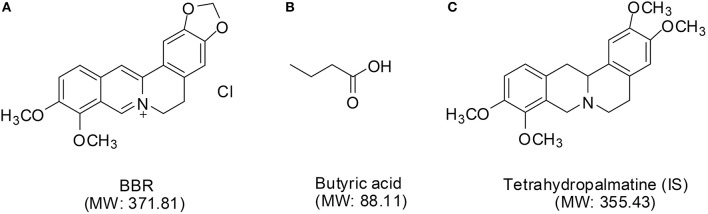
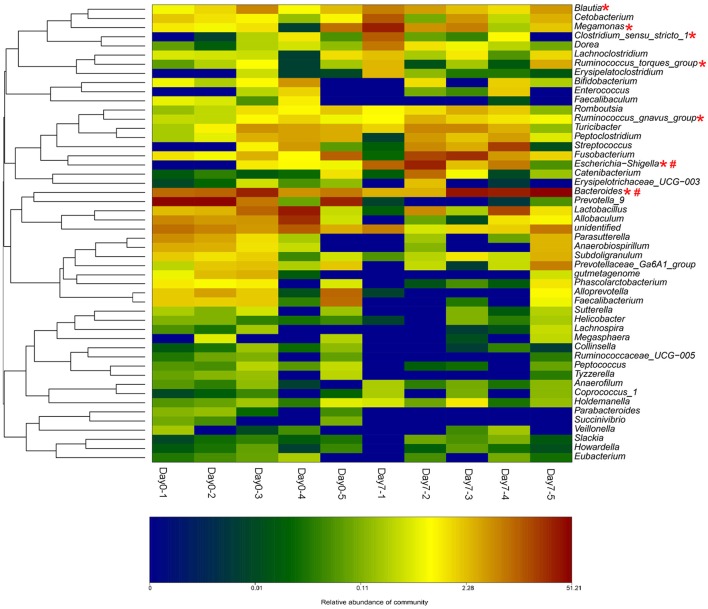
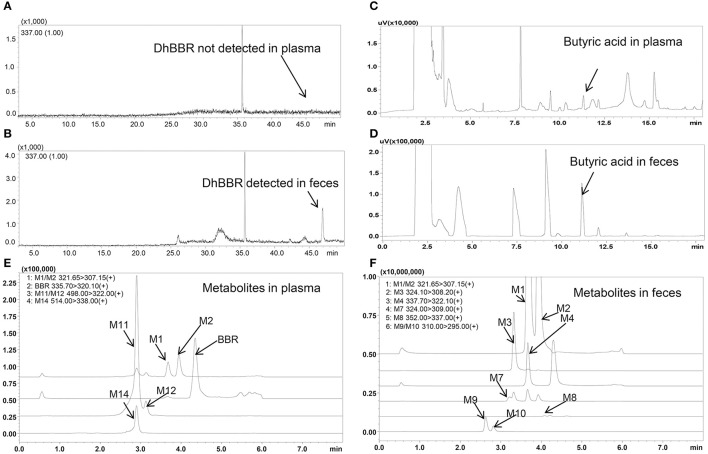
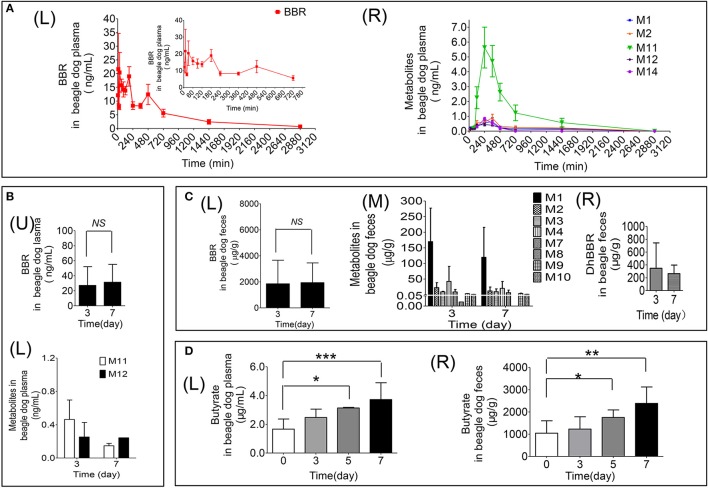
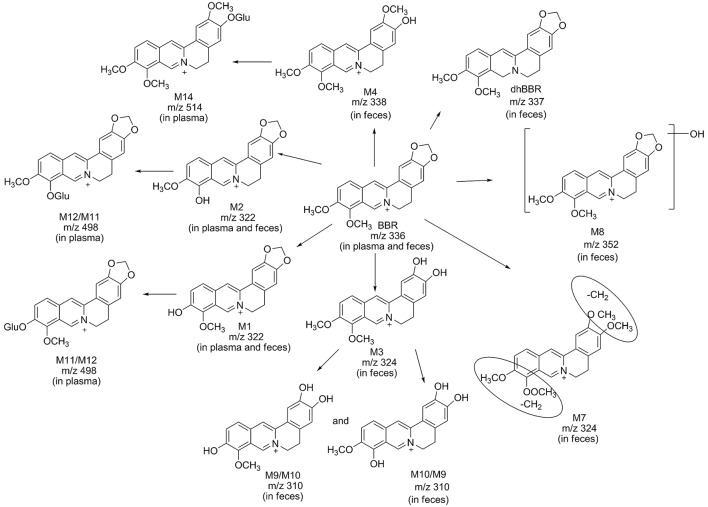
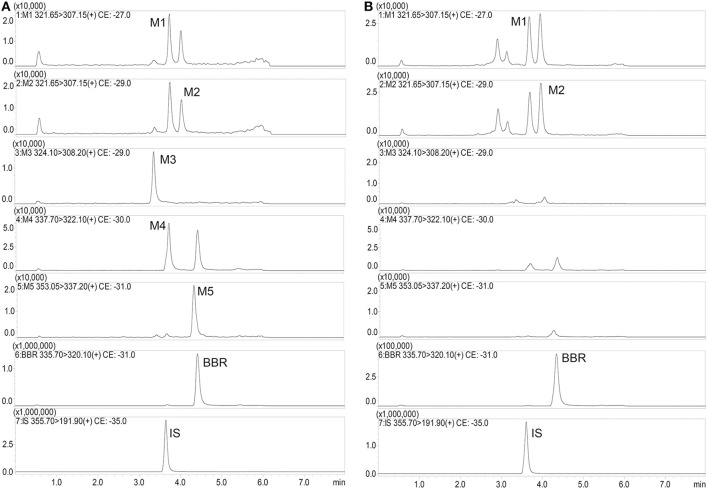
Berberine (BBR) is considered a multi-target drug that has significant advantages. In contrast to its significant pharmacological effects in clinic, the plasma level of BBR is very low. Our previous work revealed that dihydroberberine (dhBBR) could be an absorbable form of BBR in the intestine, and butyrate is an active metabolite that is generated by gut bacteria in rats. In this study, for the first time we describe gut microbiota-regulated pharmacokinetics in beagle dogs after oral administration of BBR by single (50 mg/kg) or multiple doses (50 mg/kg/d) for 7 days. GC-MS, GC, LC-MS/MS, and LC/MS-IT-TOF were used to detect dhBBR, butyrate and BBR as well as its Phase I and II metabolites, respectively. The results showed that dhBBR was not detected in dog plasma but was excreted in small amounts in the feces of dogs examined on days 3 and 7. Butyrate was generated by gut bacteria and increased by 1.3- and 1.2-fold in plasma or feces, respectively, after 7 days of BBR treatment compared to the levels before treatment. Changes of intestinal bacterial composition were analyzed by 16S rRNA genes analysis. The results presented that dogs treated with BBR for 7 days increased both the abundance of the butyrate- and the nitroreductases- producing bacteria. We also identified chemical structures of the Phase I and II metabolites and analyzed their contents in beagle dogs. Eleven metabolites were detected in plasma and feces after BBR oral administration (50 mg/kg) to dogs, including 8 metabolites of Phase I and III metabolites of Phase II. The pharmacokinetic profile indicated that the concentration of BBR in plasma was low, with a value of 36.88 ± 23.45 ng/mL. The relative content of glucuronic acid conjugates (M11) was higher than those of other metabolites (M1, M2, M12, and M14) in plasma. BBR was detected in feces, with high excreted amounts on day 3 (2625.04 ± 1726.94 μg/g) and day 7 (2793.43 ± 488.10 μg/g). In summary, this is the first study to describe gut microbiota-regulated pharmacokinetics in beagle dogs after oral administration of BBR, which is beneficial for discovery of drugs with poor absorption but good therapeutic efficacy.
黄连素(BBR)被认为是一种具有显著优势的多靶点药物。与它在临床上显著的药理作用相比,BBR的血浆水平非常低。我们之前的研究表明,二氢黄连素(dhBBR)可能是BBR在肠道中的一种可吸收形式,并且丁酸是大鼠肠道细菌产生的一种活性代谢产物。在本研究中,我们首次描述了比格犬口服单次(50mg/kg)或多次剂量(50mg/kg/d)BBR 7天后肠道微生物群调节的药代动力学。分别使用气相色谱-质谱联用仪(GC-MS)、气相色谱(GC)、液相色谱-串联质谱(LC-MS/MS)和液相色谱/离子阱-飞行时间质谱(LC/MS-IT-TOF)检测dhBBR、丁酸以及BBR及其I相和II相代谢产物。结果显示,在犬血浆中未检测到dhBBR,但在第3天和第7天检测的犬粪便中有少量排泄。肠道细菌产生了丁酸,与治疗前水平相比,BBR治疗7天后血浆或粪便中的丁酸分别增加了1.3倍和1.2倍。通过16S rRNA基因分析来分析肠道细菌组成的变化。结果表明,用BBR治疗7天的犬增加了产生丁酸的细菌和硝基还原酶产生菌的丰度。我们还鉴定了I相和II相代谢产物的化学结构,并分析了它们在比格犬中的含量。给犬口服BBR(50mg/kg)后,在血浆和粪便中检测到11种代谢产物,包括8种I相代谢产物和3种II相代谢产物。药代动力学特征表明,BBR在血浆中的浓度较低,AUC值为36.88±23.45ng/mL。血浆中葡萄糖醛酸结合物(M11)的相对含量高于其他代谢产物(Ml、M2、M12和M14)。在粪便中检测到了BBR,第3天(2625.04±1726.94μg/g)和第7天(2793.43±488.10μg/g)排泄量较高。总之,这是首次描述比格犬口服BBR后肠道微生物群调节药代动力学的研究,这有助于发现吸收差但治疗效果好的药物。