Laboratorio de Neuroinmunología, Fundación Ciencia and Vida, Santiago, Chile.
Center for Research in Medical Pharmacology, University of Insubria, Varese, Italy.
Front Immunol. 2018 Mar 21;9:571. doi: 10.3389/fimmu.2018.00571. eCollection 2018.
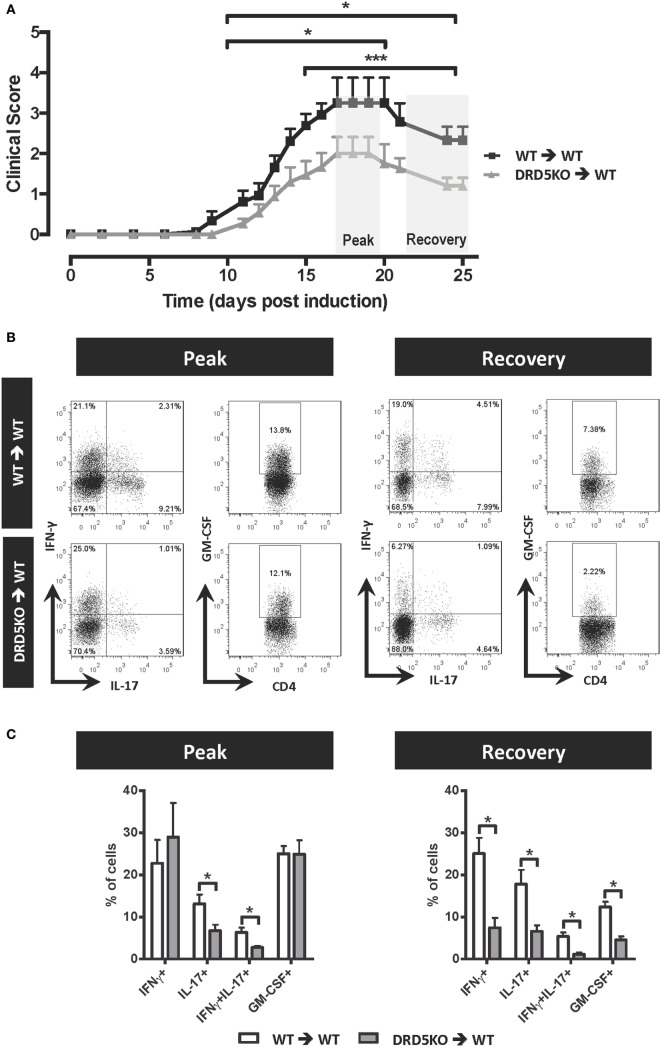
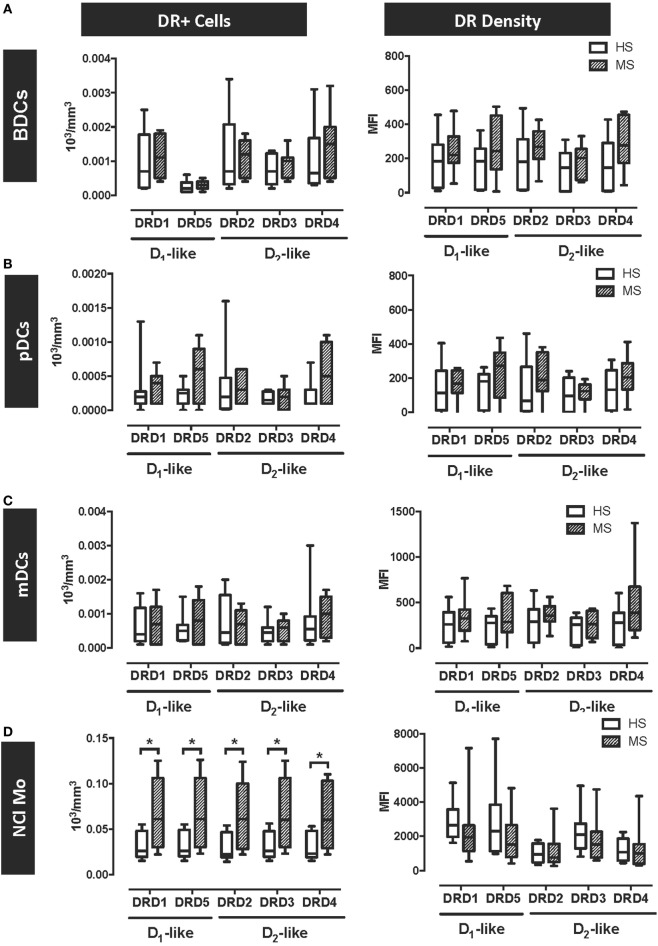
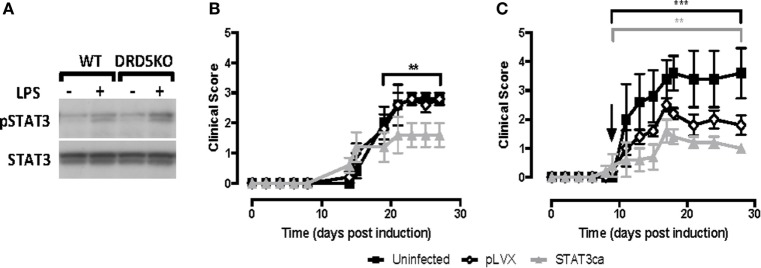
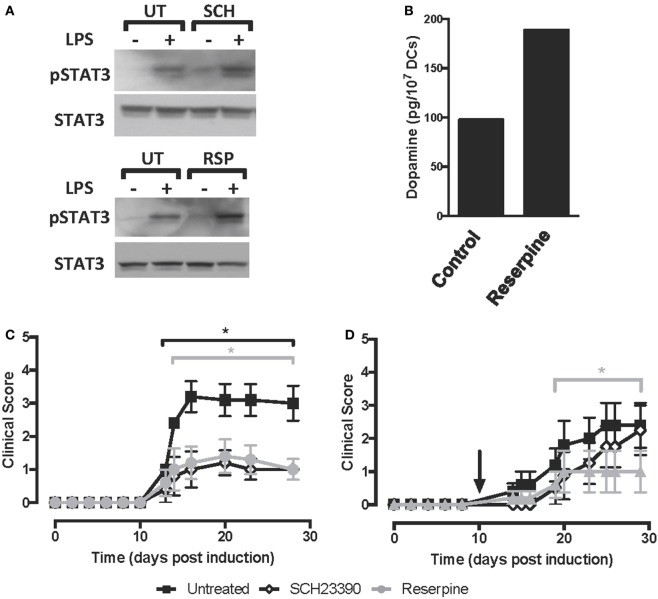
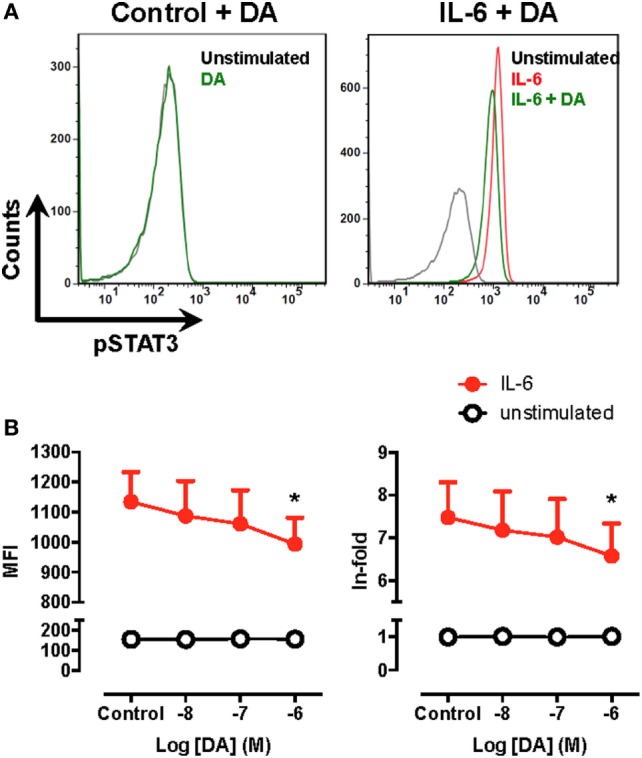
The dual potential to promote tolerance or inflammation to self-antigens makes dendritic cells (DCs) fundamental players in autoimmunity. Previous results have shown that stimulation of dopamine receptor D5 (DRD5) in DCs potentiates their inflammatory behaviour, favouring the development of experimental autoimmune encephalomyelitis (EAE). Here, we aimed to decipher the underlying mechanism and to test its relevance in multiple sclerosis (MS) patients. Our data shows that DRD5-deficiency confined to DCs in EAE mice resulted in reduced frequencies of CD4 T-cell subsets with inflammatory potential in the central nervous system, including not only Th1 and Th17 cells but also granulocyte-macrophage colony-stimulating factor producers. Importantly, depletion of dopamine from DCs resulted in a dramatic reduction of EAE severity, highlighting the relevance of an autocrine loop promoting inflammation . Mechanistic analyses indicated that DRD5-signalling in both mouse DCs and human monocytes involves the attenuation of signal transducer and activator of transcription 3-activation, a transcription factor that limits the production of the inflammatory cytokines interleukin (IL)-12 and IL-23. Furthermore, we found an exacerbated expression of all dopamine receptors in peripheral blood pro-inflammatory monocytes obtained from MS patients. These findings illustrate a novel mechanism by which myeloid antigen-presenting cells may trigger the onset of their inflammatory behaviour promoting the development of autoimmunity.
树突状细胞(DCs)具有促进自身抗原耐受或炎症的双重潜能,是自身免疫的关键细胞。先前的研究结果表明,DC 中多巴胺受体 D5(DRD5)的刺激增强了其炎症行为,有利于实验性自身免疫性脑脊髓炎(EAE)的发展。在此,我们旨在解析其潜在机制,并在多发性硬化症(MS)患者中进行验证。我们的数据表明,EAE 小鼠中仅局限于 DC 的 DRD5 缺失导致中枢神经系统中具有炎症潜能的 CD4 T 细胞亚群频率降低,不仅包括 Th1 和 Th17 细胞,还包括粒细胞-巨噬细胞集落刺激因子产生细胞。重要的是,从 DC 中耗尽多巴胺会导致 EAE 严重程度显著降低,突出了促进炎症的自分泌环的相关性。机制分析表明,DRD5 在小鼠 DC 和人单核细胞中的信号转导涉及转录激活因子 3(STAT3)激活的减弱,STAT3 是一种限制炎症细胞因子白细胞介素(IL)-12 和 IL-23 产生的转录因子。此外,我们发现从 MS 患者外周血促炎单核细胞中所有多巴胺受体的表达均明显增强。这些发现说明了髓样抗原呈递细胞可能触发其炎症行为的发生,从而促进自身免疫的发展的新机制。