Wang Hongbin, Li Zheng, Niu Junling, Xu Yongfen, Ma Li, Lu Ailing, Wang Xun, Qian Zhikang, Huang Zhong, Jin Xia, Leng Qibin, Wang Jianhua, Zhong Jin, Sun Bing, Meng Guangxun
1CAS Key Laboratory of Molecular Virology and Immunology, Institut Pasteur of Shanghai, Chinese Academy of Sciences, 200031 Shanghai, China.
2Shanghai Blood Center, 200051 Shanghai, China.
Cell Discov. 2018 Mar 27;4:14. doi: 10.1038/s41421-018-0013-6. eCollection 2018.
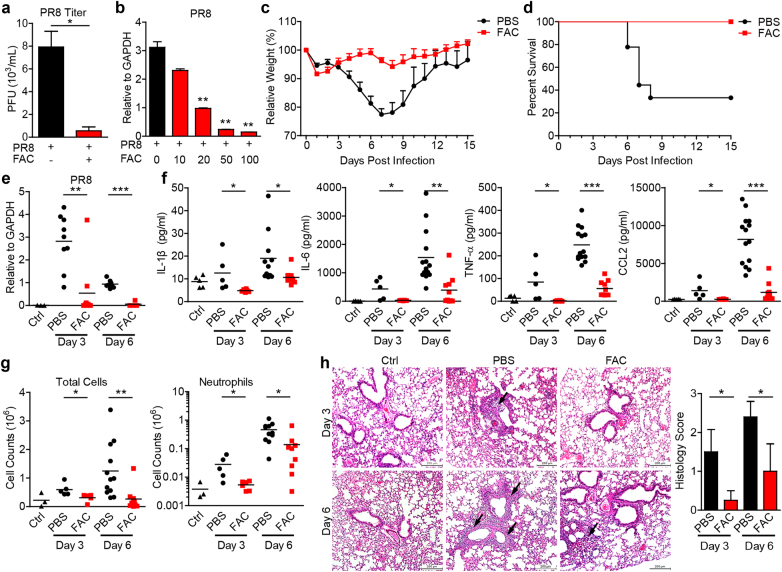
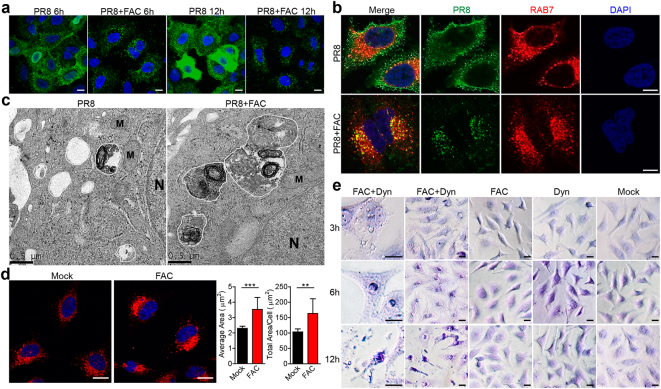
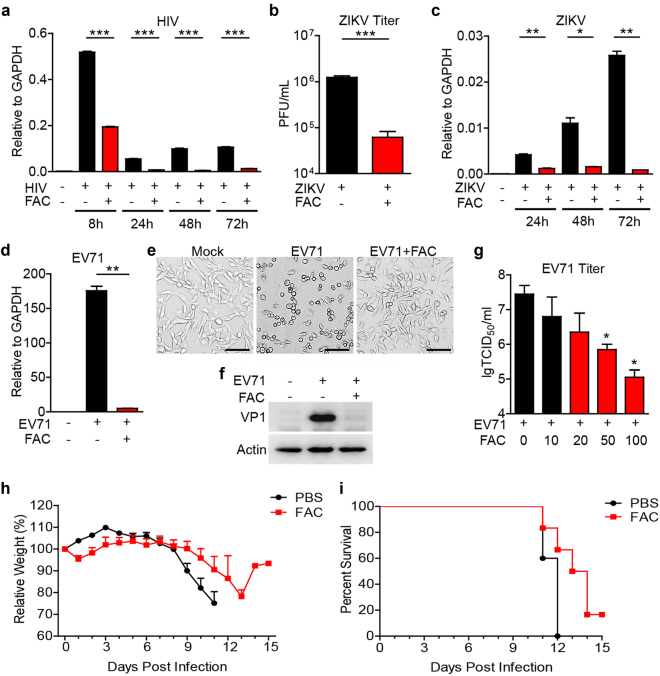
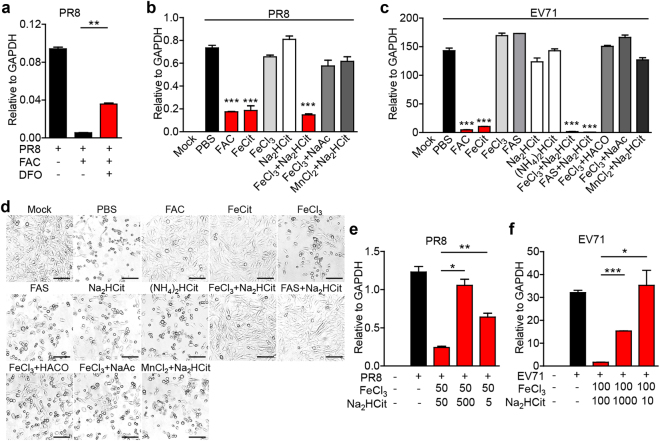
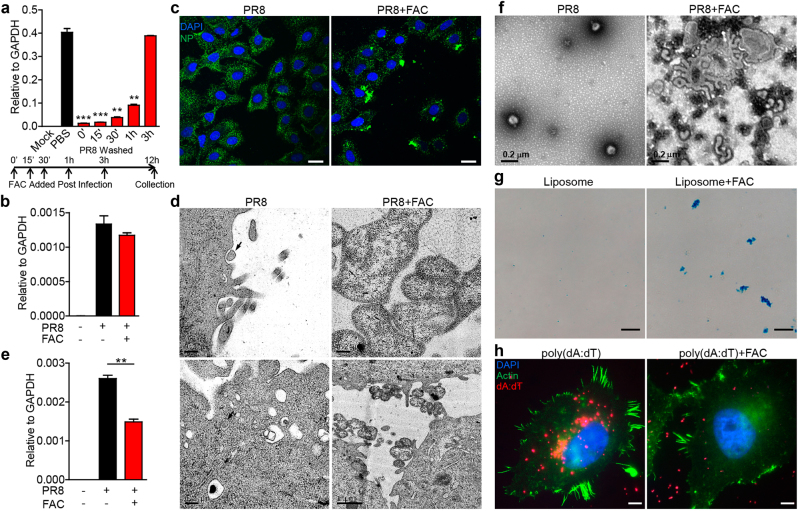
Iron is an essential nutrient for cell survival and is crucial for DNA replication, mitochondrial function and erythropoiesis. However, the immunological role of iron in viral infections has not been well defined. Here we found the iron salt ferric ammonium citrate (FAC) inhibited Influenza A virus, HIV virus, Zika virus, and Enterovirus 71 (EV71) infections. Of note, both iron ion and citrate ion were required for the antiviral capability of FAC, as other iron salts and citrates did not exhibit viral inhibition. Mechanistically, FAC inhibited viral infection through inducing viral fusion and blocking endosomal viral release. These were further evidenced by the fact that FAC induced liposome aggregation and intracellular vesicle fusion, which was associated with a unique iron-dependent cell death. Our results demonstrate a novel antiviral function of FAC and suggest a therapeutic potential for iron in the control of viral infections.
铁是细胞存活所必需的营养素,对DNA复制、线粒体功能和红细胞生成至关重要。然而,铁在病毒感染中的免疫作用尚未明确界定。在此,我们发现铁盐柠檬酸铁铵(FAC)可抑制甲型流感病毒、HIV病毒、寨卡病毒和肠道病毒71型(EV71)感染。值得注意的是,FAC的抗病毒能力需要铁离子和柠檬酸根离子两者,因为其他铁盐和柠檬酸盐并未表现出病毒抑制作用。从机制上讲,FAC通过诱导病毒融合和阻断内体病毒释放来抑制病毒感染。FAC诱导脂质体聚集和细胞内囊泡融合这一事实进一步证明了这些,这与一种独特的铁依赖性细胞死亡有关。我们的结果证明了FAC的一种新型抗病毒功能,并提示铁在控制病毒感染方面具有治疗潜力。