Department of Systems Biology, Columbia University, New York City, United States.
Department of Biochemistry and Molecular Biophysics, Columbia University, New York City, United States.
Elife. 2018 Apr 5;7:e31867. doi: 10.7554/eLife.31867.
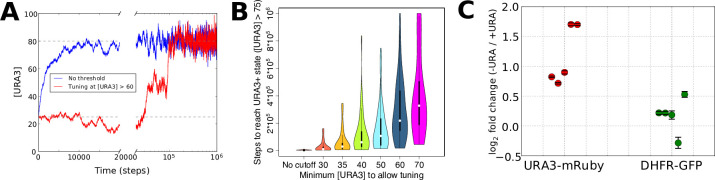
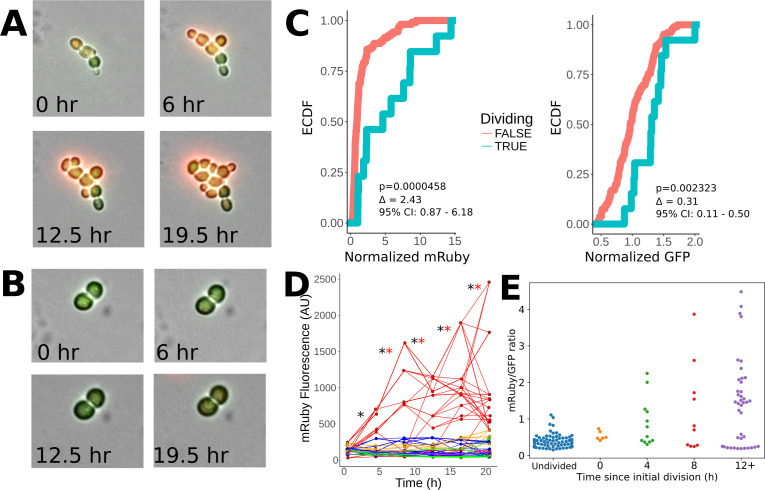
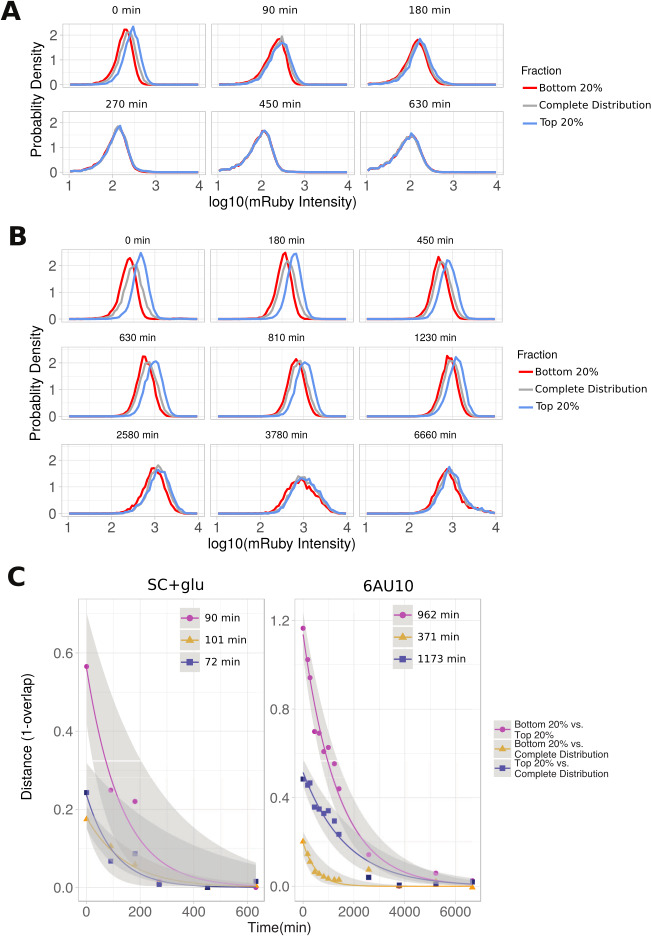
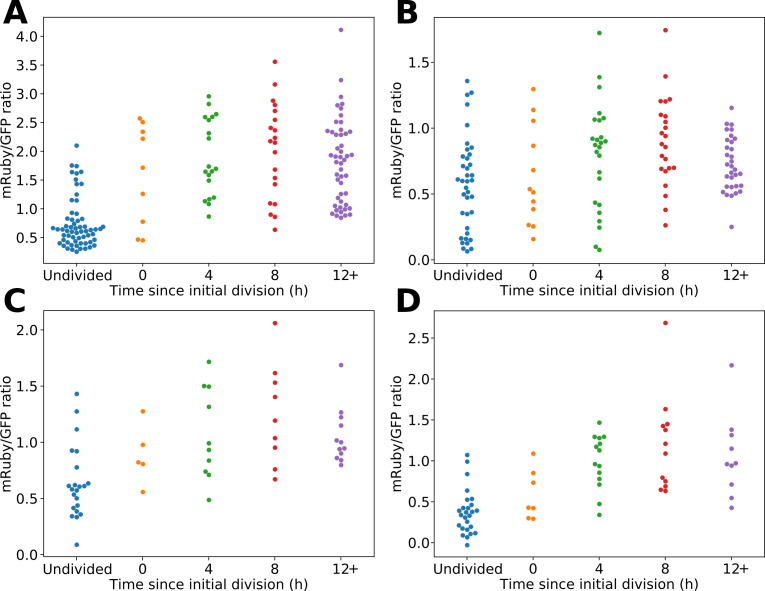
Cells adapt to familiar changes in their environment by activating predefined regulatory programs that establish adaptive gene expression states. These hard-wired pathways, however, may be inadequate for adaptation to environments never encountered before. Here, we reveal evidence for an alternative mode of gene regulation that enables adaptation to adverse conditions without relying on external sensory information or genetically predetermined -regulation. Instead, individual genes achieve optimal expression levels through a stochastic search for improved fitness. By focusing on improving the overall health of the cell, the proposed stochastic tuning mechanism discovers global gene expression states that are fundamentally new and yet optimized for novel environments. We provide experimental evidence for stochastic tuning in the adaptation of to laboratory-engineered environments that are foreign to its native gene-regulatory network. Stochastic tuning operates locally at individual gene promoters, and its efficacy is modulated by perturbations to chromatin modification machinery.
细胞通过激活预先设定的调节程序来适应其环境中的熟悉变化,从而建立适应性的基因表达状态。然而,这些预先设定的途径可能不足以适应以前从未遇到过的环境。在这里,我们揭示了一种替代的基因调控模式的证据,这种模式可以在不依赖外部感觉信息或遗传上预先确定的调节的情况下,实现对不利条件的适应。相反,个体基因通过随机搜索来提高适应性,从而达到最佳的表达水平。通过关注提高细胞的整体健康水平,所提出的随机调谐机制发现了全新的、针对新环境进行优化的全局基因表达状态。我们提供了实验证据,证明了在实验室设计的环境中, 对其固有基因调控网络的适应性中存在随机调谐。随机调谐在单个基因启动子上局部起作用,其功效受染色质修饰机制的干扰调节。