She Qin, Cheng Zhi, El-Chaar Darine, Luo Feng, Guo Xiaoyan, Wen Shi Wu
Department of Obstetrics and Gynecology, the Six Affiliated Hospital, Guangzhou Medical University, Qingyuan, Guangdong Province, China OMNI Research Group, Department of Obstetrics and Gynecology, University of Ottawa Ottawa Hospital Research Institute Clinical Epidemiology Program Department of Obstetrics, Gynecology and Newborn Care, The Ottawa Hospital, Ottawa, ON, Canada Department of Pathology, the Six Affiliated Hospital, Guangzhou Medical University, Qingyuan, Guangdong Province, China School of Epidemiology, Public Health, and Preventive Medicine, University of Ottawa Faculty of Medicine, Ottawa, ON, Canada.
Medicine (Baltimore). 2018 Apr;97(14):e9977. doi: 10.1097/MD.0000000000009977.
Near-term intraplacental choriocarcinoma (IC) coexisting with massive fetomaternal hemorrhage (FMH) is rare, and its clinical course is poorly understood. Here, we report a new case from our hospital, with detailed discussion and literature review.
A 21-year-old Chinese female at 35 weeks gestation was admitted to our hospital due to reduced fetal movement. Near-term IC coexisting with massive FMH was diagnosed after delivery.
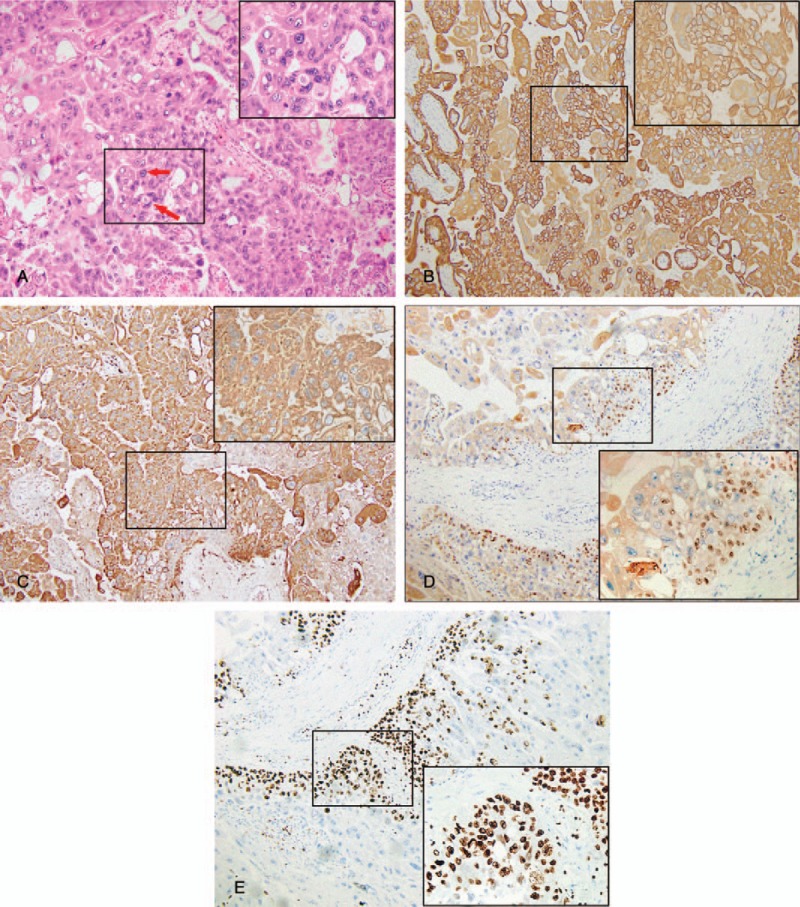
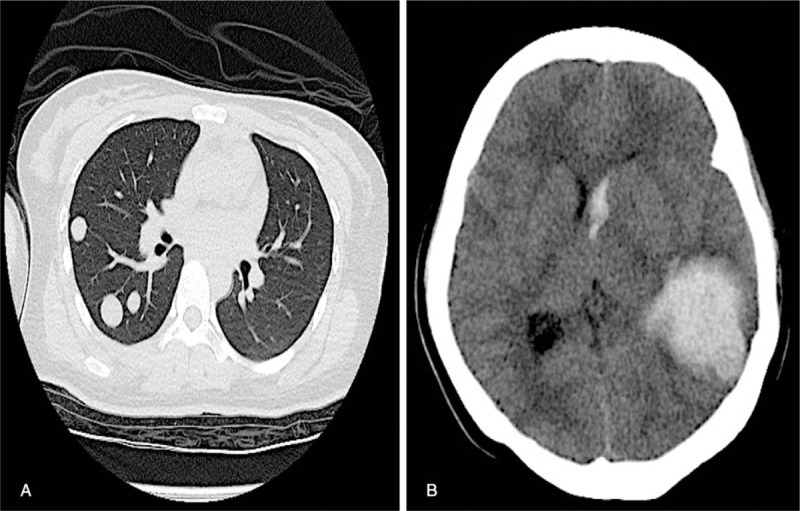
The mother and infant were followed 3 months after delivery. Beta-human chorionic gonadotropin (β-HCG), pathological examination of the placenta, and computed tomography scans were performed for the mother and β-HCG was performed for the infant.
The mother's β-HCG serum level increased from 31,280 IU/L (6 days postdelivery) to 192,070 IU/L (49 days postdelivery), and then steadily fell to 42,468 IU/L (3 months postdelivery) without chemotherapy. The mother died from metastasis and cerebral hemorrhage. The infant survived and his β-HCG serum level fell to within the normal range without chemotherapy.
FMH associated with near-term IC is a rare disease. Measurement of maternal β-HCG may therefore represent a useful parameter when IC is a possible differential diagnosis. A pathological examination of the placenta should be performed in all cases of FMH to better identify cases of IC. Future research should aim to develop methods of identifying which patients with IC should receive chemotherapy, whether we should use single- or multiagent chemotherapies, and whether there is a positive correlation between chemotherapy regimen and β-HCG serum levels.
近期胎盘内绒毛膜癌(IC)与大量胎儿-母体出血(FMH)并存的情况罕见,其临床病程尚不清楚。在此,我们报告我院的一例新病例,并进行详细讨论及文献回顾。
一名21岁的中国女性,孕35周时因胎动减少入院。分娩后诊断为近期IC与大量FMH并存。
母婴在分娩后随访3个月。对母亲进行β-人绒毛膜促性腺激素(β-HCG)检测、胎盘病理检查及计算机断层扫描,对婴儿进行β-HCG检测。
母亲的β-HCG血清水平从产后6天的31,280 IU/L升至产后49天的192,070 IU/L,然后在未进行化疗的情况下稳步降至产后3个月的42,468 IU/L。母亲死于转移和脑出血。婴儿存活,其β-HCG血清水平在未化疗的情况下降至正常范围。
与近期IC相关的FMH是一种罕见疾病。因此,当IC可能为鉴别诊断时,检测母体β-HCG可能是一个有用的参数。所有FMH病例均应进行胎盘病理检查,以更好地识别IC病例。未来的研究应致力于开发方法,以确定哪些IC患者应接受化疗,我们应使用单药还是多药化疗,以及化疗方案与β-HCG血清水平之间是否存在正相关。