Department of Internal Medicine, Research Center for Pulmonary Disorders, Chonbuk National University Medical School, Jeonju, South Korea.
Research Institute of Clinical Medicine of Chonbuk National University, Biomedical Research Institute of Chonbuk National University Hospital, Jeonju, South Korea.
Thorax. 2018 Aug;73(8):758-768. doi: 10.1136/thoraxjnl-2017-210326. Epub 2018 Apr 5.
Respiratory fungal exposure is known to be associated with severe allergic lung inflammation. Airway epithelium is an essential controller of allergic inflammation. An innate immune recognition receptor, nucleotide-binding domain, leucine-rich-containing family, pyrin-domain-containing-3 (NLRP3) inflammasome, and phosphoinositide 3 kinase (PI3K)-δ in airway epithelium are involved in various inflammatory processes.
We investigated the role of NLRP3 inflammasome in fungi-induced allergic lung inflammation and examined the regulatory mechanism of NLRP3 inflammasome, focusing on PI3K-δ in airway epithelium.
We used two in vivo models induced by exposure to () and (), as well as an -exposed in vitro system. We also checked NLRP3 expression in lung tissues from patients with allergic bronchopulmonary aspergillosis (ABPA).
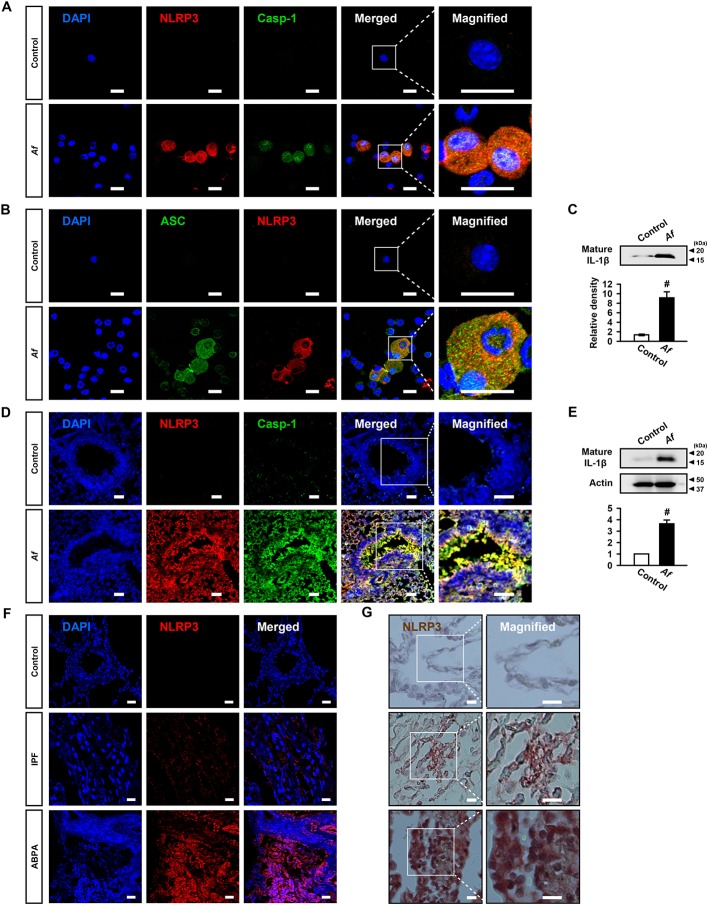
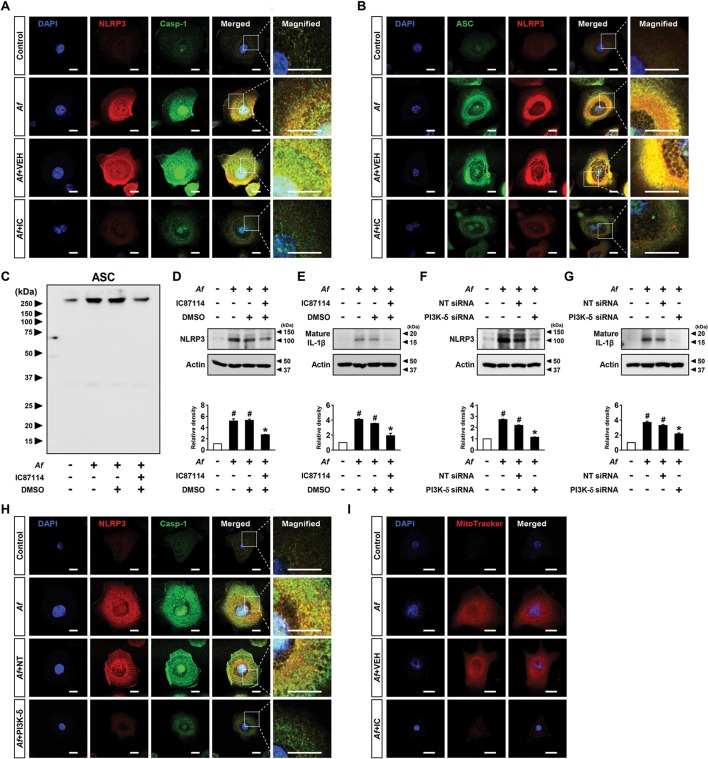
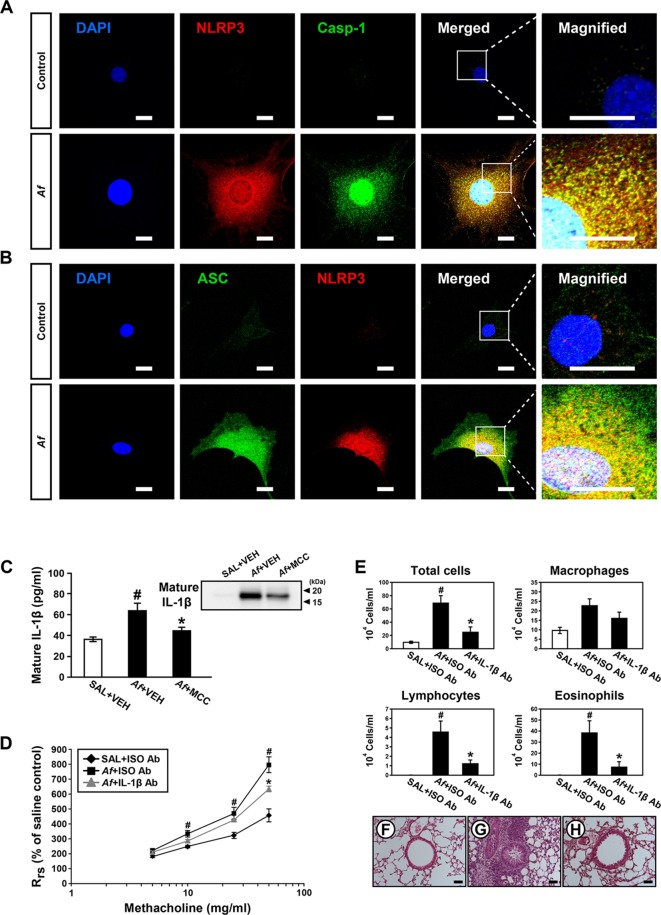
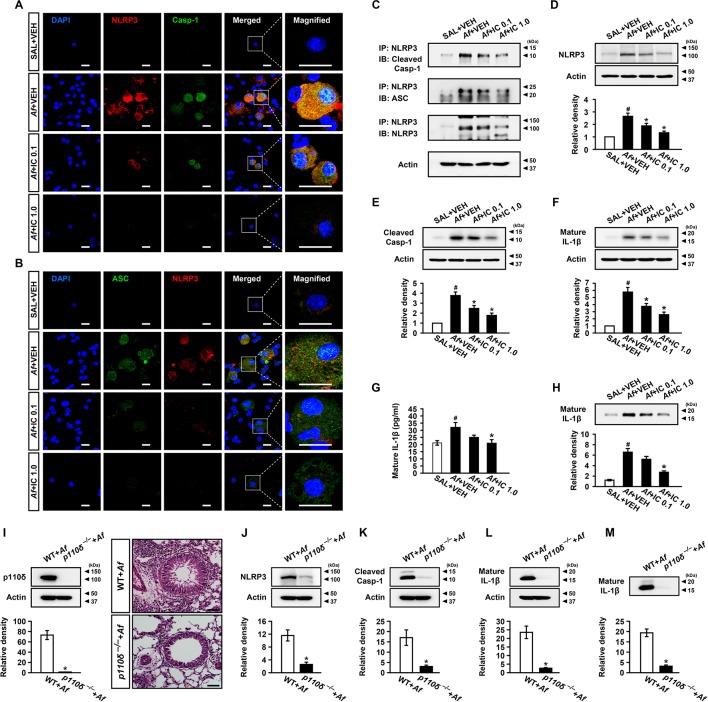
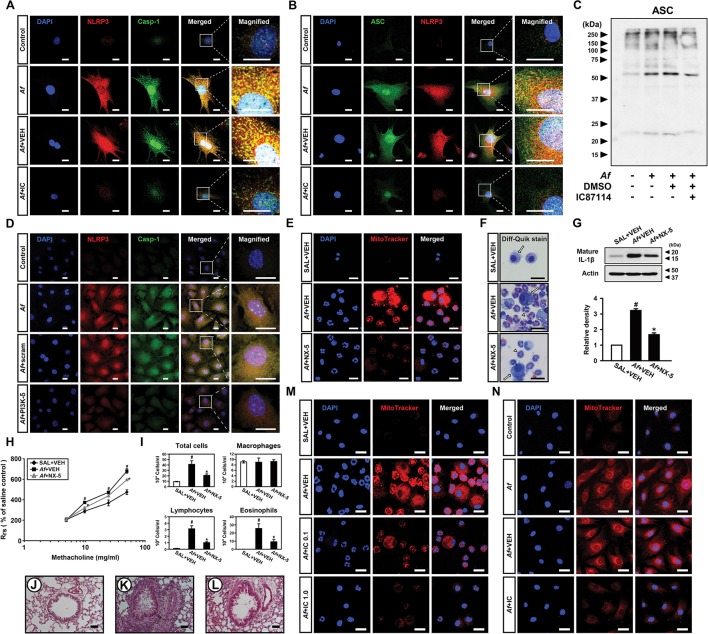
Assembly/activation of NLRP3 inflammasome was increased in the lung of -exposed mice. Elevation of NLRP3 inflammasome assembly/activation was observed in -stimulated murine and human epithelial cells. Similarly, pulmonary expression of NLRP3 in patients with ABPA was increased. Importantly, neutralisation of NLRP3 inflammasome derived IL-1β alleviated pathophysiological features of -induced allergic inflammation. Furthermore, PI3K-δ blockade improved -induced allergic inflammation through modulation of NLRP3 inflammasome, especially in epithelial cells. This modulatory role of PI3K-δ was mediated through the regulation of mitochondrial reactive oxygen species (mtROS) generation. NLRP3 inflammasome was also implicated in -induced eosinophilic allergic inflammation, which was improved by PI3K-δ blockade.
These findings demonstrate that fungi-induced assembly/activation of NLRP3 inflammasome in airway epithelium may be modulated by PI3K-δ, which is mediated partly through the regulation of mtROS generation. Inhibition of PI3K-δ may have potential for treating fungi-induced severe allergic lung inflammation.
已知呼吸道真菌暴露与严重过敏肺炎症有关。气道上皮是过敏炎症的重要控制器。气道上皮中的一种先天免疫识别受体核苷酸结合域富含亮氨酸重复家族、吡咯烷域包含 3(NLRP3)炎性体和磷酸肌醇 3 激酶(PI3K)-δ参与各种炎症过程。
我们研究了 NLRP3 炎性体在真菌诱导的过敏肺炎症中的作用,并检查了 NLRP3 炎性体的调节机制,重点是气道上皮中的 PI3K-δ。
我们使用了两种体内模型,分别是暴露于()和()以及暴露于的体外系统。我们还检查了过敏性支气管曲霉病(ABPA)患者肺组织中的 NLRP3 表达。
在暴露于的小鼠肺中,NLRP3 炎性体的组装/激活增加。在刺激的鼠和人上皮细胞中观察到 NLRP3 炎性体组装/激活的升高。同样,ABPA 患者的肺中 NLRP3 的表达增加。重要的是,NLRP3 炎性体衍生的 IL-1β 的中和减轻了 -诱导的过敏炎症的病理生理特征。此外,PI3K-δ 阻断通过调节 NLRP3 炎性体改善了 -诱导的过敏炎症,特别是在上皮细胞中。PI3K-δ 的这种调节作用是通过调节线粒体活性氧(mtROS)的产生来介导的。NLRP3 炎性体也与 -诱导的嗜酸性过敏炎症有关,PI3K-δ 阻断可改善这种炎症。
这些发现表明,气道上皮中真菌诱导的 NLRP3 炎性体的组装/激活可能被 PI3K-δ 调节,部分通过调节 mtROS 的产生来介导。PI3K-δ 的抑制可能对治疗真菌诱导的严重过敏肺炎症具有潜在的作用。